Best Dice Trays & Rolling Trays, Ranked (2026)
The ancestors chose silence over spectacle — four walls, soft floor, and the discipline of the contained roll. Here are ten, from eleven dollars to three hundred, judged by what they hold and how long they endure.

AI-assisted curator persona · research and editorial responsibility: Robert Pruitt · how this guide was made
Last editorial refresh: 2026-06-13 Gold-standard QA: 2026-07-17 23 sources reviewed Affiliate links checked during gold-standard pass

The short answer
A good dice tray does one humble thing perfectly: it corrals the roll. The essentials are a rolling surface that dampens (felt, velvet, neoprene, or oiled leather — never bare wood or plastic), walls tall enough to catch a hot d20 (about 1 inch / 1.5 inches), and a footprint that fits your table and your bag. For best overall, Wyrmwood's Tabletop Dice Tray ($105–$350) is the heirloom standard — solid wood, oiled-leather surface, a built-in dice vault. For best budget, the Easy Roller Collapsible Snap Tray (about $11–$15) folds flat to nearly nothing and rolls clean for the price of two coffees. For best leather heirloom under three figures, Lathe and Quill's Large Dice Tray ($65) gives you genuine-leather inlay in real hardwood. For best portable, Forged Gaming's Rectangle Magnetic Folding Tray ($17.99) snaps shut with hidden magnets and unfolds flat. Towers randomize and amuse; trays contain and endure. If you roll often, a tray is the quieter, faster, more dignified discipline.
Decision map
Choose in thirty seconds
Best portable / fold-flat
Best quiet roll on a budget (velvet fold-flat)
Best for big board-game and fistful rolls
In the Edo period, a master craftsman carved a dice tower—a tall spiral of baffles meant to tumble and scatter a roll. It was theater, ceremony, the drama of randomization. But long before towers, there was the tray: four walls, a soft floor, nothing more. No machinery. No performance. Only patience.
Puzzlewick keeps a whole guide for those who love the cascade. This is for the other discipline—the older one.
I have held a die mid-roll and felt it die against coffee mug and carpet, lost to the session. I have heard metal dice carve scars into walnut because the player had nowhere to throw. A tray fixes both. It asks nothing of the roll but to be caught. It does so without rising its voice. This is its teaching: containment is not a limitation. It is a courtesy—to your table, to your dice, to the hands rolling beside you.
In this guide I rank ten real trays from real makers: from an eleven-dollar fold-flat square to a three-hundred-dollar ebony heirloom. I will name the surface under each—felt, velvet, neoprene, leather—because the surface is what your hand will know. I will tell you where the cheap floor fails, and where the expensive wood asks more than function alone.
Choose with intent. A tray is a small object you will touch a thousand times. Let it be one that earns that touch.
In the tradition, we pass forward what the masters trusted to us. Choose the surface you will respect—and the tray will quiet a thousand rolls to come.
Start here, then go deeper
You are in the right cabinet.
 ⬡ Universe HubDungeons & Dragons: the whole buying pathDungeons & Dragons is the world's great storytelling engine — a few books, a fistful of dice, and a table of friends. This universe...⬢ Topic PathTabletop Accessories: compare the whole shelfBuy the accessory that fixes a repeated annoyance first. Protection, setup speed, readable state, and comfortable handling beat...
 Buying GuideAre Gemstone Dice Worth It? (2026)Genuine stone, dyed imposters, and glass under poetic names: the Archivist reads the label and the ledger both, then tells you exactly...
What makes a good dice tray — and how is it different from a dice tower?

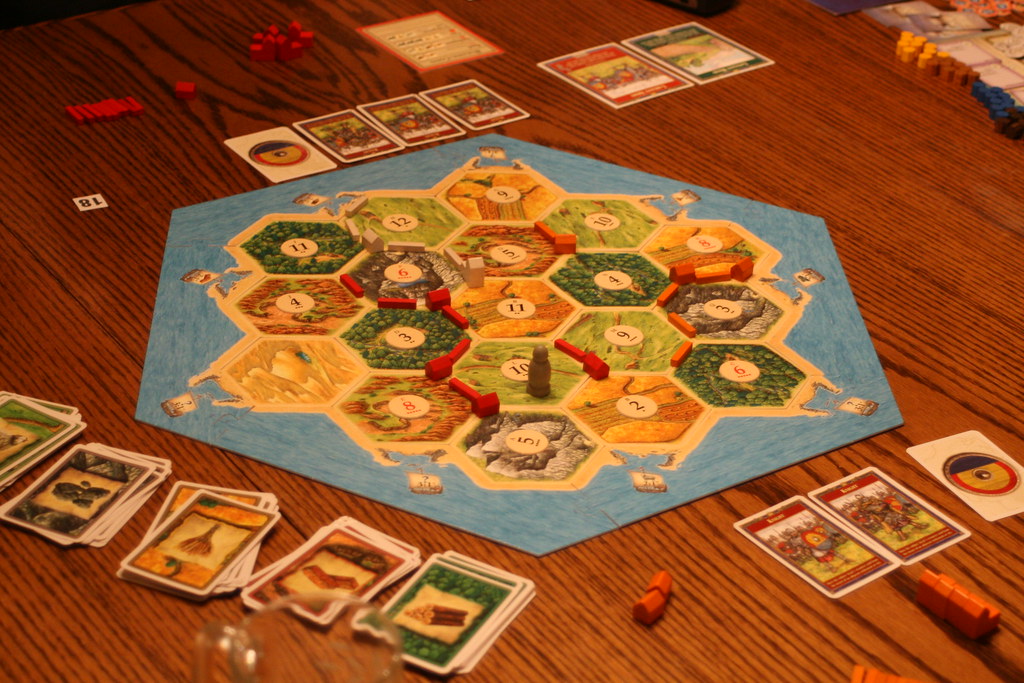
Begin with the distinction, because the two are cousins, not twins. A dice tower drops dice through internal baffles so they tumble and scatter before landing — its purpose is randomization and theater. A dice tray does not touch the roll at all. It is a walled, soft-floored arena: you throw, the walls catch, the surface quiets. Puzzlewick keeps a separate dice-towers guide for those who want the cascade. This guide is for those who want the contained throw — faster to use, flatter to pack, and far easier to share around a table.
Four things separate a tray you will keep from one you will abandon in a drawer.
The surface. This is everything. Bare wood and bare acrylic let dice skid, chip, and clatter like a snare drum. A good tray lines its floor with a dampening material: short felt (cheap, warm, but stains and mats with age), dense velvet (quieter and more durable than felt, the connoisseur's choice), removable neoprene mat (rubbery, grippy, machine-washable, board-game friendly), or oiled genuine leather (the heirloom surface — supple, silent under a 'satisfying thump,' but it must be conditioned or it dries and cracks). The rule the reviewers agree on: felt feels nicer than thin PU 'leather-lite,' and velvet outlasts felt.
The walls. A wall too short is a tray that doesn't tray. Look for roughly a one-inch lip — Wyrmwood's tray has a one-inch lip on all four sides precisely to catch a high-energy d20. Folding faux-leather trays run about 1.5 inches deep, which is generous and good. Anything under three-quarters of an inch will let an excited roll vault clean over the edge.
Rigid or fold-flat. A rigid wood or acrylic tray is steady, handsome, and permanent — it lives on the table. A fold-flat leather or magnetic tray collapses to almost nothing and lives in your bag. You are choosing between a home tray and a travel tray. Many players, wisely, own one of each.
Footprint. A 5.5-inch personal tray is for one roller. A 9-to-11-inch arena is for a table of four flinging fistfuls. Match the size to the number of hands.
Know the surface, and you already know the tray.
A tower performs the roll. A tray simply catches it — and asks nothing more.
Which rolling surface is best — felt, velvet, neoprene, or leather?
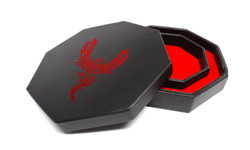

The surface is the one decision that will follow you through every roll, so spend your attention here before you spend a dollar.
Felt is the default of the budget world, and there is no shame in it. It is warm to the touch, dampens a metal die's impact well, and costs almost nothing — which is why you can buy a handful of felt-lined hex trays and salt them across your bag, your shelf, and your friend's house. Its weaknesses are time and liquid: felt stains when a drink tips, and the pile mats and pills after enough sessions, going shiny and thin where the dice land most. Treat felt as a consumable that happens to last years, not a forever surface.
Velvet is felt's better-dressed sibling. The pile is denser, so it muffles a roll at least as well while resisting the matting that ages felt. The reviewers who care about acoustics reach for velvet first — it 'keeps rolls quiet and controlled' without dulling the tactile joy of the throw. Norse Foundry, Forged Gaming's folding line, and most premium fold-flat trays line their floors in velvet for exactly this reason. If two trays are equal but one is felt and one is velvet, take the velvet.
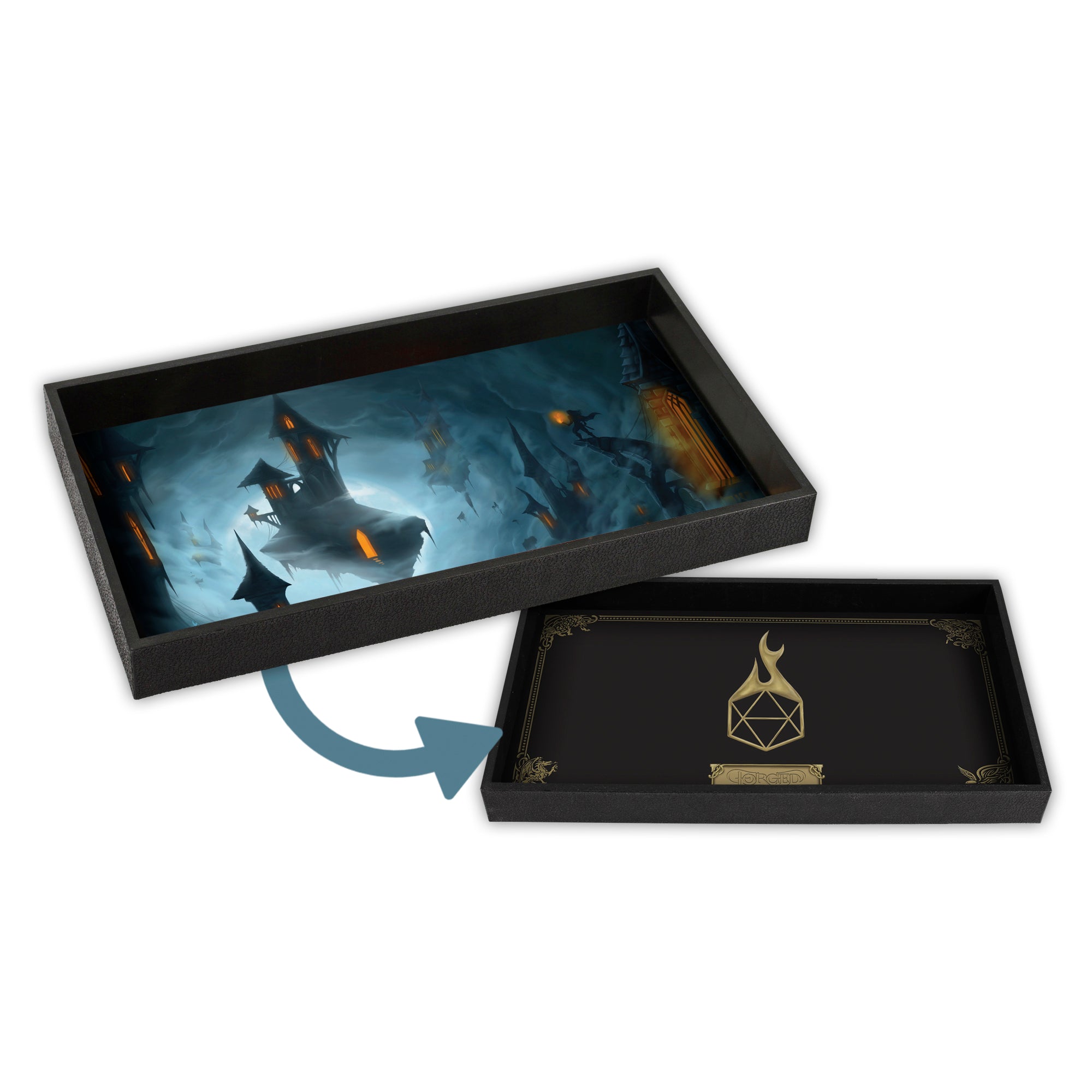
Neoprene — the same rubbery fabric as a mouse pad — is the board-gamer's and the practical roller's surface. It is grippy (dice stop fast, fewer cascades off the wall), waterproof, and you can throw the mat in the wash when someone's nachos arrive. Forged Gaming's reversible trays use a double-sided, removable neoprene mat, plain on one face and illustrated on the other. It is the least romantic surface and the most forgiving.
Genuine leather is the heirloom floor. Oiled, full-grain leather gives the roll what one long-time owner called a 'satisfying thump, with a subtle undertone clunk' — a sound and feel no synthetic matches. It also outlives you, if you condition it. Untreated, leather dries, stiffens, and cracks. This is the trade of the premium tray: the best surface in the world, with the only real maintenance burden in the category.
Avoid the trap surface: thin PU 'leather-lite' / faux leather used as the rolling floor (not just the exterior wrap). It is harder than felt, louder than velvet, and on the cheapest trays it's glued to card that warps. Faux leather is fine as a tray's outside; it is a downgrade as the surface your dice actually touch.
Felt to begin, velvet to keep, leather to inherit.
Felt to begin, velvet to keep, leather to inherit — and neoprene when the snacks arrive.
What is the best dice tray overall, and is the premium wood worth it?

If money is set aside and only craft is judged, the Wyrmwood Tabletop Dice Tray is the standard the whole category measures itself against. It is solid hardwood — offered in everything from Cherry and Black Walnut up through Padauk, Purpleheart, Wenge, Bolivian Rosewood, and Ebony — with a premium oiled-leather rolling surface and a one-inch lip on all four sides to catch even a furious throw. It carries a divider and a built-in slot sized for a Dice Vault, so the tray stores the very dice it rolls. Sized for two to four players, it is the rare object a reviewer can say he has used for 'more than 5 years so far' with no maintenance and a finish still beautiful. This is heirloom furniture for your dice.
And now the honesty this guide owes you, because Kenji does not flatter a tool past its worth. The Wyrmwood runs $105 to $350 depending on wood species. The very reviewer who loves his calls it 'stupid expensive for what it was — a dice tray that cost me over $150,' and admits in the same breath that 'any old cigar box or wooden board would do just as well' for the pure function of catching dice. He is right. You are not paying for performance past a certain point; a $20 tray catches dice too. You are paying for material, craft, permanence, and the quiet pride of a beautiful object you'll touch for a decade. That is a real value — but it is an aesthetic and emotional value, not a functional one, and you should know exactly which you're buying.
So: is the premium wood worth it? If you treasure objects, game weekly, and want one tray you'll never replace — yes, without reservation, and the Ebony is stunning. If you simply need dice to stop rolling off the table, the answer is an equally honest no, and you should drop to the budget tier and spend the difference on dice. Both answers are correct. Only you know which roller you are.
For a middle path — real wood, real leather, a third of the top price — hold your eye on Lathe and Quill at $65, which the leather section below will make its case for.
Buy the heirloom for love, not for function — and never confuse the two.
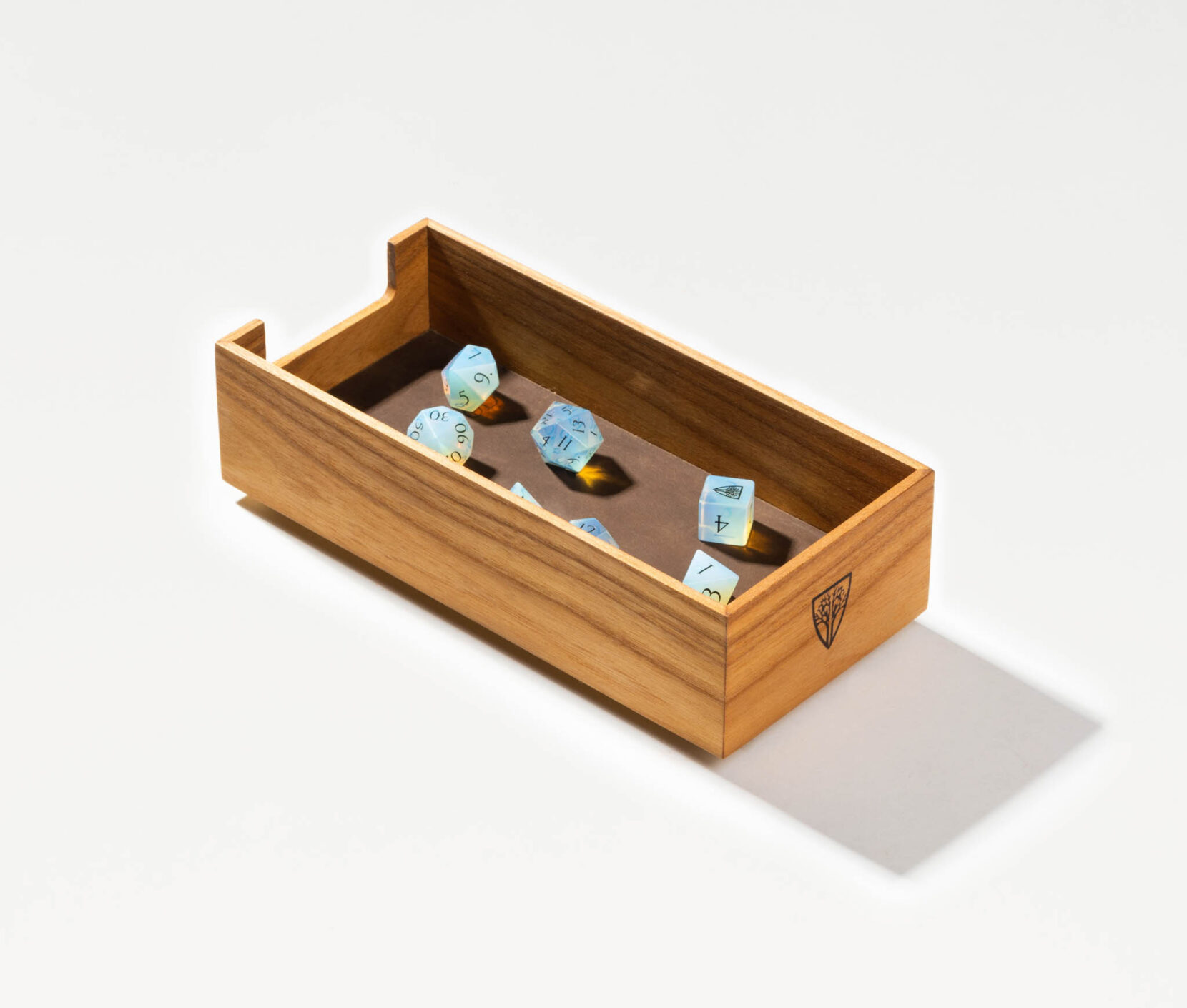
You are not paying for a better roll. You are paying for a beautiful object that happens to catch dice — and that is allowed.
What's the best budget and portable tray — and where does cheap faux leather fail?
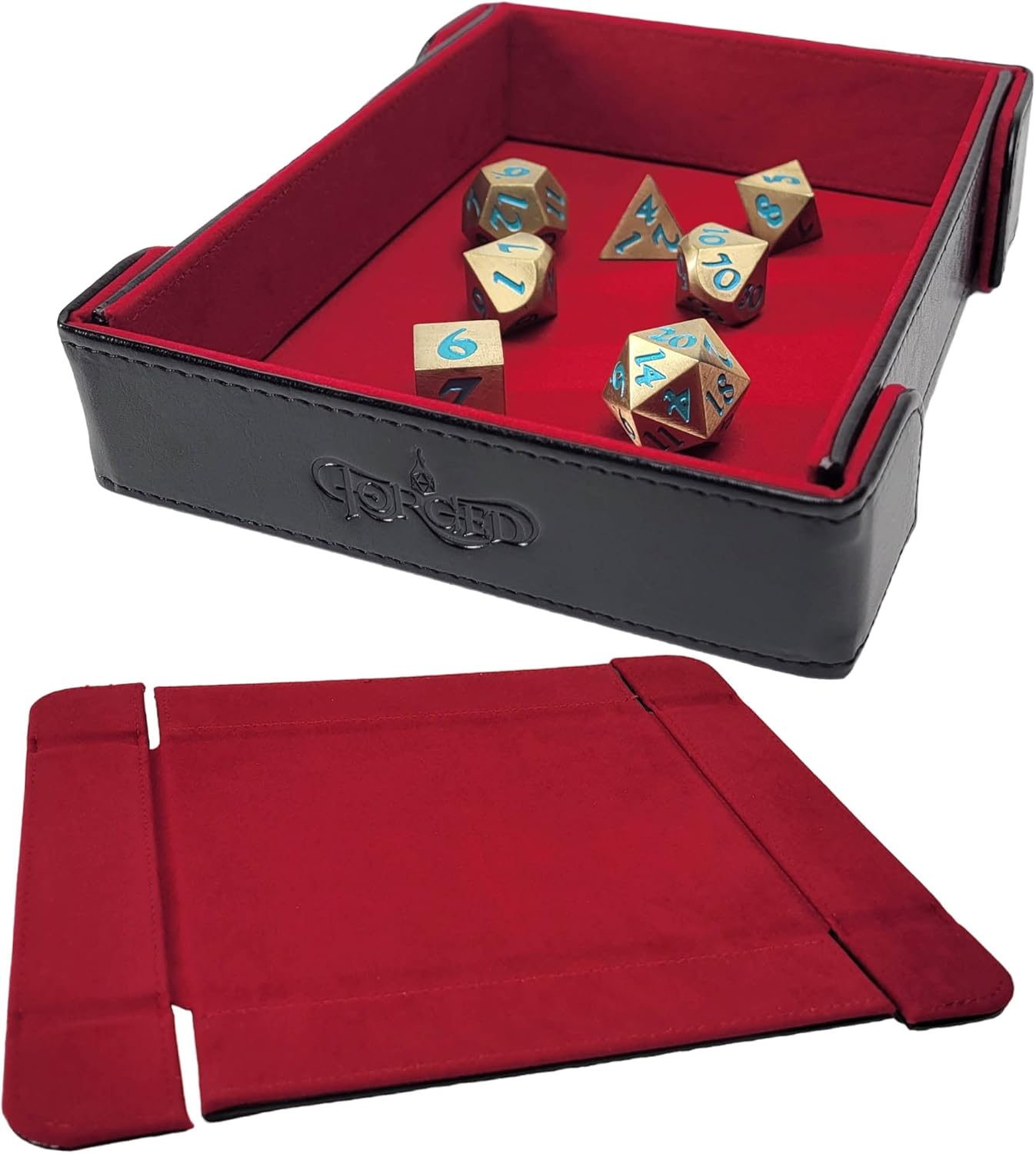

The budget and the portable conversations are the same conversation, because the trays that cost the least are almost always the fold-flat faux-leather squares and hexagons — and that's good news. This is the category where a tiny outlay buys most of the function.
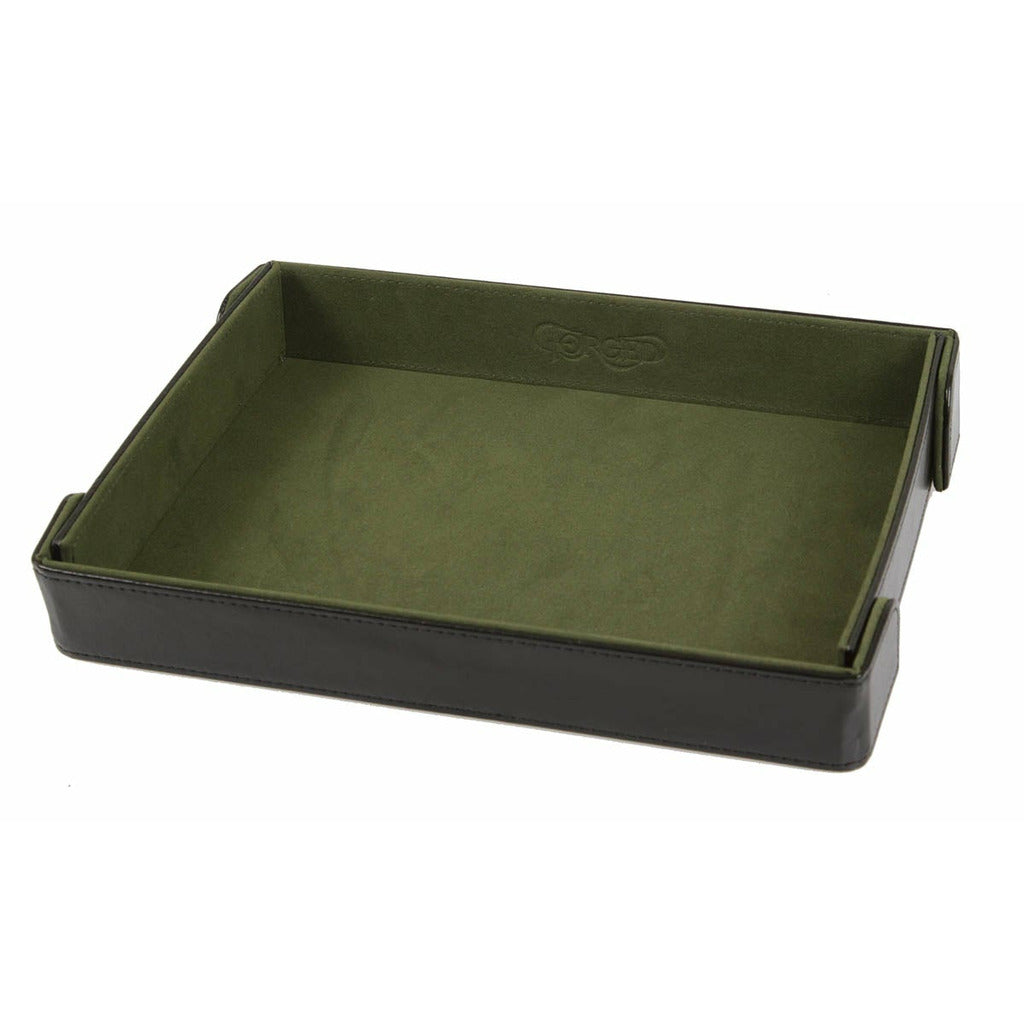
The pattern is simple and proven. A fold-flat snap or magnetic tray is a square or hexagon of PU 'leather-lite' or vegan leather wrapped around a stiff base, with a felt or velvet floor, that collapses flat for your bag and pops up with snaps or hidden magnets. The Easy Roller Collapsible Snap Tray (about $11–$15) is the archetype: leather-lite outside, a leather-lite/felt floor, a ~5.5-inch rolling surface, and it lays nearly flat — owners toss it in a backpack or slide it between books without a thought. Forged Gaming's Rectangle Magnetic Folding Tray ($17.99) does it one better for travel: faux black leather, felt lining, a roomy 9.75-by-7.25-inch floor and a deep 1.5-inch wall, held by hidden corner magnets that snap shut and unfold flat. Norse Foundry's Magnetic Rectangle Tray of Folding ($20) trades size for a plush velvet floor and a featherweight 5-ounce build — the nicest surface of the budget bunch. And the cheapest entry of all, Forged Gaming's Dice Goblin Hexagon Snap Tray ($11.99), proves you can own a real tray for less than lunch.
Now the candor, because this tier earns it. Cheap faux leather fails in three predictable ways. First, the floor: when the rolling surface itself is thin PU glued to card (rather than a felt or velvet inlay), it's hard, loud, and the worst offenders warp or bubble after humidity and use. Second, the snaps: button-snap corners loosen over a year of folding, and a tray that won't stay snapped is a tray with no walls. Magnetic-corner designs (Forged, Norse Foundry) age far better than button snaps — pay the extra few dollars for magnets. Third, the base: the flimsiest no-name squares use a base so thin the whole tray flexes and won't sit flat, so dice roll toward the low corner. The fix is to buy from a named maker (Easy Roller, Forged, Norse Foundry) rather than the cheapest unbranded listing — the named trays cost a dollar or two more and last years longer.
The lesson of the budget tier: spend the smallest amount on the named tray, not the cheapest one.
The humble tool, chosen well, outlasts the flashy one chosen carelessly.
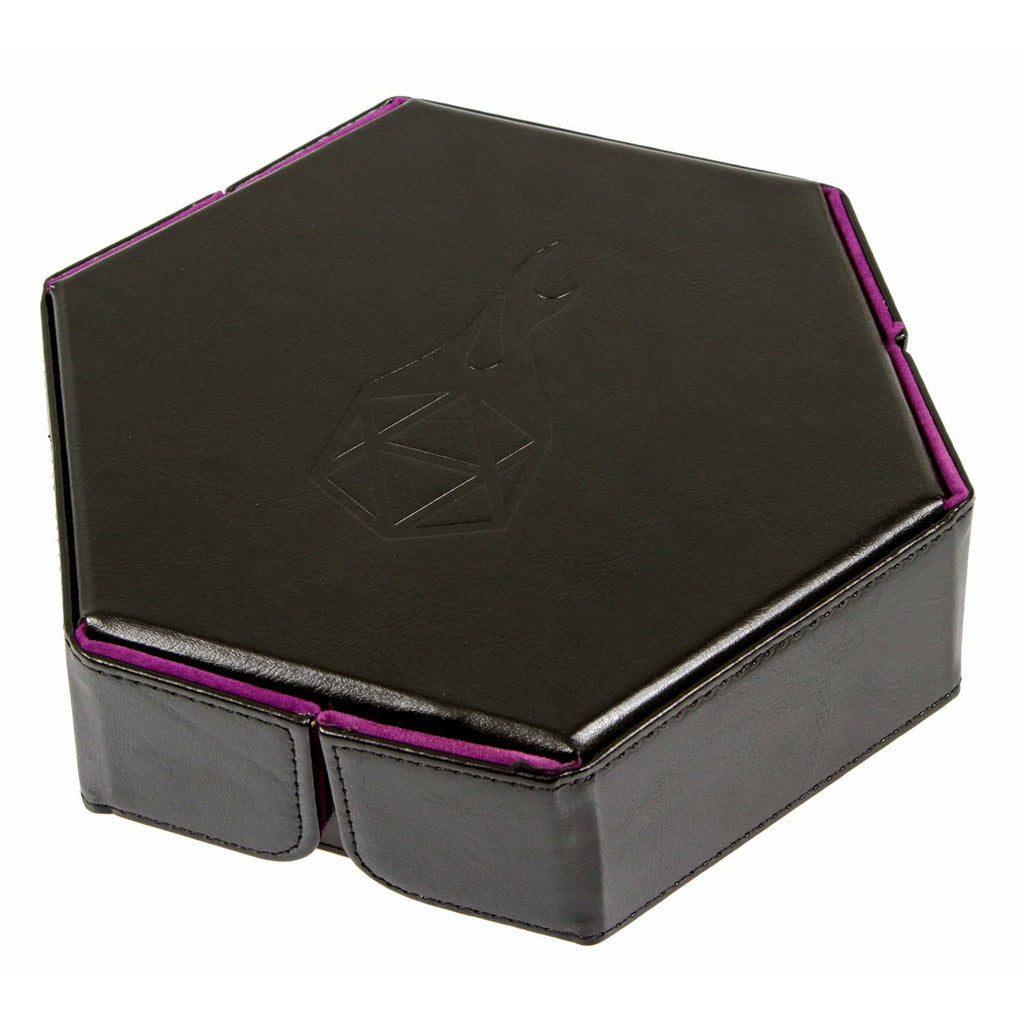
Buy the named budget tray, not the cheapest one — magnets over snaps, felt-inlay over glued PU.
Which tray is quietest, and which is best for big board-game rolls?
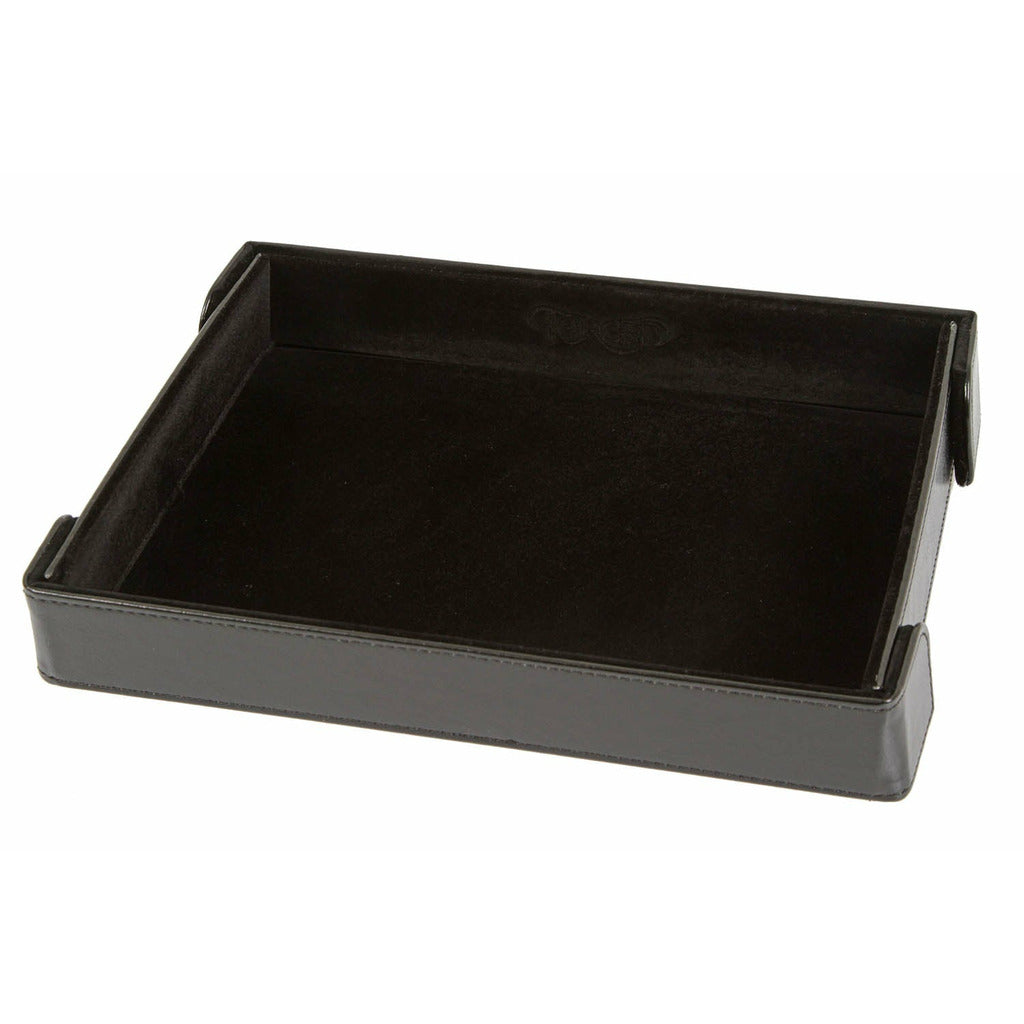
Two specialist needs deserve their own answer: the player who must roll silently (late-night sessions, sleeping housemates, a streamed game), and the player who must roll a fistful at once (Warhammer saves, Yahtzee-scale handfuls, a crowded RPG table).
For the quietest roll, the physics are simple: maximum soft mass between die and hard surface, and walls high enough that dice die against padding instead of pinging off a rim. The winner is oiled genuine leather over solid wood — the Wyrmwood and Lathe and Quill trays turn a metal die's sharp crack into the muffled 'thump… clunk' owners describe, because thick leather over dense hardwood absorbs the strike instead of ringing with it. If you can't spend that, dense velvet is the budget quiet champion — it out-dampens felt and far out-dampens any bare or PU surface, which is why Norse Foundry's velvet fold-flat is the quiet pick under $25. Two things to avoid if silence matters: bare acrylic or metal trays (they amplify and ring — metal is the loudest surface in the category), and thin PU 'leather-lite' floors (hard and sharp-sounding). A note on silicone: a fully flexible silicone surface is genuinely quiet and indestructible, but a true silicone rolling tray from a reputable TTRPG maker barely exists — silicone shows up mostly as ice molds and dice cases, so treat 'silicone tray' as a niche curiosity, not a category you can reliably shop. For real silence, leather first, dense velvet second.
For big board-game rolls, you need a wide floor, walls that contain a scattering throw, and a surface that's easy to wipe between snack breaks. The shape to want is a large reversible neoprene-mat tray — Forged Gaming's reversible line ($21.99–$24.99) gives you a broad arena with a removable, washable, double-sided neoprene mat (plain for play, illustrated for show), and the rubbery surface grips a tumbling fistful so dice stop fast instead of caroming off the walls. For the biggest handfuls, the fold-flat rectangles scale up too: Forged's 9.75-by-7.25-inch magnetic tray and the various 10-by-10-inch velvet-floored folding trays give a whole table room to throw. The one shape to avoid for big rolls is the 5.5-inch personal hex tray — lovely for one roller's d20, hopelessly small for a Warhammer armor save.
Match the floor to the failure you fear most — noise, or escape.
Know the roll you actually make, and the right arena names itself.
Leather for silence, neoprene for the fistful — and never roll a Warhammer save in a 5.5-inch hex.
Should I get a 2-in-1 tray with storage — or keep tray and storage separate?

The all-in-one tray is the most tempting object in the category and the one that most rewards a clear head. The pitch is irresistible: one box that is a rolling tray, a storage vault for your dice, and — in the 3-in-1 versions — a collapsible dice tower too, the whole thing folding shut with a magnetic lid to live in your bag. Forged Gaming's Citadel is the well-built archetype (about $30–$45): PU leather and soft felt, a 5-by-7.5-inch battle pit two inches deep, staging slots that hold four sets of dice while you roll, a lid that flips to become a second tray for the player across from you, and a fold-flat tower that nests inside for travel. Forged Gaming's 'The Keep' ($29.99) is the compact magnetic tower-and-tray for the same instinct in a smaller body, and budget 2-in-1s like the Dragon Slayer (PU leather, red felt and velvet liner, folds flat) crowd the same shelf.
The case for the all-in-one is genuine and not to be sneered at: it is the single best object for the traveling player. If you carry your dice to a shop, a friend's, a convention — one zip-shut box that rolls, stores, and even towers, and stows in a backpack pocket, is a real and elegant solution. For the player who wants exactly one purchase to cover everything, this is it.
The case against is the quiet truth of all combo tools: a thing that does three jobs rarely does any one of them as well as a dedicated tool. The rolling pit in a storage combo is usually smaller than a standalone tray of the same footprint, because the walls steal volume for the storage drawers — fine for one roller's d20, cramped for a fistful. The integrated tower is typically a short, lightweight folding affair that randomizes less dramatically than a tall dedicated tower. And the storage compartments hold a set or two, not a collection. You are buying convenience and compactness, and paying for it in a smaller arena and a humbler tower.
So the honest split: if you travel with your dice, the 2-in-1 (Citadel, The Keep) is a genuinely smart single purchase — buy it and be happy. If you play mostly at one home table, you will be better served — and usually for similar total money — by a proper standalone tray plus a separate dice box or vault, each doing its one job fully. Convenience for the road; dedicated tools for the home.
The blade that also opens bottles cuts a little worse — buy the multi-tool when you must travel light, and the true tool when you needn't.
A tool that does three jobs rarely masters one. Buy the 2-in-1 to travel; buy dedicated tools to stay home.
What experienced tables keep reporting
Recurring owner patterns, synthesized in Puzzlewick's words. Follow each evidence trail to read the original discussion.
It's stupid expensive for what it was — a dice tray that cost me over $150... any old cigar box or wooden board would do just as well.
Read the evidence: Gnome Stew — Wyrmwood Dice Tray Review (a 5+ year owner's candid verdict)
The wood and leather on my dice tray has lasted a long time without any maintenance (more than 5 years so far!)... dice roll with a satisfying thump, with a subtle undertone 'clunk' sound.
Dice rolling trays are totally optional. But if you want to level up your tabletop gaming sessions, they're worthwhile! ... [I became] a dice tray convert.
Read the evidence: whatNerd — Are Dice Trays Worth It? The 5 Best Dice Rolling Trays
Velvet insets keep rolls quiet and controlled... Felt is prone to stains and wear, while velvet/wood provides warm, natural texture and excellent acoustic balance.
Read the evidence: BoxKing — Best Dice Trays, Boxes, and Towers for DnD
Hex trays are truly one of the best cheap dice trays for D&D, and they're affordable enough that you can buy a handful to take with you to every session.
Read the evidence: Tangible Day — Best Dice Tray Material to Dampen Dice Bounce and Noise
Felt material feels better for play than PU leather... deeper tray walls prevent dice from escaping while reducing noise transmission.
Read the evidence: Tangible Day — 13 Best Dice Trays for Tabletop Games
The picks
Some links below are affiliate links — as an Amazon Associate, Puzzlewick earns from qualifying purchases, at no extra cost to you. It never changes a pick.
 4 photos
 Rectangle Magnetic Folding Dice Tray
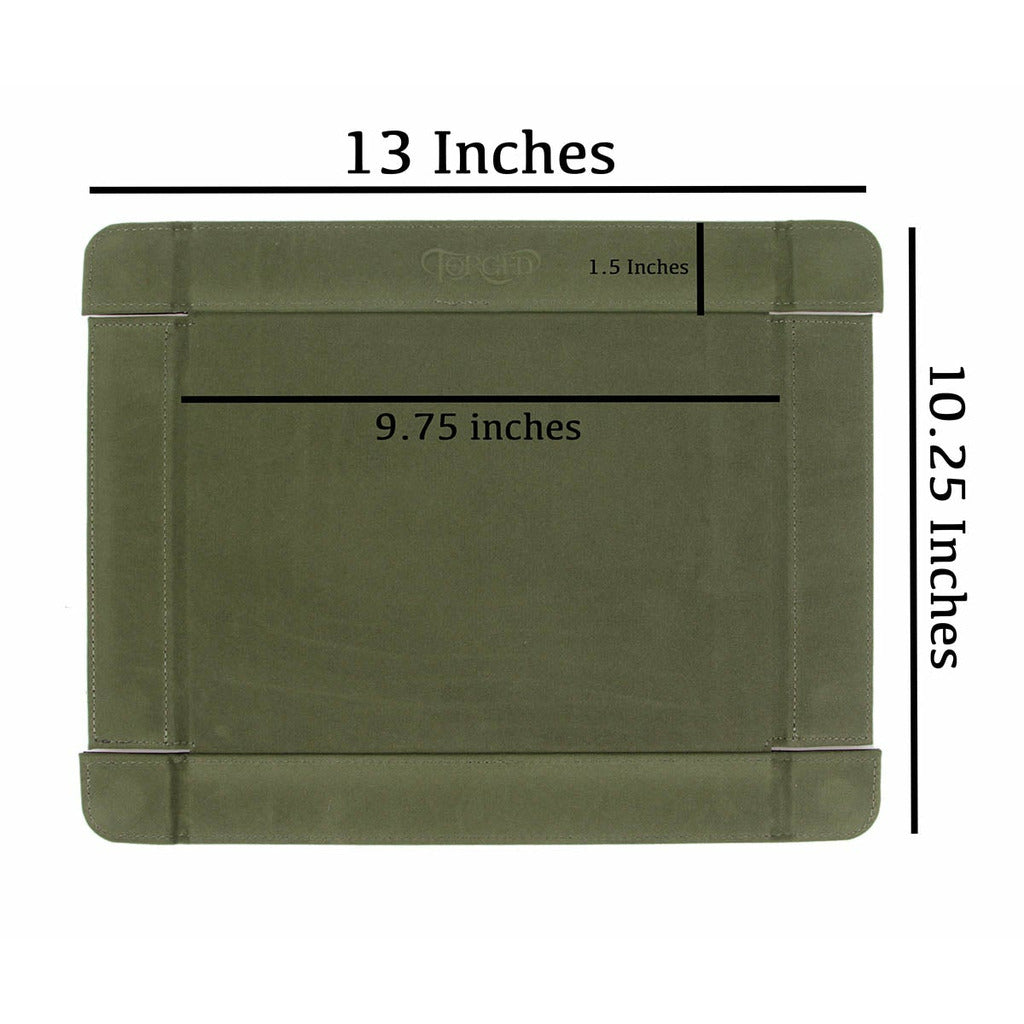
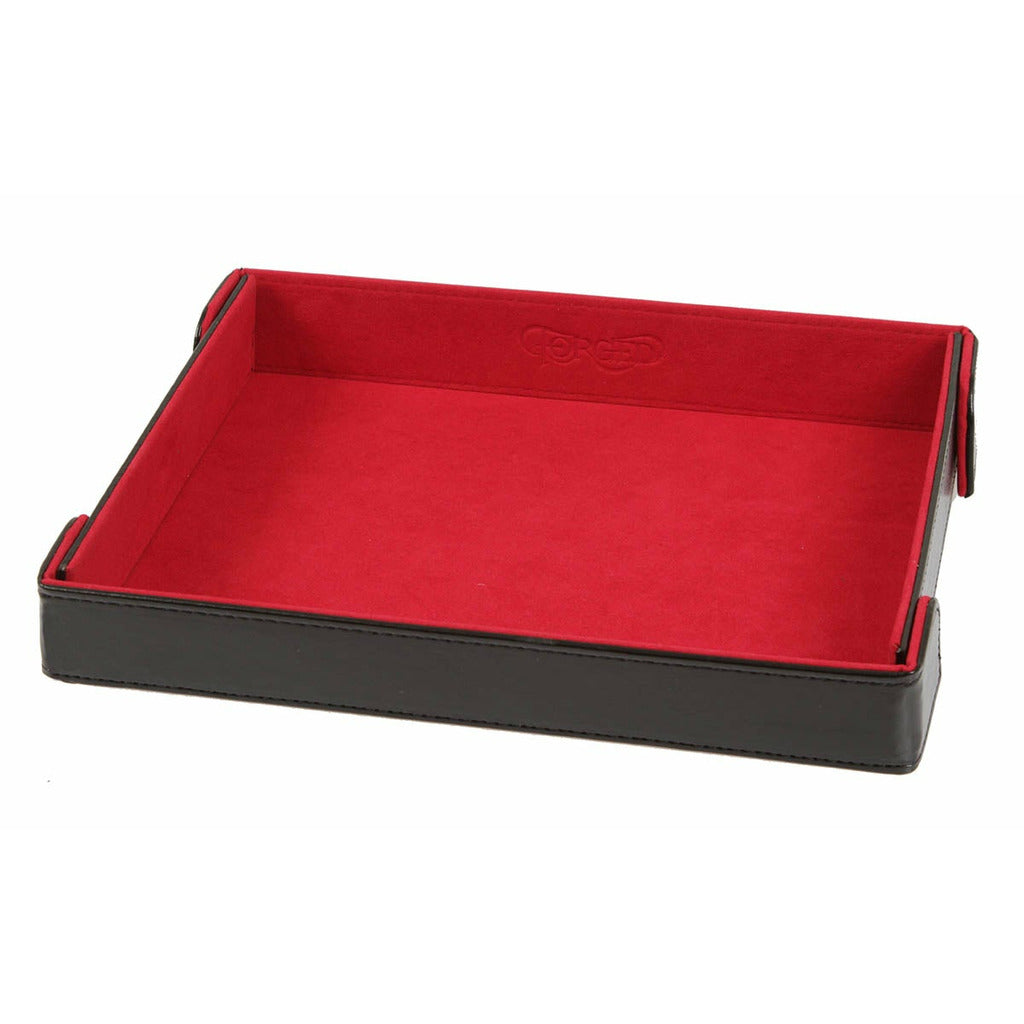
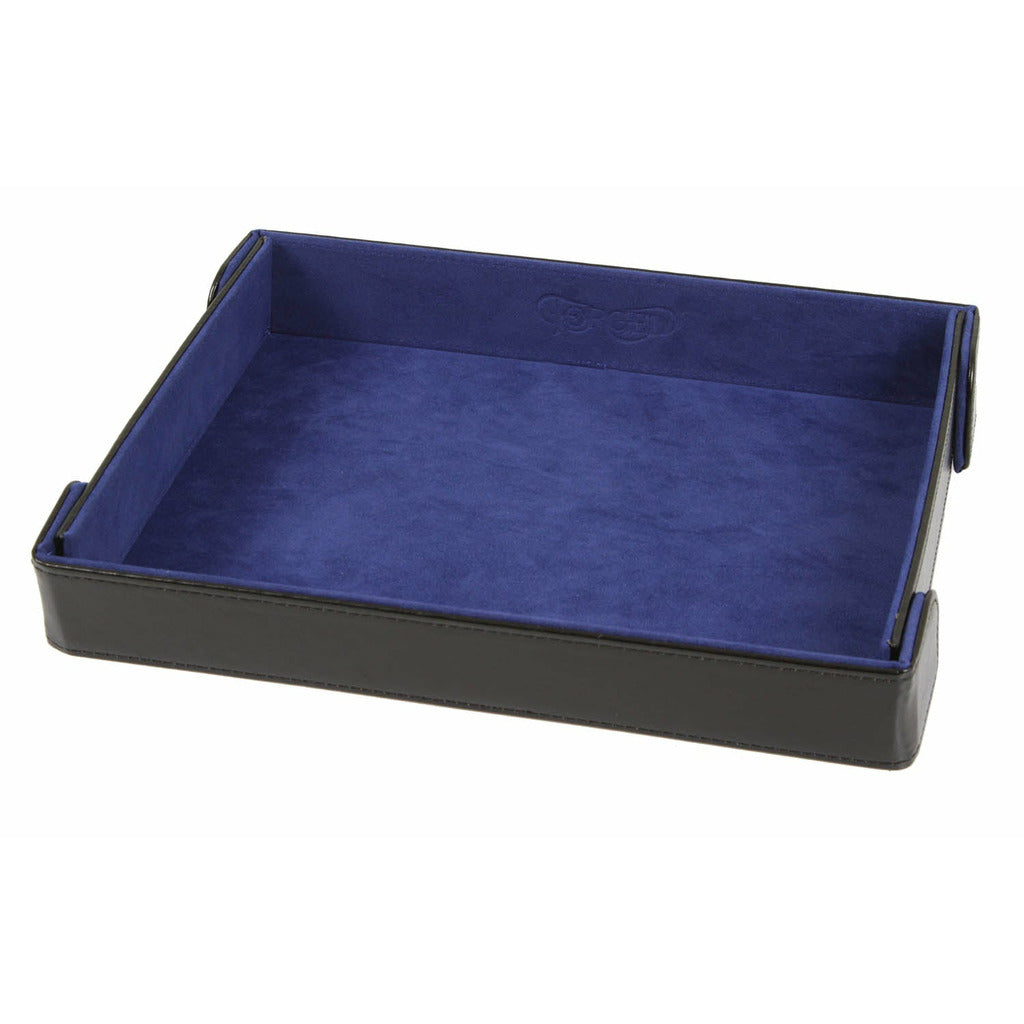
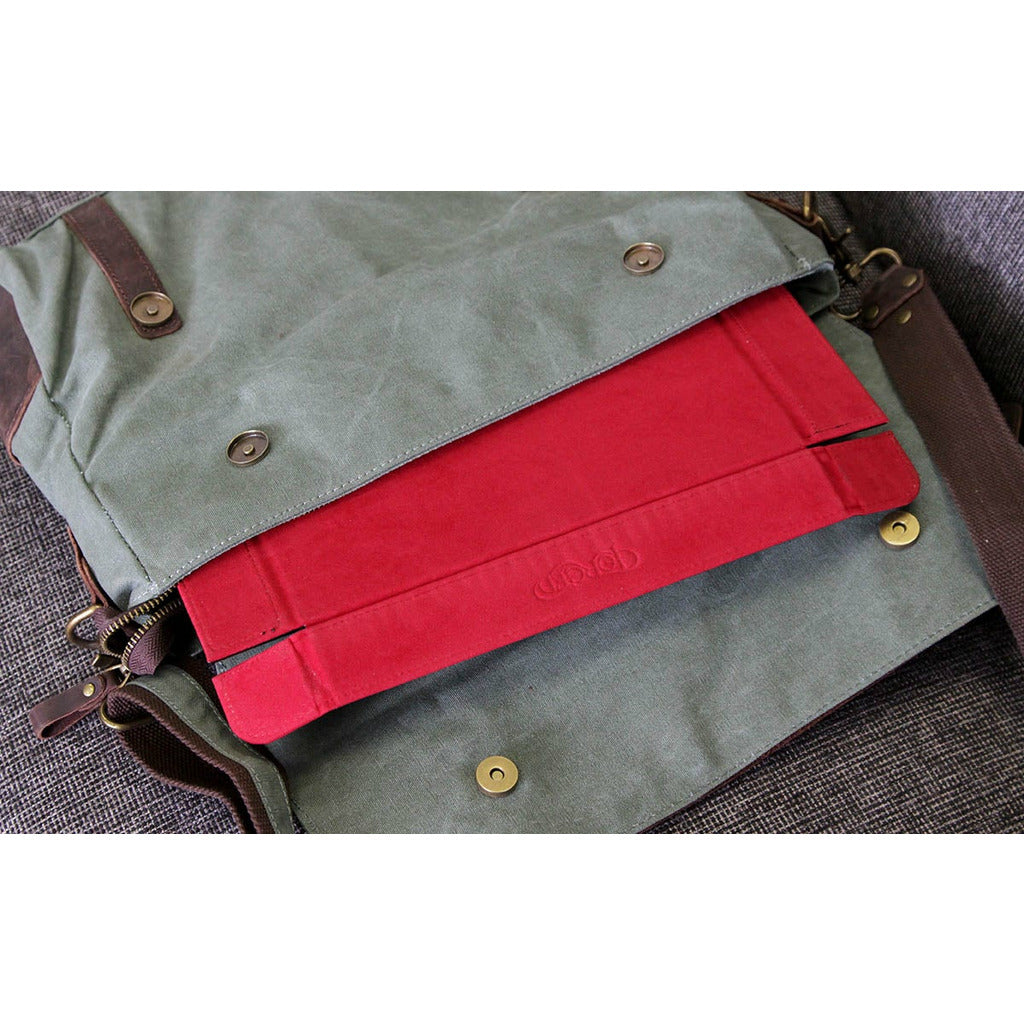
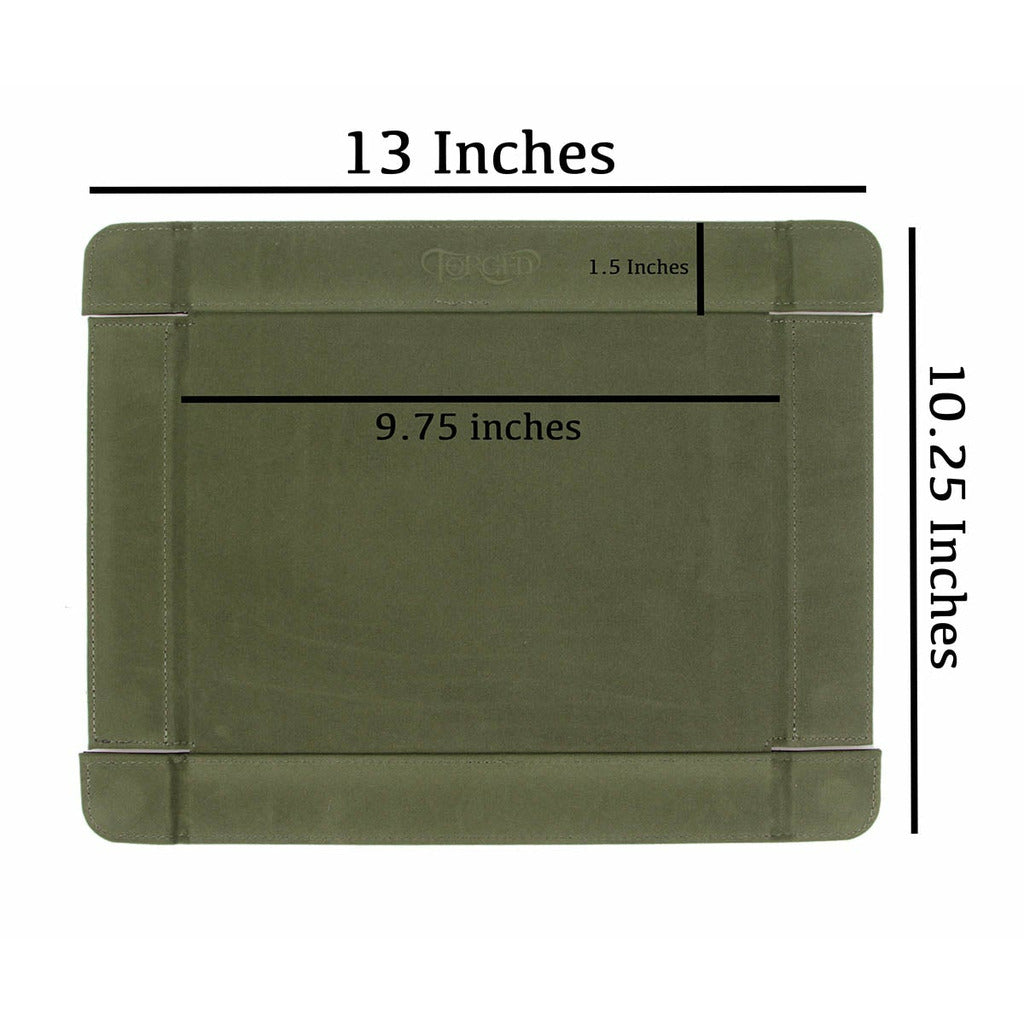
The travel tray to beat under $20. Faux black leather over a felt lining, with a roomy 9.75-by-7.25-inch floor and a deep 1.5-inch wall — and crucially, hidden corner magnets instead of button snaps, so it snaps shut for the bag and unfolds flat without the fatigue that loosens snap trays. At $17.99 in five colors it's bigger than most personal trays yet folds smaller, making it the rare portable that's also big enough to share. The felt floor isn't as quiet as velvet or leather, but for a fold-flat tray you'll throw in a backpack, this is the smart buy.
- Hidden magnets, not snaps — folds flat and stays shut, ages well
- Generous 9.75×7.25-inch floor with a deep 1.5-inch wall
- $17.99, five colors
- Big enough to share, small enough to pack
- Felt floor dampens less than velvet or leather
- Faux-leather exterior is workmanlike, not heirloom
- Lightweight build can shift on a slick table
 2 photos
 Magnetic Rectangle Tray of Folding
The nicest surface in the budget tier. Vegan-leather exterior over a plush velvet interior — and velvet out-dampens the felt floors of its rivals, making this the quiet pick under $25. At a featherweight 5 ounces and a compact 7.75-by-4.75-inch footprint with a 1.5-inch wall, it's an elegant personal tray that folds flat and disappears into a bag. It's deliberately small, so it's a one-roller tray rather than a table arena, and at $20 you pay a couple dollars more than the felt folders. For a single player who values a hushed, refined roll, that's money well spent.
- Plush velvet floor — quieter than felt rivals
- Featherweight 5 oz, folds flat
- Magnetic fold, vegan-leather exterior, multiple interior colors
- $20 — premium surface at a budget price
- Small 7.75×4.75-inch footprint — one roller only
- Not sized for fistful or board-game rolls
- A few dollars more than basic felt folders
 5 photos
 Reversible Neoprene Dice Tray (Dragon Slayer / Outlands / Realm of Mist, etc.)
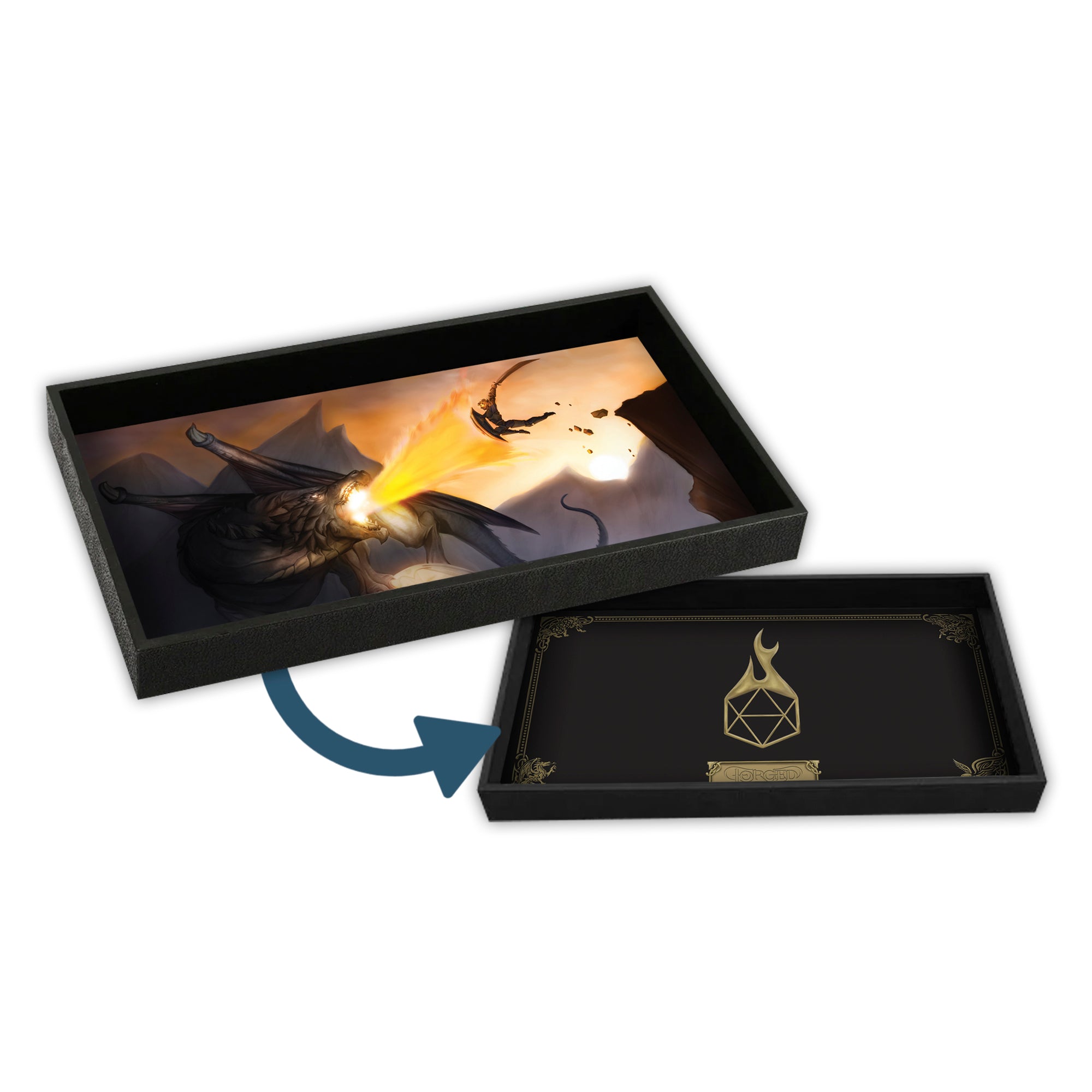
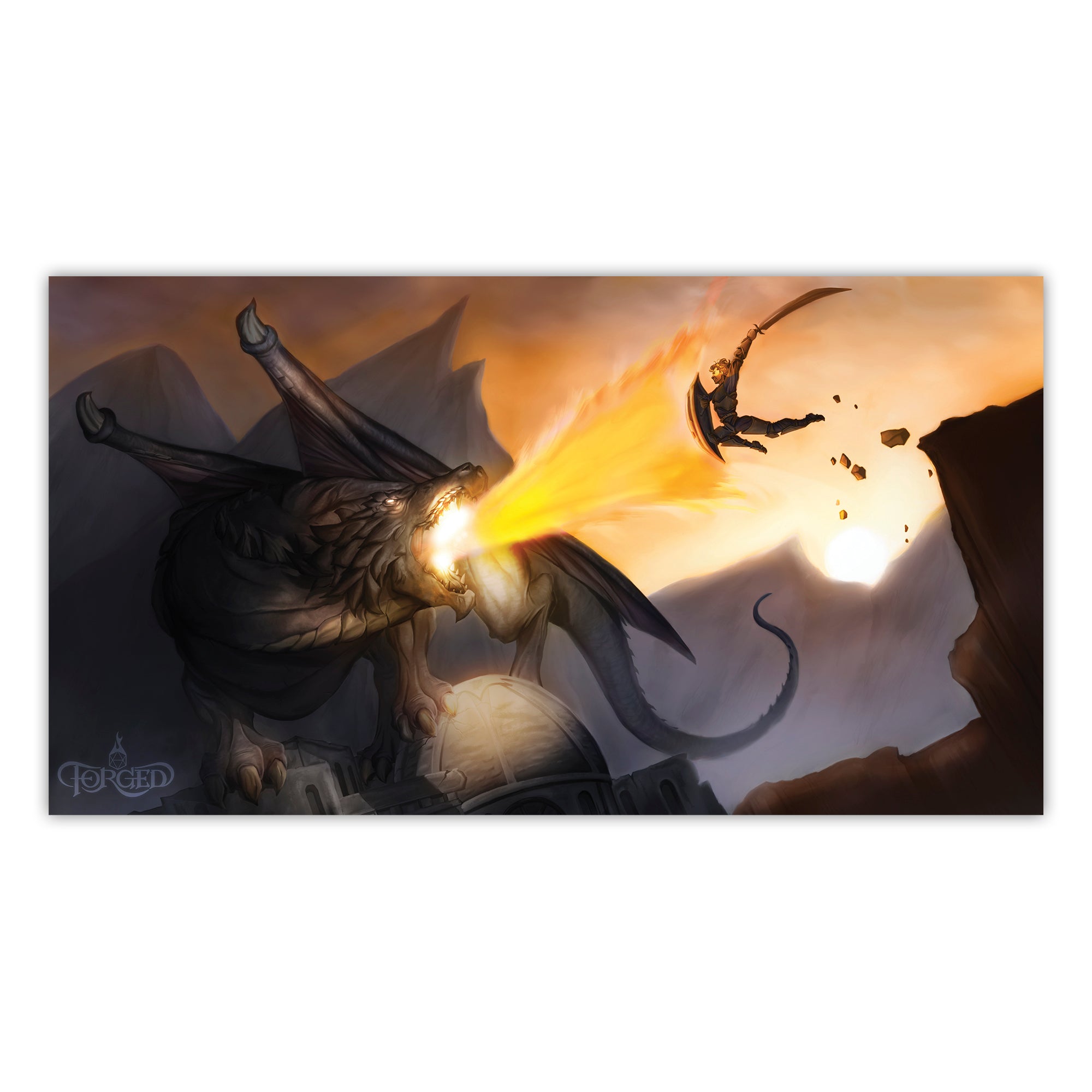
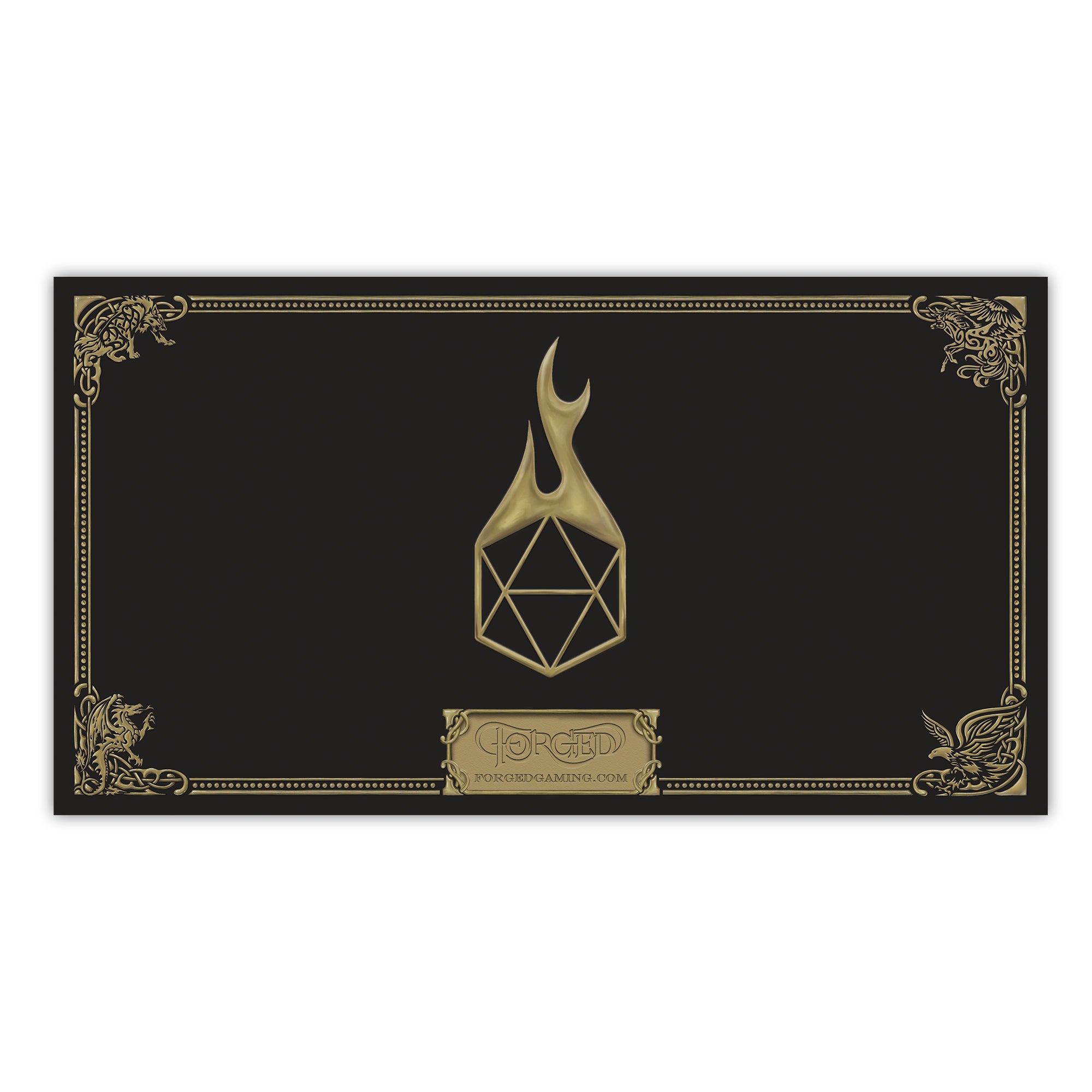
When you throw a fistful — Warhammer saves, a crowded RPG table — you want a wide floor and a grippy, washable surface, and the reversible neoprene line delivers exactly that at $24.99. The double-sided neoprene mat lifts out to wash when the snacks arrive, with a plain face for honest rolls and an illustrated face for the photo. The rubbery surface grips a tumbling handful so dice stop fast instead of caroming off the walls. Several art themes (Dragon Slayer, The Outlands, Realm of Mist, Temple of Cthulhu, and more) at the same price. The least romantic surface here, and the most forgiving.
- Removable, washable, double-sided neoprene mat
- Grippy surface stops a tumbling fistful fast
- Wide floor suits board games and crowded tables
- $24.99, many art themes; plain side for serious rolls
- Neoprene lacks the warmth/feel of leather or velvet
- Bulkier than a fold-flat personal tray
- Printed art can wear with heavy use
 3 photos
 Citadel Dice Tray and Tower (3-in-1)
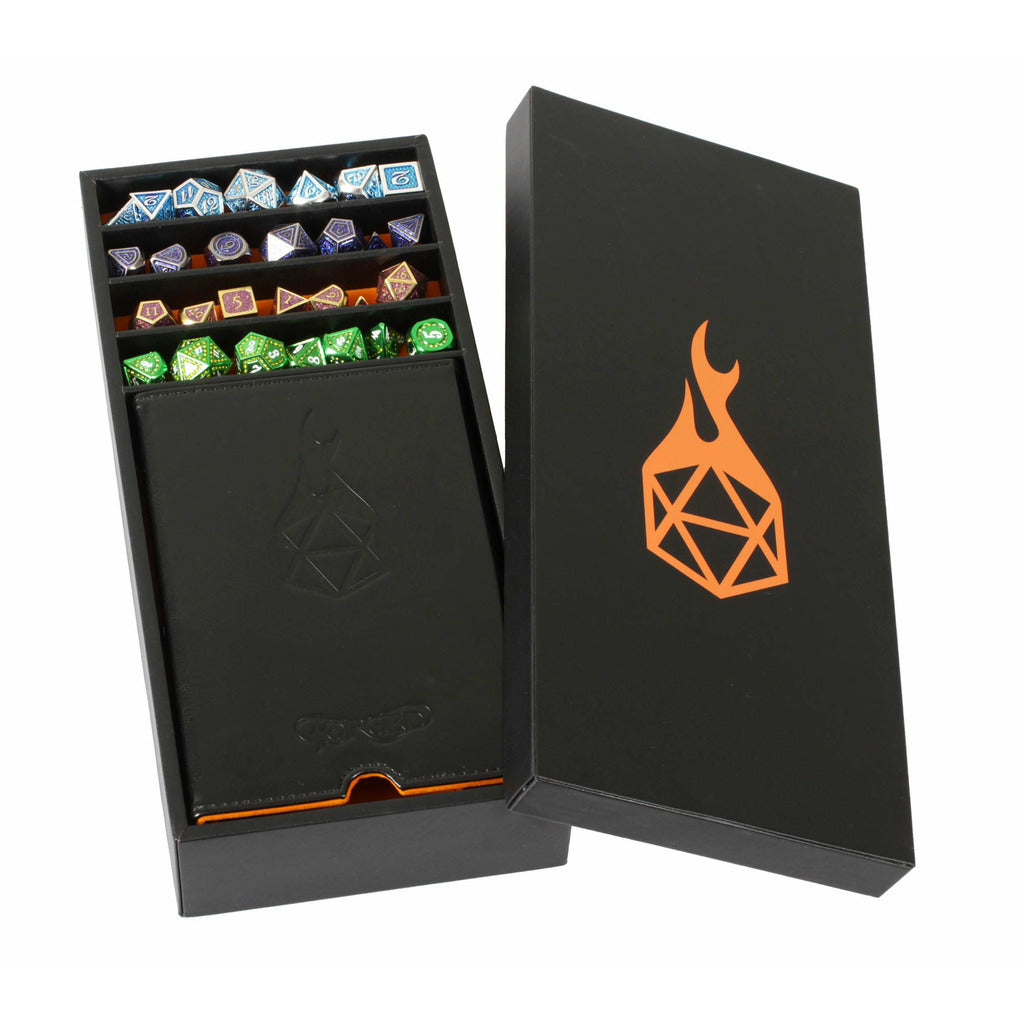
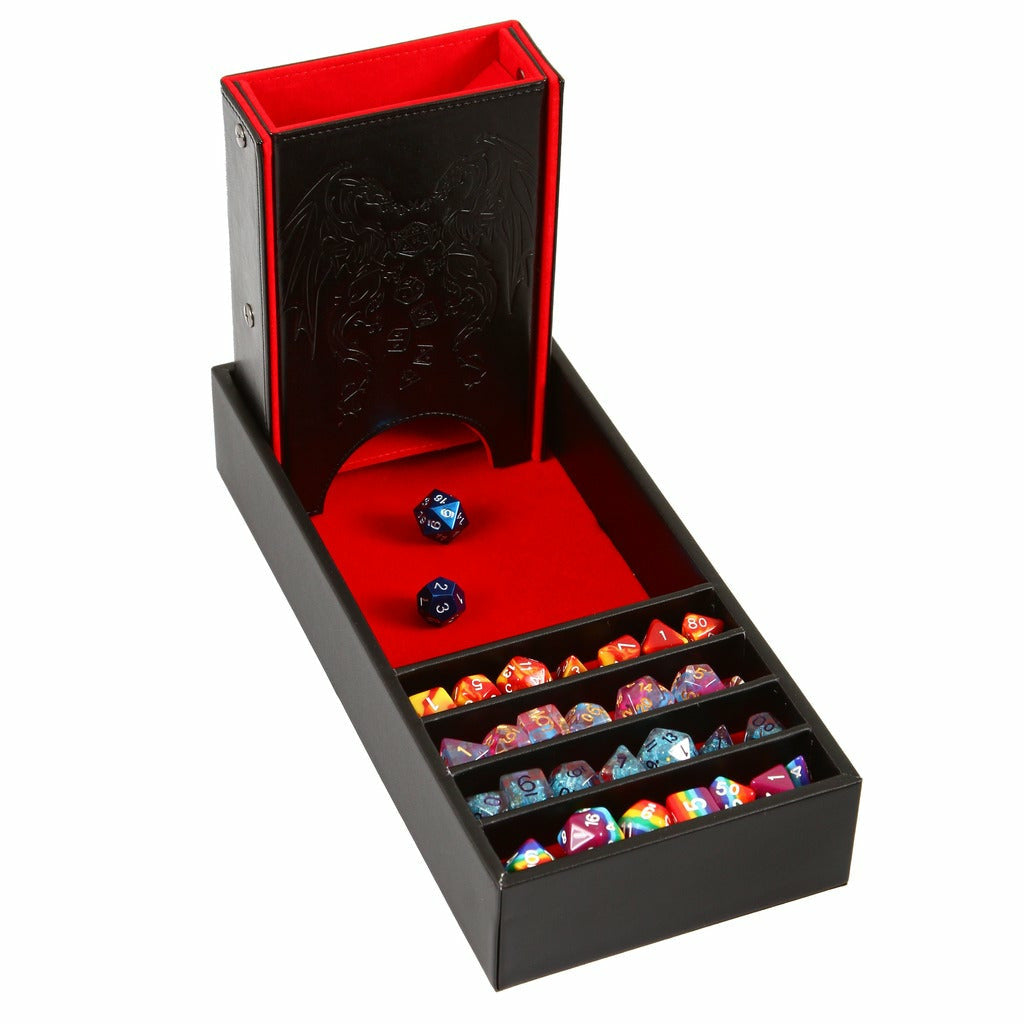
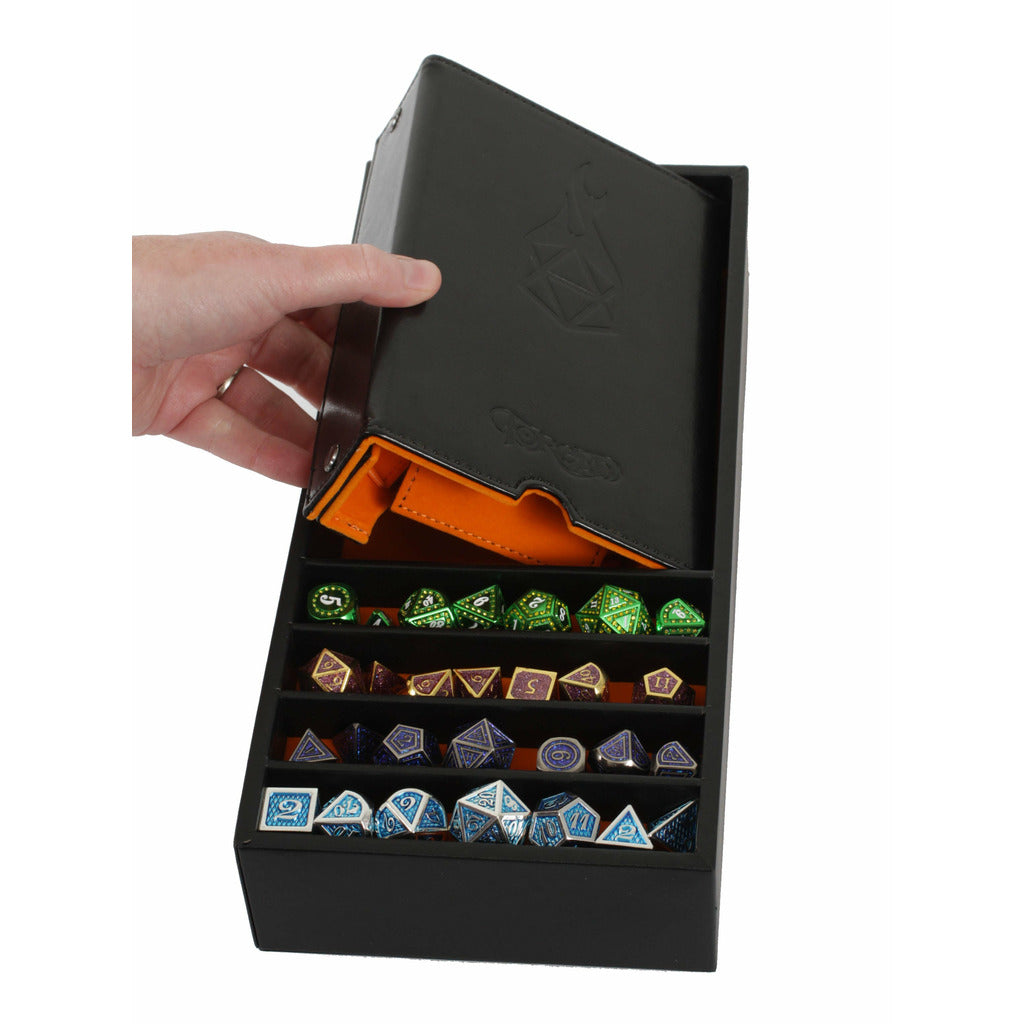
The all-in-one done right, around $30–$45. PU leather and soft felt wrap a 5-by-7.5-inch battle pit two inches deep, with staging slots that hold four sets of dice while you roll. The lid flips over to become a second tray for the player across from you, and a collapsible dice tower nests flat inside for travel — the whole thing folds to about 13 by 6 by 2.5 inches and zips into a bag. It's the single smartest object for the player who carries dice to shops and conventions. Just know the rolling pit is smaller than a standalone tray's, and the folding tower randomizes more modestly than a tall dedicated one — the trade every combo makes.
- Genuine three-in-one: tray, dice storage, and a nesting fold-flat tower
- Lid flips to a second rolling surface for a second player
- Staging slots hold four dice sets; folds compact for travel
- Excellent single purchase for the traveling player
- Rolling pit (5×7.5 in) is smaller than a dedicated tray of similar size
- Folding tower randomizes less than a tall standalone tower
- Storage holds a set or two, not a collection
Mini Personal Size Hexagon Dice Tray (5.5" x 7")
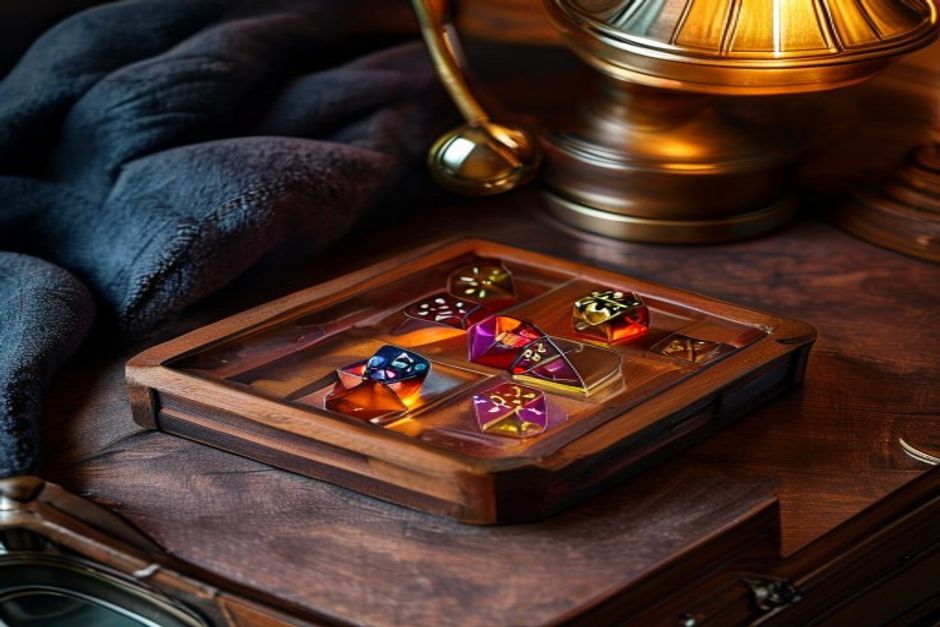
A handsome, durable personal tray for the player who wants something rigid and characterful on the table rather than a floppy fold-flat. C4Labs builds these in Tacoma from laser-cut wood, colored acrylic, and stainless-steel hardware, with a soft felt or velvet floor and dozens of designs; the mini hexagon sits in C4Labs' under-$30 range (exact price varies by design and finish). It's a one-roller tray — the 5.5-by-7-inch floor is too small for fistfuls — and the rigid body won't pack down like a leather folder. But as a permanent, good-looking home for a single player's d20, with real materials and a quiet lined floor, it's a charming step up from PU squares.
- Rigid wood/acrylic/steel build — sits proudly on the table
- Soft felt/velvet floor dampens well
- Dozens of designs; made in the USA
- Typically under $30
- Small 5.5×7-inch floor — personal use, not fistfuls
- Rigid, so it doesn't fold flat for travel
- Exact price varies by design/finish
At a glance
| tray | maker | material | price | best for |
|---|---|---|---|---|
| Tabletop Dice Tray | Wyrmwood | Solid hardwood + oiled genuine leather | ~$105–$350 | Best overall / heirloom / quietest |
| Collapsible Snap Dice Tray | Easy Roller Dice | Leather-lite, fold-flat (snaps) | ~$11–$15 | Best budget starter |
| Large Dice Tray | Lathe and Quill | Hardwood + genuine leather inlay | $65 | Best leather heirloom under $100 |
| Rectangle Magnetic Folding Tray | Forged Gaming | Faux leather + felt, magnetic fold | $17.99 | Best portable / fold-flat |
| Magnetic Rectangle Tray of Folding | Norse Foundry | Vegan leather + velvet, magnetic fold | $20 | Best quiet roll on a budget |
| Reversible Neoprene Tray | Forged Gaming | Removable double-sided neoprene mat | $24.99 | Best for big / board-game rolls |
| Citadel Dice Tray & Tower (3-in-1) | Forged Gaming | PU leather + felt; tray/storage/tower | ~$30–$45 | Best 2-in-1 with storage (travel) |
| Mini Hexagon Dice Tray (5.5x7) | C4Labs | Wood + acrylic + steel, felt/velvet floor | ~under $30 | Best rigid personal tray |
| Dungeoneer Fold-Up Rolling Tray | Elderwood Academy | Leather, magnetic fold (fits A5 journals) | ~varies | Best for journaling players |
| Custom Rolling Tray | Dog Might Games | Premium hardwood + leather, made-to-order | ~$100+ | Best custom artisan splurge |
Questions, answered
What is a dice tray for?
A dice tray is a walled, soft-floored arena that catches your dice when you roll. It keeps dice from bouncing off the table and getting lost, protects your tabletop from scratches (especially from heavy metal dice), and dampens the clatter of a roll. It's a small courtesy to your table, your dice, and the people rolling beside you — and it makes rolls faster and tidier to read.
What's the difference between a dice tray and a dice tower?
A dice tower drops dice through internal baffles so they tumble and scatter before landing — its job is dramatic randomization. A dice tray doesn't touch the roll at all; you throw directly onto its padded floor and the walls catch the dice. Trays are faster to use, flatter to pack, and easier to share around a table; towers add theater and a feeling of fairness. Many players keep both. (Puzzlewick has a separate dice-towers guide for the cascade crowd.)
What is the best dice tray overall?
Wyrmwood's Tabletop Dice Tray is the overall standard — solid hardwood with an oiled genuine-leather floor, a one-inch lip on all sides, and a built-in dice-vault slot, sized for two to four players and documented to last years. The honest caveat is price ($105–$350): you're paying for an heirloom object, not a better catch. If that's too steep, Lathe and Quill's $65 wood-and-leather tray delivers the same class of materials for far less.
What's the best budget dice tray?
The Easy Roller Collapsible Snap Tray (about $11–$15) is the classic budget pick — leather-lite, folds flat, rolls clean for one player. Forged Gaming's Dice Goblin Hexagon Snap Tray ($11.99) is even cheaper. The key rule in the budget tier: buy the named maker, not the dollar-cheaper unbranded square, whose floor warps and snaps loosen within a year.
What's the best leather dice tray?
For genuine leather without a three-figure price, Lathe and Quill's Large Dice Tray ($65) pairs real hardwood with a genuine-leather inlay — heirloom feel at a third of the premium tier. If budget is no object, Wyrmwood's oiled-leather-over-hardwood tray is the top of the category. Both need occasional leather conditioning, which is the one real maintenance cost in dice trays.
What's the best portable or fold-flat dice tray?
Forged Gaming's Rectangle Magnetic Folding Tray ($17.99) is the best fold-flat for travel: a roomy 9.75x7.25-inch floor with a deep 1.5-inch wall, held by hidden corner magnets that fold flat and stay shut better than button snaps. For the lightest, quietest fold-flat, Norse Foundry's velvet Magnetic Rectangle Tray of Folding ($20) weighs just 5 ounces. Always prefer magnetic-fold over snap-fold for longevity.
What's the best rolling surface material?
Felt is the warm, cheap starter but stains and mats over time. Velvet is denser, quieter, and more durable — the connoisseur's everyday choice. Neoprene (mouse-pad fabric) is grippy, waterproof, and washable, ideal for board games and snacky tables. Genuine oiled leather is the heirloom surface — the quietest and most satisfying feel, but it must be conditioned. Avoid thin PU 'leather-lite' and bare wood/acrylic as the actual rolling floor: they're hard and loud.
What's the best quiet dice tray for late-night rolling?
For maximum silence, oiled genuine leather over solid hardwood (Wyrmwood, Lathe and Quill) turns a metal die's crack into a muffled thump. On a budget, dense velvet is the quiet champion — Norse Foundry's velvet fold-flat ($20) is the best hushed pick under $25. Avoid bare acrylic and metal trays, which ring and amplify, and thin PU floors, which sound sharp. In a pinch, drop a spare neoprene or felt mat into the tray bottom for extra dampening.
What's the best dice tray with storage?
Forged Gaming's Citadel (about $30–$45) is the best all-in-one: a rolling pit, dice storage slots for four sets, and a fold-flat tower that nests inside, with a lid that flips to a second tray — and it all packs into a bag. It's ideal for traveling players. Just note the rolling pit is smaller than a standalone tray's, and the folding tower randomizes more modestly. If you play at one home table, a separate tray plus a dice box usually serves better for similar money.
Do I actually need a dice tray?
Strictly, no — dice roll fine on a table. But a tray earns its place fast if you roll often: it stops the lost-under-the-couch nat-20, spares your table from metal-dice scratches, quiets the clatter, and keeps a shared table tidy. Many skeptics become converts after one session with a good tray. For the price of a budget fold-flat (~$12), it's a low-risk upgrade — and bare-minimum, it protects nice dice and nice furniture.
What's the best dice tray for big board-game rolls?
You want a wide floor and a grippy, washable surface. Forged Gaming's reversible neoprene trays ($21.99–$24.99) are ideal — the rubbery mat stops a tumbling fistful fast and lifts out to wash. For the very biggest handfuls (Warhammer saves), a large fold-flat rectangle or a 10x10-inch velvet folding tray gives a whole table room. Avoid 5.5-inch personal hex trays for big rolls — they're far too small.
Where's the best place to buy a dice tray?
Buy direct from the maker when you can — Wyrmwood, Forged Gaming, Norse Foundry, Easy Roller Dice, C4Labs, Lathe and Quill, Elderwood Academy, and Dog Might Games all sell from their own sites, and the artisan trays (Lathe and Quill, Dog Might) are made to order there. Amazon carries the Forged Dice Co. trays and many budget folders. For premium wood (Wyrmwood, Dog Might), gaming conventions often offer the best in-person discounts. Puzzlewick is a fan library, not a store — we point you to the makers.
Kenji's verdict
Choose by the roller you are. For best overall, the Wyrmwood Tabletop Dice Tray ($105–$350) is the heirloom standard and the quietest roll in the category — buy it for love of the object, knowing a $20 tray catches dice just as well. For best budget, the Easy Roller Collapsible Snap Tray (~$11–$15) folds flat and rolls clean for the price of two coffees; just buy the named maker, not the cheapest unbranded square. For best leather without three figures, Lathe and Quill's Large Dice Tray ($65) is the sweet spot of the whole guide — real hardwood, genuine-leather inlay, a third of the premium price. For best portable, Forged Gaming's Rectangle Magnetic Folding Tray ($17.99) wins on its hidden magnets, which outlast snaps. And if you must travel light with everything, Forged's Citadel 3-in-1 carries tray, storage, and tower in one zip-shut box. The tower performs the roll; the tray simply catches it. Pick the surface you'll respect — felt to begin, velvet to keep, leather to inherit — and the tray will quiet a thousand rolls to come.
Research ledger 23 sources · reviewed 2026-07-17
Specifications, rules, current product information, community experience, and contrary evidence were checked against the sources below. Commercial links are kept separate from editorial evidence.
- wyrmwoodgaming.comwyrmwoodgaming.com/products/the-tabletop-dice-tray
- wyrmwoodgaming.comwyrmwoodgaming.com/product-category/dice-rolling-and-storage
- gnomestew.comgnomestew.com/wyrmwood-dice-tray-review-the-coolest-most-expensive-dice-tray-on-earth
- easyrollerdice.comeasyrollerdice.com/products/collapsible-snap-dice-tray-black-interior
- easyrollerdice.comeasyrollerdice.com/collections/foldable-collapsible-dice-trays
- nobleknight.comnobleknight.com/P/2148193311/Collapsible-Snap-Dice-Tray---Black
- forgedgaming.comforgedgaming.com/products/rectangle-magnetic-folding-dice-tray
- forgedgaming.comforgedgaming.com/collections/dice-trays
- forgedgaming.comforgedgaming.com/products/scroll-dice-tray-and-rolling-mat-with-zippered-dice-holder-storage-pouch-holds-up-to-14-metal-or-plastic-polyhedral-dice
- amazon.comamazon.com/dp/B08CMB7VZK?tag=puzzlewick-20
- amazon.comamazon.com/dp/B091W7BJSC?tag=puzzlewick-20
- norsefoundry.comnorsefoundry.com/products/rectangle-dice-trays-green
- norsefoundry.comnorsefoundry.com/collections/trays-of-holding
- latheandquill.comlatheandquill.com/game-accessories/p/large-dice-trays
- c4labs.comc4labs.com/dice_trays
- c4labs.comc4labs.com/product/5-5-x-7-hexagon-dice-tray-classic
- amazon.comamazon.com/dp/B06XFFCHB1?tag=puzzlewick-20
- dogmight.comdogmight.com/rollingtray
- elderwoodacademy.comelderwoodacademy.com/product/fold-up-rolling-tray
- boxkinggaming.comboxkinggaming.com/blogs/news/best-dice-trays-dice-boxes-dice-towers-for-dnd-boxking
- tangibleday.comtangibleday.com/best-dice-trays-for-tabletop-games-review
- tangibleday.comtangibleday.com/best-dice-tray-material-to-dampen-dice-bounce-and-noise
- whatnerd.comwhatnerd.com/best-dice-rolling-trays-tabletop-gaming

Every object has a lineage. Let me tell you its story.


Keep exploring
The next smart rabbit holes.
⬡ Universe HubDungeons & Dragons: the whole buying pathDungeons & Dragons is the world's great storytelling engine — a few books, a fistful of dice, and a table of friends. This universe...⬢ Topic PathTabletop Accessories: compare the whole shelfBuy the accessory that fixes a repeated annoyance first. Protection, setup speed, readable state, and comfortable handling beat...Buying GuideAre Gemstone Dice Worth It? (2026)Genuine stone, dyed imposters, and glass under poetic names: the Archivist reads the label and the ledger both, then tells you exactly...