Best Levitating Moon Lamps & Maglev Desk Decor (Worth the Wow?)
Floating moons, hovering globes, and a planter that grows life in mid-air — which maglev desk pieces actually levitate reliably, and which just photograph well.

Written and reviewed by Robert Pruitt · how this guide was made
Last editorial refresh: 2026-06-30 11 sources reviewed Affiliate links checked during gold-standard pass

The short answer
Yes — a levitating moon lamp is worth the wow if you buy the right one, but most of the "magic" lives in the base, not the floating object. For a forgiving first float and a genuinely gift-worthy gasp, the VGAzer Levitating Moon Lamp is the sweet spot; if you want a heirloom-grade design piece, the Swedish-made FLYTE LYFE levitating planter is the one people photograph. Skip the cheapest no-name listings — the failure you'll hit isn't the lamp, it's a weak electromagnet base that won't hold the float.
There is a specific sound a person makes the first time a solid object hangs in the air on your desk for no visible reason. I have spent more time than I'll admit chasing that sound across a shelf of floating moons, spinning globes, and one absurdly elegant levitating planter. Most of them deliver it. A few of them deliver it for about a week and then sulk on the desk like a dead paperweight — and the difference between those two outcomes is almost entirely about the part that doesn't move.
Start here, then go deeper
You are in the right cabinet.
 Buying GuideIs Levitating Desk Decor Worth It? Ranked (2026)Most levitating desk decor is a $79 electromagnet with a hum — but three things genuinely aren't. A skeptic stress-tests the wonder from...
 ComparisonKinetic Desk Sculptures, Compared (2026)The entire market is a lie dressed in perpetual motion — here's what actually moves, for how long, and which ones die the moment you stop...
 Deep DiveThe Swinging Sticks: The Iron Man Desk Grail That Never Stops MovingDesigned in Germany, hand-built in Thailand, screen-used in Iron Man 2, silent, hypnotic, and impossible to ignore — the one desk object...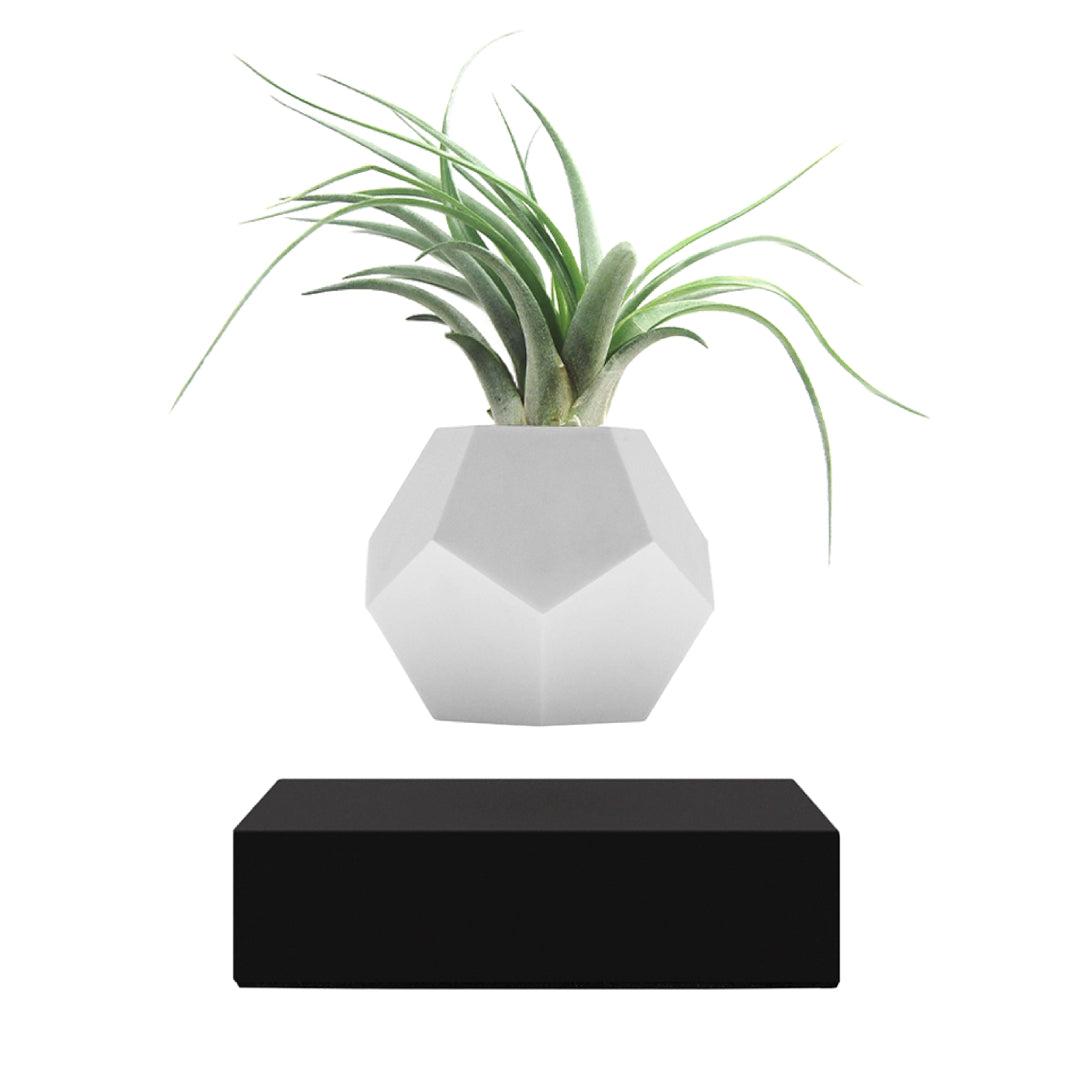
What is maglev desk decor, really?
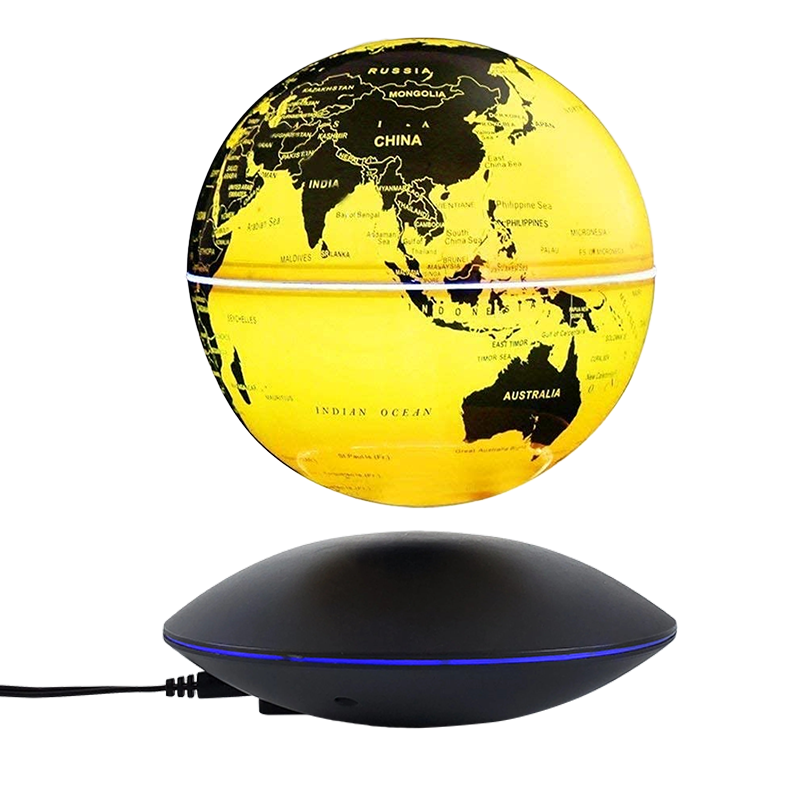
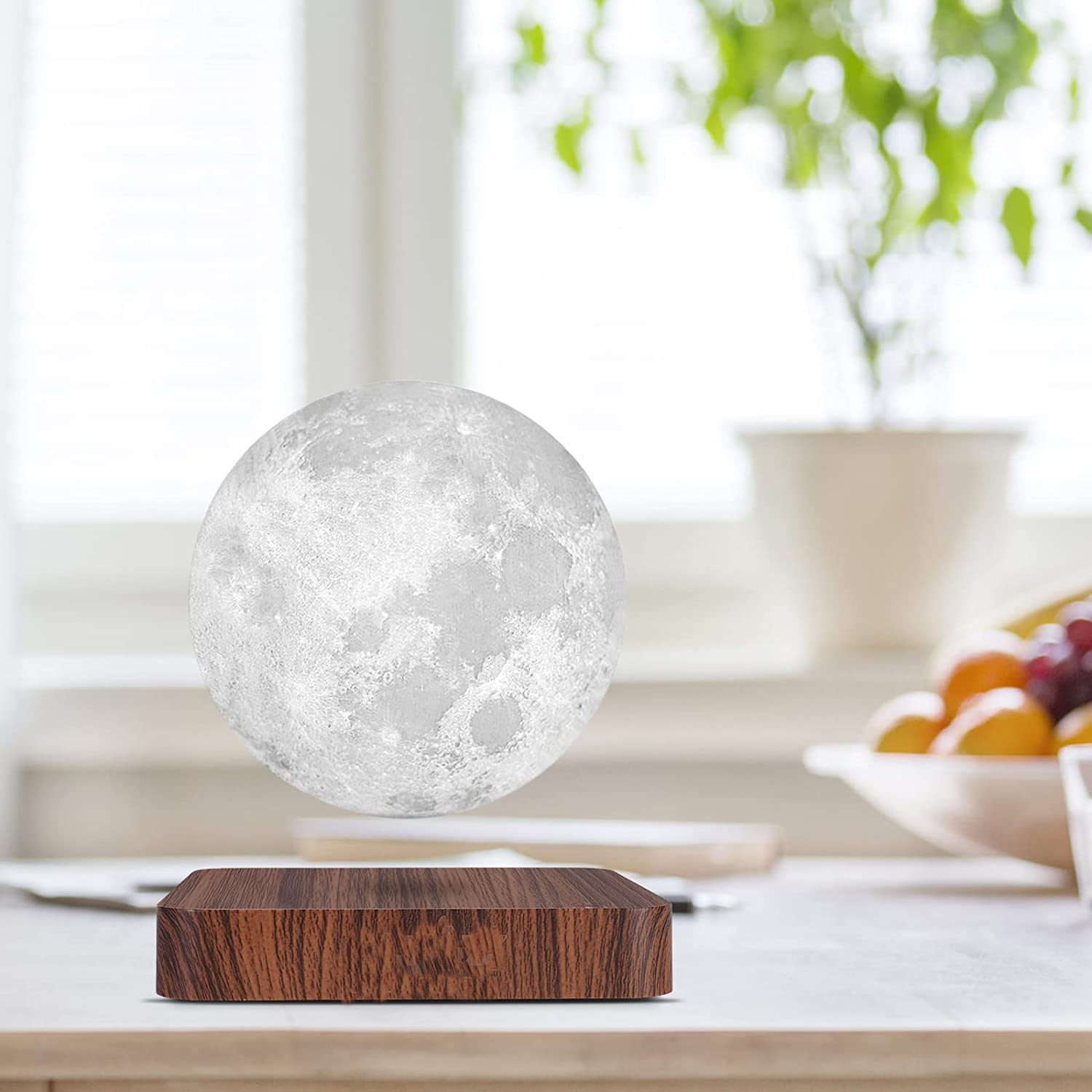
Maglev decor is any object held in mid-air by an electromagnet instead of a wire or a stand. The family is small but distinct: floating moon lamps (a 3D-printed lunar sphere), levitating globes (a spinning world map, often LED-lit), and the rarer levitating planter — a real pot with a live plant hovering over a wooden base.
They all share one architecture. There is a base that does all the work, and a floating object that does all the showing off. The object is deliberately light and mostly hollow; the engineering — and the price you're really paying — is buried in the base. Understanding that one fact changes how you shop for every product on this page.
How does magnetic levitation actually keep it floating?
It is not a trick of two repelling magnets — that arrangement is famously unstable and would flip or shoot the object sideways. Real maglev decor uses active electromagnetic levitation: an electromagnet in the base, a small permanent magnet in the floating object, and a Hall-effect sensor that measures exactly where the object is, thousands of times a second.
A microcontroller reads that sensor and constantly nudges the electromagnet's strength to cancel gravity and any wobble — a feedback loop holding the object in a stable pocket of force, typically 0.5 to 1 inch above the base. On a moon lamp and most globes, the light inside is then powered through the air by induction, the same wireless principle as a phone charger, which is why a floating, glowing moon has no visible wire and no battery to die mid-float.
The practical upshot: these devices need continuous mains power to levitate. Pull the plug and the magic drops — literally.
Are levitating moon lamps actually worth it?
For the right buyer, yes — with eyes open. As a gift or a conversation piece, a floating moon is one of the highest wow-per-dollar objects you can put on a desk, and the good ones run for years. The reason to hesitate is reliability variance: the magic depends on a precision feedback loop, and on the cheapest listings that loop is built down to a price.
Buy it as kinetic decor, not as your primary reading light — the LED inside a floating moon is mood-grade, not task-grade. And buy it expecting a learning curve on day one (see the setup section). If those two expectations are set, the satisfaction rate is high. If you want a flawless float with zero fuss out of the box, temper that — even good units take a few tries to seat.
What goes wrong — wobble, weight, and the float that won't hold
Four failure modes account for nearly every disappointed review, and three of them are avoidable.
1. The float won't seat. The single most common complaint isn't a defect — it's setup. The moon sticks to the side or drops because it wasn't lowered into the exact center pocket. This is a technique problem, not a broken-lamp problem.
2. Wobble and drift. A weak or poorly tuned base lets the object oscillate or slowly spin off-center. Better units add anti-vibration damping and auto-calibration; cheap ones don't, and any bump or nearby metal can disrupt the equilibrium.
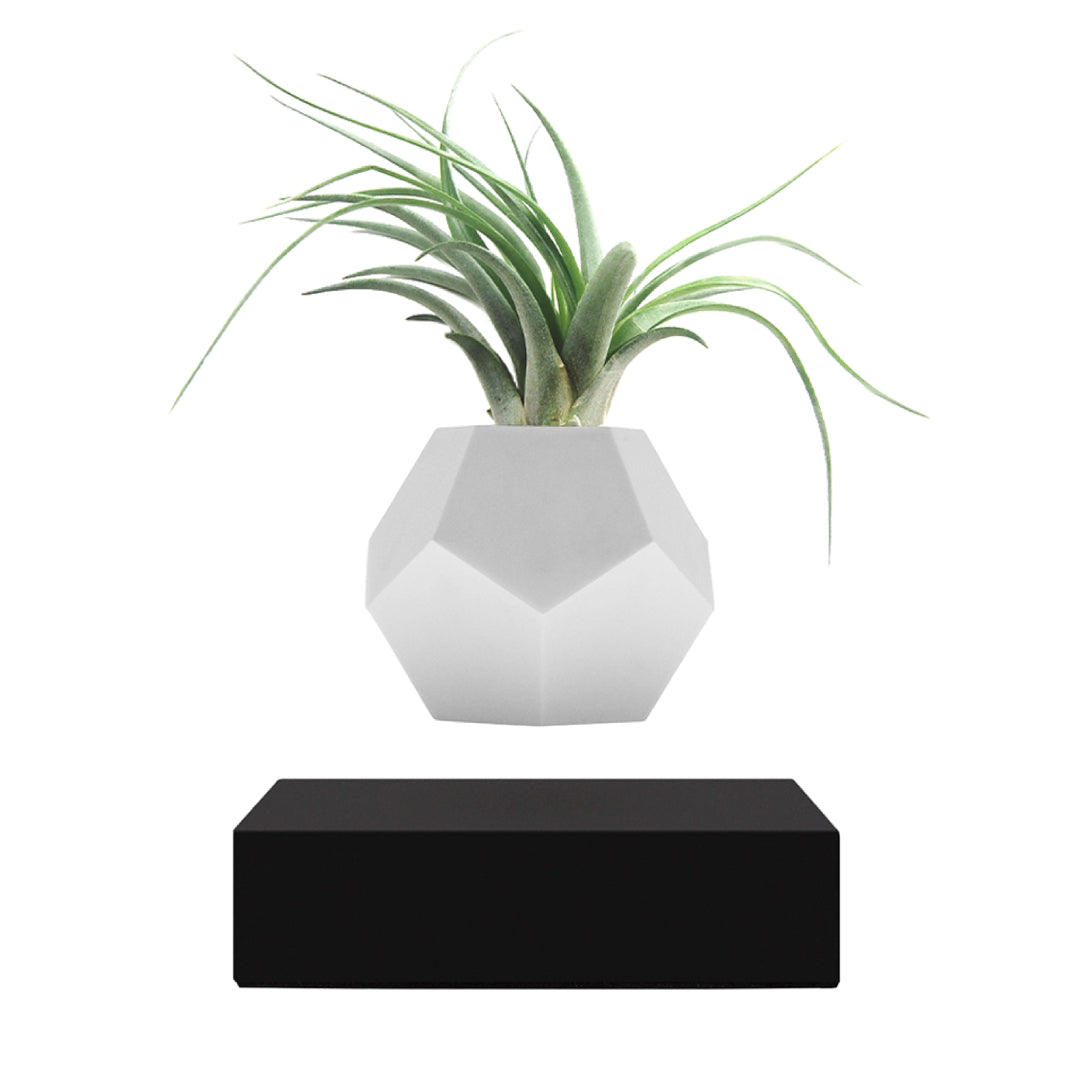
3. The weight limit is invisible but real. The electromagnet is rated for the exact object it shipped with. You cannot make a planter hold a heavier pot, a wetter plant, or extra soil — overload it and it simply won't lift. This matters most for levitating planters.
4. Power and placement. Levitation needs constant power and a flat, non-metallic surface away from other magnets. A metal desk, a nearby speaker magnet, or an unstable shelf will sabotage an otherwise perfect unit.
How hard is the setup, honestly?
Plan ten patient minutes for your first float — not ten seconds. The ritual is consistent across nearly every product here: place the base on a flat, non-metallic surface, plug in the adapter, then start the object roughly six inches above center and lower it slowly with both hands until you feel the magnetic field catch and push back against gravity.
The mistakes are always the same: lowering too fast, drifting off-center so it snaps to one side, or doing it on a metal desk. Once you feel the 'catch' a few times, it becomes muscle memory and takes seconds. But the first attempt frustrates people who expected it to just float on contact — it won't, and that's normal, not a fault.
If you're gifting one, a five-second heads-up — 'there's a knack to the first float, lower it slow and dead-center' — saves the recipient a wave of false disappointment.
Moon lamp vs. floating globe vs. levitating planter — which fits you?
Floating moon lamp — the warmest, most universal gift. Best as ambient light and a nightstand or desk centerpiece. Color-changing models lean novelty; the photorealistic warm-white ones (modeled on NASA lunar imagery) lean classy.
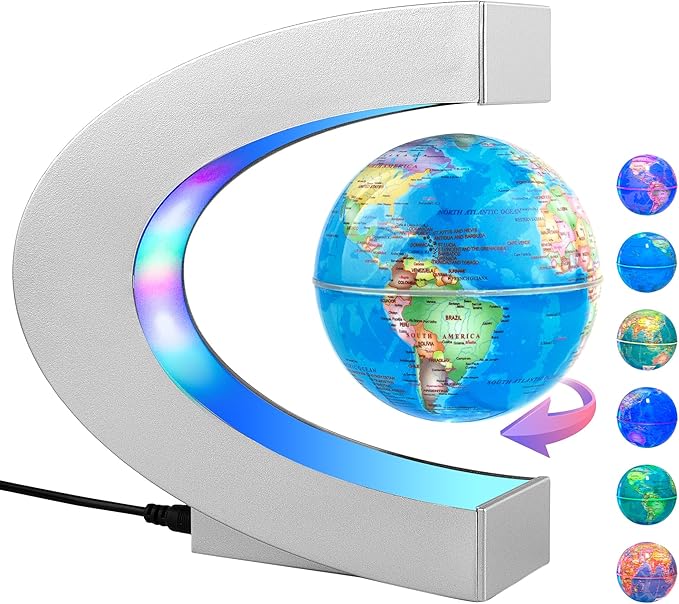
Levitating globe — the 'smart desk' pick. A spinning, LED-lit world map reads more executive-office than bedroom, and the slow rotation is genuinely mesmerizing. Great for a den, study, or someone who likes maps and gadgets.
Levitating planter — the design-object splurge. A real plant rotating in mid-air is the rarest and most expensive of the three, and the one that makes guests stop talking. It asks the most of you: gentle, light plants only, and respect for the weight limit.
Quick rule: gift a moon, impress an office with a globe, and reward a design-lover with a planter.
What size and base material should you look for?
On moon lamps, 6 to 7 inches is the gift-friendly sweet spot — big enough to read as a real moon, small enough to float stably and ship safely. Larger spheres look impressive in listings but get harder to levitate and more delicate.
The base material is a real quality tell, not just aesthetics. Solid wood (oak is the benchmark on premium pieces) and marble bases add mass and damping, which steadies the float and resists nudges. Lightweight plastic bases are fine on budget moons but are more prone to walking across the desk or wobbling.
Ignore the marketing arms race on number of colors and modes. Sixteen colors and twenty modes sound impressive, but most people settle on one or two looks within a week. Stability and base quality age far better than the RGB count.
Is a levitating piece a good gift — and for whom?
It's one of the safest 'wow' gifts in the kinetic-decor category, because the appeal is pre-verbal: it floats, and almost everyone reacts. It lands especially well for space and astronomy fans, gadget-curious adults, new-desk or new-office milestones, and as a this-is-clearly-not-socks centerpiece gift.
Match the form to the person. A teen or kid: a color-changing moon. A tasteful adult or minimalist: a warm-white photorealistic moon or a wood-based globe. A serious plant person with a sense of humor about their hobby: the levitating planter, budget permitting.
Two gifting cautions. First, include the setup heads-up. Second, mind the surface — if they work on a steel desk, pair it with a note to use a wooden tray or shelf, or the gift face-plants on arrival.
How do you keep it floating for years?
These are durable when respected and fragile when bumped. Three habits cover almost everything.
Leave it powered and placed well. A stable, flat, non-metallic surface away from speakers and other magnets is 90% of long-term reliability. Don't relocate it constantly; every move is a fresh chance to drop it.
Don't bump the base. Jostling can knock the object out of its equilibrium pocket; a hard knock can damage the magnet-and-electronics housing inside the base, and that's the one part you can't easily fix.
Respect the rated load on planters. Light air plants or small succulents, modest soil, careful watering. Overloading is the fastest way to a planter that simply refuses to lift — the electromagnet was tuned for a specific weight and it will not negotiate.
From the rabbit hole
Real voices from players, reviewers, and the communities who know these games best.
Community“The secret to the levitation is an electromagnet hidden in the oaken base — the geodesic pot hovers several inches above the wooden base while a real, live 'air' plant grows inside.”
Thedesignsheppard
Community“Hall effect sensors detect the proximity of the moon to the base and send real-time feedback to the microcontroller, which fine-tunes the electromagnetic forces for smooth and stable levitation.”
Electronicspecifier
Community“The lamp must remain precisely balanced for the globe to float properly, and jostling or bumping the base can disrupt the equilibrium.”
Ralphsway
The picks
VGAzer Levitating Moon Lamp (6-inch)
FLYTE LYFE Levitating Planter (Oak base)
The Original Levitating Moon Lamp (7-inch, photorealistic)
MOKOQI Magnetic Levitating Globe with LED
LANGTU Levitating Globe / World Map Lamp
At a glance
| pick | type | approx price | float object | base | powered how | best for |
|---|---|---|---|---|---|---|
| VGAzer Moon Lamp | Floating moon | $60–74 | 6" 3D-printed moon | Wood or marble | Induction LED | Default gift |
| FLYTE LYFE Planter | Levitating planter | ~$249–299 | Geodesic silicone pot + live plant | Solid oak | N/A (plant, not lit) | Design splurge |
| Original Moon Lamp | Floating moon | ~$99 | 7" photorealistic moon | Wood | Induction LED | Tasteful realism |
| MOKOQI Globe | Levitating globe | ~$40–55 | LED world globe | Plastic/stand | Induction LED | Office desk |
| LANGTU Globe | Levitating globe | ~$80–90 | 6" globe lamp | Plastic/metal | Induction LED | Lamp-grade globe |
Questions, answered
How does a levitating moon lamp work?
It uses active electromagnetic levitation. An electromagnet in the base, a permanent magnet in the moon, and a Hall-effect sensor form a feedback loop that adjusts the magnetic field thousands of times a second to hold the moon stable about 0.5–1 inch up. The light inside is powered wirelessly through the air by induction, so there's no wire or battery in the floating moon.
Do levitating moon lamps need to be plugged in?
Yes, continuously. The electromagnet that creates the float needs constant mains power. Unplug it and levitation stops immediately and the moon drops — these are not battery-powered floating objects in the way many people assume.
Why won't my moon lamp float — is it broken?
Usually it's setup, not a defect. The most common cause is lowering the moon too fast or off-center, or placing the base on a metal surface or near other magnets. Start the moon about six inches above the exact center and lower it slowly with both hands until you feel the field catch.
Are they hard to set up?
There's a knack on the first try, then it's easy. Budget about ten patient minutes the first time: flat non-metallic surface, plug in, lower slowly and dead-center. After a few successful floats it becomes muscle memory and takes seconds.
How much do levitating moon lamps cost?
Quality floating moons typically run roughly $60–100 depending on size, base material, and brand. Levitating globes start lower (often $40–90), while the premium levitating planters like the FLYTE LYFE are far more, around $250–300, because of the design and engineering involved.
Will it work on a metal desk?
Not reliably. Metal surfaces and nearby magnets (speakers, magnetic tools) disrupt the magnetic field and prevent a stable float. Use a wooden tray, shelf, or non-metallic surface, and keep other magnets away from the base.
Can I put any plant in a levitating planter?
No — light plants only. The electromagnet is tuned for a specific weight, so air plants and small, light succulents work best. Heavy pots, wet soil, or oversized plants exceed the rated load and the planter simply won't lift.
Do levitating moon lamps make good night lights?
As ambient or mood lighting, yes; as a task light, no. The induction-powered LED is soft and atmospheric rather than bright enough to read by. Buy it as kinetic decor and gentle glow, not as your main lamp.
How high does the object float?
Typically about half an inch to one inch above the base. The gap is small by design — a wider gap is harder to stabilize. A consistent, steady float height is actually a sign of a well-tuned base.
Why does mine wobble or spin off-center?
Wobble usually means a weak or poorly tuned base, a bump, or interference from a nearby metal object or magnet. Better units add anti-vibration damping and auto-calibration. Make sure the surface is flat and stable and nothing magnetic is close by.
Are levitating globes or moon lamps better gifts?
Moons are the warmer, more universal gift and great for bedrooms and astronomy fans; globes read more executive and suit offices, dens, and map lovers. Pick the moon for emotional appeal and the globe for a 'smart desk' impression.
Do they use a lot of electricity?
Very little. These are low-wattage devices — many globes and lamps draw only a handful of watts. The continuous power requirement is about keeping the electromagnet active, not about high consumption, so leaving one running is inexpensive.
Can the lamp be damaged if it falls?
The floating object is usually fine, but a hard knock to the base can damage the magnet-and-electronics housing inside it — and that's the part that's hard to repair. Protect the base from bumps and don't relocate the unit constantly.
How long do they last?
Well-treated units can outlast several phone upgrades. Longevity comes down to stable placement, constant clean power, and not bumping the base. The failures people report are overwhelmingly about handling and cheap bases, not wear-out.
Robert's verdict
Levitating moon lamps and maglev decor genuinely earn the wow — but only when you buy for the base, not the glow, and set your expectations for a fiddly first float. For most people the VGAzer moon is the right blend of price, reliability, and gasp; the FLYTE LYFE planter is the real design splurge; and any cheap no-name listing is a coin flip on a weak electromagnet. Buy it as a small daily wonder, give it a flat non-metallic home, and it'll keep arguing with gravity for years.
Sources: electronicspecifier.com, levitatingmoon.com, amazon.com, flytestore.com, amazon.com, theoriginalmoonlamp.com, amazon.com, langtustore.com, ralphsway.com, thedesignsheppard.com, nerdtechy.com
If it didn't earn a shelf, it isn't here.
Keep exploring
The next smart rabbit holes.
Buying GuideIs Levitating Desk Decor Worth It? Ranked (2026)Most levitating desk decor is a $79 electromagnet with a hum — but three things genuinely aren't. A skeptic stress-tests the wonder from...ComparisonKinetic Desk Sculptures, Compared (2026)The entire market is a lie dressed in perpetual motion — here's what actually moves, for how long, and which ones die the moment you stop...Deep DiveThe Swinging Sticks: The Iron Man Desk Grail That Never Stops MovingDesigned in Germany, hand-built in Thailand, screen-used in Iron Man 2, silent, hypnotic, and impossible to ignore — the one desk object...