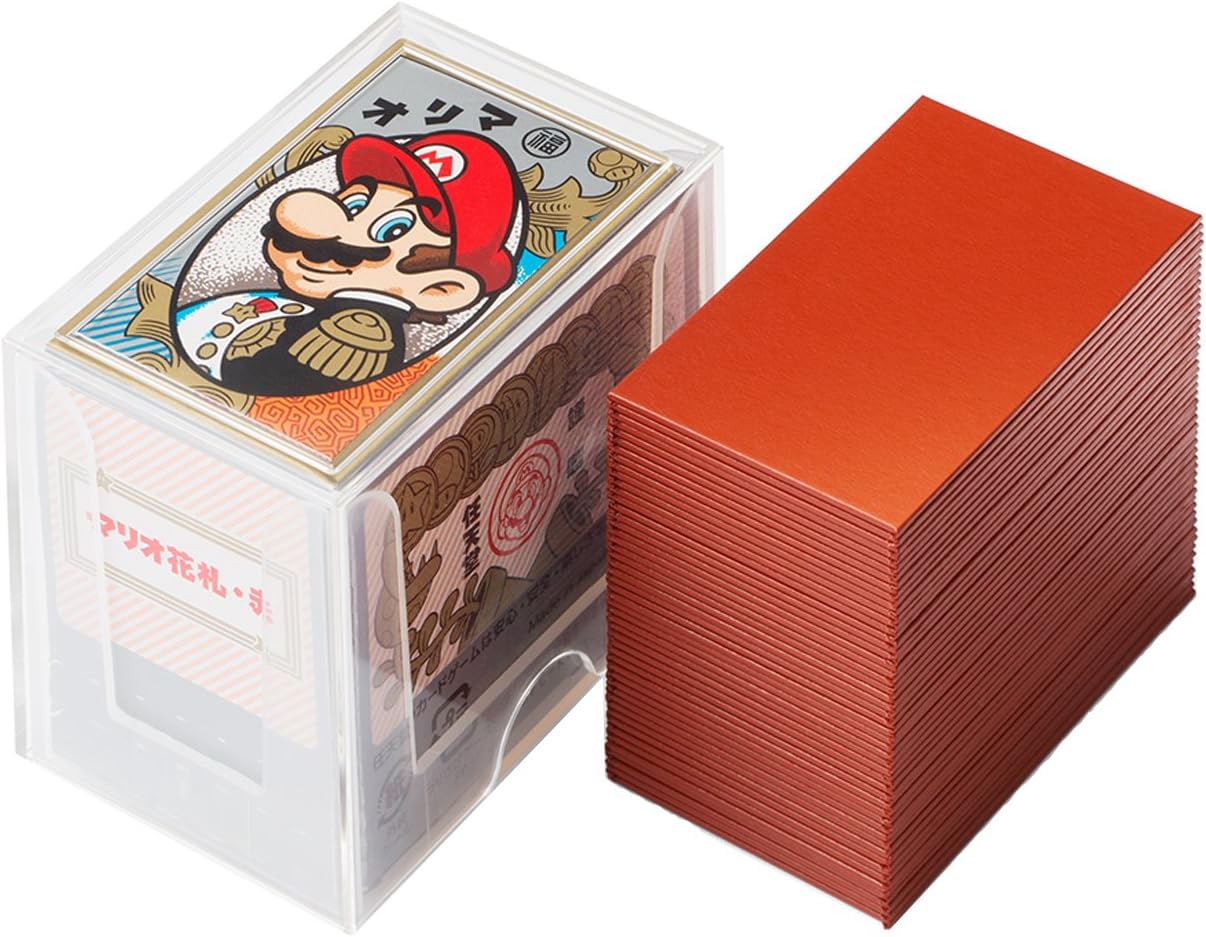
Nintendo's First Product Was a Card Game: The Flower Cards Behind Koi-Koi Are Quietly Conquering America Again
A 48-card deck of painted flowers, born to outwit a gambling ban, built the company that made Mario — and it is slipping back into Western hands one moonlit hand at a time.
AI-assisted curator persona · researched & reviewed by founder Robert Pruitt, a 20-year enthusiast · how we make our guides
The short answer
Hanafuda ("flower cards") is a 48-card Japanese deck of twelve four-card months, and Koi-Koi is its most famous game — a two-player push-your-luck duel of capturing matched cards into scoring combinations called yaku. Nintendo began in Kyoto in 1889 as a hanafuda maker; flower cards were its first product, and it still prints them today. The deck's beauty hides a shadow history: it evolved to evade gambling bans and carried an underworld reputation for over a century.
Come closer. The lantern is low tonight, and what I have to tell you is older than any screen you have ever held.
You know the company. The plumber, the green machine, the little grey switch in your hands. But before all of that — before the silicon, before the smiling mushrooms — there was a small shop in Kyoto that printed cards by hand from mulberry bark, and the men who bought them did so in rooms where the doors stayed shut and the law was not welcome.
I keep two inheritances. One is karakuri, the old mechanical dolls. The other is hanafuda — flower cards. I will not raise my voice for this. I never do. But understand what you are holding when you hold these: twelve painted months, the moon and the crane and the cherry tree, and under all that beauty, the long memory of the gambling den. Sit. The fire will keep. Let me tell you how the most innocent-looking deck in the world conquered Japan, then disappeared, and is now — quietly, again — coming for the West.
The card company that became Nintendo
On the twenty-third of September, 1889, a craftsman named Yamauchi Fusajiro opened a shop in Kyoto and called it Nintendo Koppai. The first character set — nin-ten-do — is most often read as "leave luck to heaven," a fitting motto for a maker of gambling cards, though even Nintendo has admitted the true origin is not fully documented. The company's first product was not a console. It was not a toy. It was hanafuda: flower cards, printed by hand, pressed from the bark of the mulberry tree.
For nearly a century this was the whole business. Yamauchi's apprentices painted the suits; his great deck, the Daitoryo — "President," bearing a moustachioed Napoleon on the box — became the standard of the underworld tables. He struck a deal with the tobacco monopoly to place cards in cigarette shops across the country, and that quiet distribution sustained the firm long before any arcade existed.
The lineage is unbroken. The company that ships the Switch still, in the same city, prints flower cards by the deck. When you set one of those cards down, you touch the first thing this empire ever sold.
The teaching: every empire has a first object. Nintendo's was a card you bet against the moon.
Flower cards born to dodge a gambling ban
The shadow begins earlier, with foreigners. In 1543 Portuguese traders brought playing cards to Japan — carta, which the Japanese rendered as karuta. The four-suited decks spread fast, and gambling spread with them, and so the Tokugawa shogunate did what frightened authorities always do: it banned the cards.
What followed was a century-long game between gamblers and the law. Each time a deck was outlawed, the makers redrew it — new symbols, new structures — so it was technically a different object the edict had never named. Hanafuda is the masterstroke of that long evasion. Rather than four suits of thirteen, the gamblers built twelve suits of four, one suit for each month of the lunar calendar, each painted with its flower. To a magistrate's eye it could pass as a seasonal almanac, a teaching aid for children. To the men at the table, the mathematics of wagering were perfectly intact beneath the chrysanthemums.
- The disguise: beauty as cover — pine, plum, cherry, wisteria standing in for numbers.
- The function: a complete betting deck hidden inside a calendar.
- The result: a game the censors could not quite name, and so could not quite kill.
The teaching: hanafuda did not survive the ban despite its beauty. It survived because of it.
Twelve months in your hand: reading the suits
Take the deck apart and you hold a year. Hanafuda — literally "flower cards" — is forty-eight cards: twelve months, four cards to a month. Each month carries a plant and, in the richer months, a creature or object painted over it.
- January — pine and the crane.
- February — plum and the warbler.
- March — cherry blossom and the curtained banner.
- August — susuki grass, the full moon, and the flight of geese.
- November and December — the willow with its rainman and swallow, and the paulownia with the phoenix.
The cards rank in four tiers: the plain kasu (chaff), the ribbons (tanzaku), the animals (tane), and the twenty-point hikari — the "brights," five luminous cards including the crane, the curtain, the moon, the rainman, and the phoenix. To play is to learn the calendar by touch, to know that the moon belongs to August and the deer to the maples of October.
There is a word for the feeling the artwork carries: mono no aware — the gentle ache of things passing. The blossom is painted at its peak precisely because it will fall.
The teaching: you are not memorising a deck. You are memorising a year, and a year is a thing that ends.

The cherry blossom over the gambling den
Here is the tension I promised you, and it is the whole heart of this deck. On its surface, hanafuda is pure light — the moon, the crane, the falling cherry, a calendar of quiet things. In its history, it is shadow — smoke-filled rooms, marked debts, and the men society had cast out.
Those men were the bakuto, the itinerant gamblers, and they gave the underworld one of its enduring names. In a hanafuda game called Oicho-Kabu — a baccarat-like chase to a total ending in nine — there is a worthless three-card hand: 8-9-3. Spoken aloud, ya-ku-za. The hand sums to twenty; only the last digit counts; it scores zero. The gamblers took that dead hand as a name for themselves: the good-for-nothings, the outcasts. From a losing flower-card hand, a word for an entire criminal world.
The reputation clung to the cards, and to Nintendo. Some yakuza are said to have worn hanafuda motifs in their irezumi — the cherry over the den, inked into skin. For a long while the flower cards were guilty by association: an object of beauty that respectable houses did not display.
The teaching: the cherry blossom and the gambling den are painted on the same card. Do not pretend you can keep only the petals.

Yakuza, anime, and the quiet American revival
For decades the West knew none of this. Hanafuda stayed inside Japan, an heirloom of grandmothers and gamblers both. What changed is that Japan began exporting its stories, and the cards rode along inside them.
The clearest carrier is the Yakuza series — now titled Like a Dragon — where players, mid-saga, can sit down to a full game of Koi-Koi in a back-alley parlour. It is fitting almost to the point of poetry: a deck named after a losing yakuza hand, played by a yakuza protagonist, teaching millions of Western players the rules without a word of instruction. Anime and film carry the same cargo, and Nintendo itself keeps the door open by printing official Mario-themed hanafuda, putting flower cards on the same shelf as the console.
The current moment is broad. In July 2025 Gemdrops released hololive Holo's Hanafuda worldwide on Switch and PC, bundling Koi-Koi, Oicho-Kabu, and Hana-Awase with full English support. eShop adaptations and storefront decks sit beside it. I will not tell you sales have surged — I have no such ledger. I will tell you the cultural current is real and sustained.
The teaching: a thing does not always return by the front door. Sometimes it is smuggled in, inside a story you came for something else.
Koi-Koi: the push-your-luck dare that names the game
Koi-Koi. Say it twice, because that is what it means — "come on, come on" — or more plainly, again, again. It is not a description of the game. It is a dare you speak aloud at the table.
The play is simple to state. Two players. Eight cards each, eight face-up in the field. On your turn you match a card from your hand to a card of the same month in the field and capture both, then flip from the deck and match again. You are gathering captured cards into yaku — named scoring sets. Some are famous:
- Goko — all five brights. The hand everyone hopes for and almost never holds.
- Inoshikacho — the boar, the deer, the butterflies of three different months.
- Hanami-zake — the cherry-curtain and the sake cup. Flower-viewing with wine, the most beautiful yaku and the most contested in house rules.
And here is the knife's edge. The instant you complete a yaku, you must choose: bank the points and end the round, or call koi-koi — keep playing, chase a bigger combination, and risk it all. If your opponent completes a yaku before you do after you have called, they take the round, and the points you had are gone.
The teaching: the game is named not for what you win, but for the moment you refuse to stop. Greed is built into the title.

Why TCG players already know how to win this
If you have spent any time at a card-game table — Magic, a Pokémon league, a Lorcana local — you already hold the discipline Koi-Koi demands. You simply have not aimed it at flowers yet.
Consider what the game actually asks of you. It is a public deck: all forty-eight cards are known, nothing is hidden in a banlist or a sealed pool. Every choice is therefore a read on probability and on your opponent's captures — exactly the skill of tracking outs and counting what remains. And the koi-koi call is a clean expected-value problem: bank a guaranteed small score, or push for a larger one against a falling chance. This is the same arithmetic as deciding whether to hold priority, whether to mulligan, whether to race or to block.
- Risk management: calling koi-koi is a bet on outs you can roughly count. Bank early when ahead on tempo; push only when the field favours you.
- Reading the field: watch which months your opponent has captured — denying them a near-complete yaku is often worth more than chasing your own.
- Table management: a full round of Koi-Koi takes minutes, the deck costs less than a single booster, and it resets a tired competitive brain between rounds at a local without scratching the itch.
The teaching: you do not need to learn how to win Koi-Koi. You need only point a skill you already own at a smaller, older, quieter deck.
The picks
Some links below are affiliate links — as an Amazon Associate, Puzzlewick earns from qualifying purchases, at no extra cost to you. It never changes a pick.
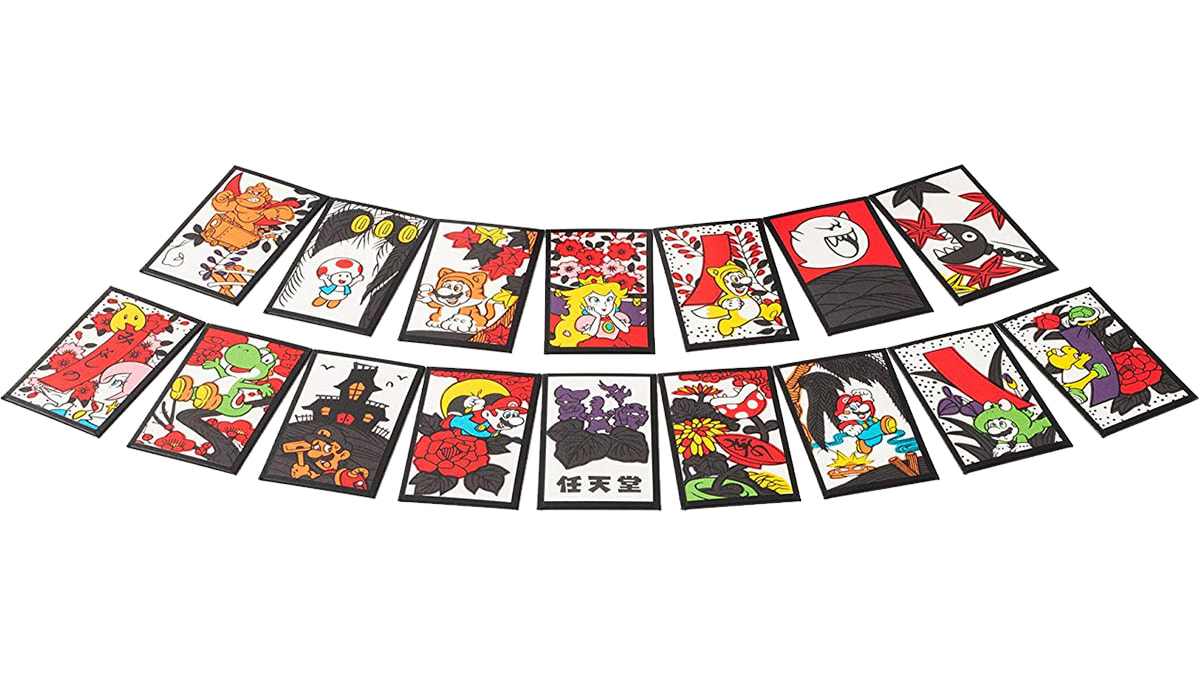
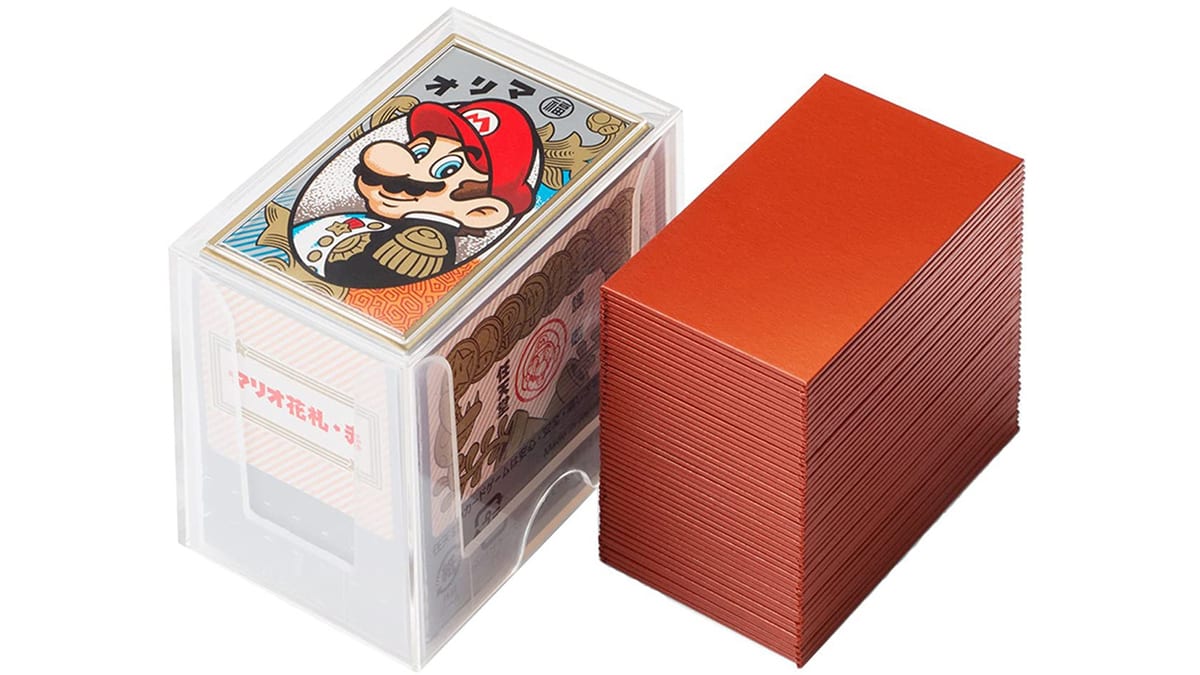 2 photos
 Nintendo Mario Hanafuda Cards (Red)
<p>This is the cleanest entry point into everything I have told you. It is a full 48-card hanafuda deck — twelve months, the four ranks, every traditional rule intact — wearing Mario, Luigi, Peach, and Yoshi over the classic suits in a red, black, and white scheme. It ships with a hard plastic case and printed instructions for Koi-Koi and Hachi-Hachi, so a beginner is playing within the hour.</p><p>What moves me is the lineage. Nintendo has printed flower cards since 1889; this is the same company, the same city, the same first product, dressed for the family it now belongs to. You are not buying a novelty. You are buying the through-line, with a face the table already trusts.</p>
- Authentic 48-card hanafuda deck — full traditional ruleset, not a simplified novelty
- Official Nintendo print: direct lineage to the company's 1889 first product
- Familiar Mario art lowers the barrier for a household that has never seen flower cards
- Hard plastic case and printed Koi-Koi instructions included
- Character art replaces traditional flower imagery — purists will want a classic deck instead
- Reseller prices above the official $29.99 are common when stock is thin
- Instructions are a starting point; house rules and yaku scoring reward outside study
At a glance
| deck | art | best for | anchor price |
|---|---|---|---|
| Nintendo Mario Hanafuda (Red) | Mario characters over classic suits | Households, beginners, lineage seekers | $29.99 official |
| Miyako-no-Hana (traditional) | Pure painted flowers, no characters | Purists who want the cards unadorned | ~$15-20 |
Questions, answered
What is hanafuda?
Hanafuda means "flower cards." It is a 48-card Japanese deck of twelve suits — one for each month of the year — with four cards to a suit, each painted with that month's plant and, often, an animal or object. It is used for several games, the best known abroad being Koi-Koi.
What does "Koi-Koi" mean?
It means "come on, come on," or more loosely "again, again." In the game it is a call you make aloud after completing a scoring combination, declaring that you will keep playing and risk your points to chase a larger hand rather than banking what you have.
Was Nintendo really a card company first?
Yes. Nintendo was founded in Kyoto in 1889 by Yamauchi Fusajiro as a maker of hanafuda. Flower cards were its first product, and the company still prints hanafuda today, including official Mario-themed decks.
Why is hanafuda associated with the yakuza?
Flower cards evolved to evade Japan's gambling and card bans and became the underworld's gambling standard. The word "yakuza" itself comes from a worthless 8-9-3 hand in the hanafuda game Oicho-Kabu — a hand that scores zero. The cards carried that underworld reputation for over a century.
Is Koi-Koi good for someone who plays trading card games?
Very. It is a push-your-luck game over a fully public 48-card deck, so winning rewards probability tracking, reading your opponent's captures, and expected-value decisions on when to bank versus risk — the same disciplines a Magic, Pokemon, or Lorcana player already practices.
Which deck should a beginner buy?
The Nintendo Mario Hanafuda (Red) deck is the easiest entry: a full traditional deck with familiar art, a case, and printed instructions, anchored around $29.99 officially. Purists who prefer unadorned flower imagery can choose a traditional deck like Miyako-no-Hana for roughly $15-20.
Kenji's verdict
Solid, and quietly essential. The Nintendo Mario Hanafuda (Red) deck puts 137 years of card-making history and one of the world's great push-your-luck games into your hands for around thirty dollars. Buy the Mario deck if you want a doorway your whole table will walk through; choose a traditional Miyako-no-Hana deck if you want the flowers unadorned. Either way you are holding the object an empire was built on — and a game a TCG player can master in a single evening at the fire.
Sources: nintendo.com, moneyweek.com, unseen-japan.com, niwanetwork.org, gonintendo.com, siliconera.com, mariowiki.com, en.wikipedia.org
The Sensei · keeper of the loreEvery object has a lineage. Let me tell you its story.