Best Gifts for Dungeon Masters (2026): For the One Behind the Screen
The instruments of craft—screens that organize chaos, terrain that makes a room a place, decks that conjure an NPC when the story goes unwritten, journals that hold campaigns across years—curated by one question: does this object help someone run a better game?

AI-assisted curator persona · research and editorial responsibility: Robert Pruitt · how this guide was made
Last editorial refresh: 2026-06-13 Gold-standard QA: 2026-07-17 25 sources reviewed Affiliate links checked during gold-standard pass

The short answer
The best overall gift for a Dungeon Master is a premium modular DM screen — the Wyrmwood DM Screen System (panels from ~$70 each) for a heirloom-grade, magnetic, customizable barrier, or the official Dungeon Master's Campaign Journal (~$25) when you want the single most useful object under thirty dollars. The best gift on a budget is a Chessex Reversible Megamat (~$28), the wet-erase battle map nearly every long-running table eventually owns. The best splurge is Dwarven Forge modular terrain — a hand-painted Deluxe Starter Set runs ~$167 and full encounter systems climb past $400 — turning flat maps into three-dimensional dungeons. For worldbuilders, pair The Worldbuilder's Journal of Legendary Adventures (~$25, 365 prompts) with a World Anvil subscription. Crucially, these are NOT player gifts: a DM does not need another set of personal dice or a character-art print. A DM needs tools that help them run the table — to hide notes, stage encounters, generate NPCs on the fly, and set a mood. Buy for the labor behind the screen, not the seat in front of it. Every product below is real, in production, and priced as of early 2026; treat all figures as approximate.
Decision map
Choose in thirty seconds
Best gift on a budget / best battle map
Best splurge (terrain)
Best utility-per-dollar / best for organized DMs
The Dungeon Master occupies a peculiar position at every table: the one person who never gets a turn. They are architect, referee, voice of the lich and the innkeeper alike—arriving with hours of invisible work so that four or five friends may spend an evening playing heroes. And yet every gift guide I've checked, and checked again, treats them as an afterthought.
Most tabletop gift lists are lists for players. Personal dice sets, character portraits, class pins—lovely things, but they belong to the people in the chairs, not the architect behind the screen. I know because I've watched a Dungeon Master smile politely at their ninth set of dice and wish, silently, that someone had asked what they actually carry to a session.
This guide is curated for the architect. I've spent time in the archives of maker catalogs, Kickstarter histories, and the long forums where Game Masters debate what earns shelf space and what is merely shiny. Every recommendation rests on one question: does this object help someone run the game? Not play in it—run it. Screens that organize the chaos. Terrain that transforms flat maps into rooms. Decks that answer 'what's that NPC's name?' with a single flip. Journals that hold a campaign together across years. Initiative trackers, miniature cases, soundscapes that do emotional labor behind the scenes. The things the table never sees but always feels.
A note on what we are here at Puzzlewick: we are the editorial guide, not the seller. Puzzlewick may earn from qualifying Amazon purchases where a tagged Amazon link appears; maker and source links are editorial unless plainly labeled otherwise. The prices are honest approximations; the makers set the real ones, good craft fluctuates, and compensation never changes the verdict.
Start here, then go deeper
You are in the right cabinet.
 ⬡ Universe HubDungeons & Dragons: the whole buying pathDungeons & Dragons is the world's great storytelling engine — a few books, a fistful of dice, and a table of friends. This universe...✦ Topic PathBoard Game Buying Guides: compare the whole shelfStart with the decision, not the shelf. These guides compare the games, editions, expansions, player counts, and costs people...
 Best OfBest Solo Board Games, Ranked (2026): The One-Player NightTen games I'd actually hand you — the ones that didn't just earn a shelf, they stayed there. From the 20-minute weeknight puzzle to the...
Why does the screen matter more than anything else on the table?
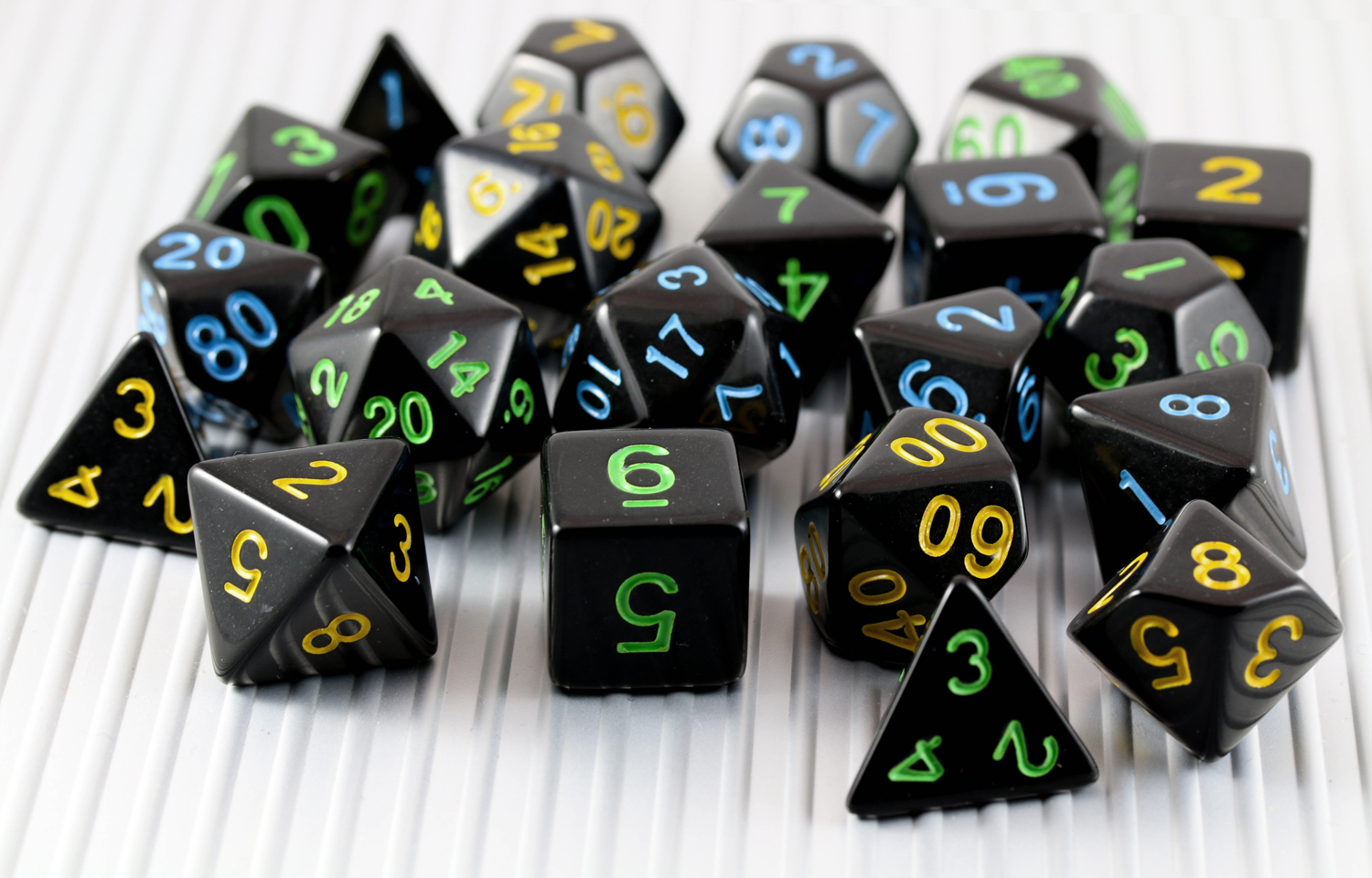
Ask a long-tenured Dungeon Master to name the one object that is always within arm's reach, and the answer is rarely the dice and never the miniatures. It is the screen. The DM screen is the literal architecture of the role: a barrier that hides the monster's statistics, conceals the map of what's to come, gives a private surface for secret rolls, and — in its better forms — presents a wall of quick-reference rules so the game never stalls while someone thumbs through a rulebook.
The budget end of this category is cardboard, and there is no shame in it; a printed three-panel screen does the job for under fifteen dollars. But as a gift, the screen is where craftsmanship announces itself most clearly, which is why it sits at the heart of this guide. The reigning object of desire is the Wyrmwood DM Screen System. It is not a single product but a modular philosophy: solid hardwood panels — eastern elm at the affordable end, climbing through cherry and black walnut to padauk, wenge, purpleheart, and ebony — that snap together with embedded barrel magnets in portrait or landscape, as few as two panels or as many as five. A single solid panel runs roughly $70 to $315 depending on the wood, and a maximalist, every-component build has been quoted as high as several hundred dollars. Each panel carries a magnetic note bar along the DM-facing top and six embedded magnets for attaching acrylic dry-erase plates. Nerdist, reviewing it, warned that you will 'get some serious screen envy from this masterpiece.'
What makes the Wyrmwood the best overall DM gift is not merely that it is beautiful — though it is heirloom-beautiful, the kind of object a DM keeps for thirty years — but that it is genuinely useful in a way a player gift can never be. Every panel is a working surface. The magnets hold initiative cards, secret notes, NPC reminders. The modularity means a DM running a small one-shot at a café uses two panels, and the same DM running an epic at the dining table uses five.
If the budget does not stretch to hardwood, the screen still makes a fine gift in its customizable-insert form: many DMs prize a screen whose reference panels they can swap for the rules of their system. The gift, in other words, is not the cardboard or the cherry wood — it is the act of giving someone a better wall to build their world behind.
A quiet observation from the archive: of every tool a Dungeon Master owns, the screen is the only one their players are forbidden to look behind. It is the membrane between the known world and the unwritten one, and a good gift honors that boundary by making it gorgeous.
The screen is the membrane between the known world and the unwritten one — the only tool a DM owns that their players are forbidden to look behind.
Is high-end terrain actually worth the splurge, or just an expensive shelf trophy?
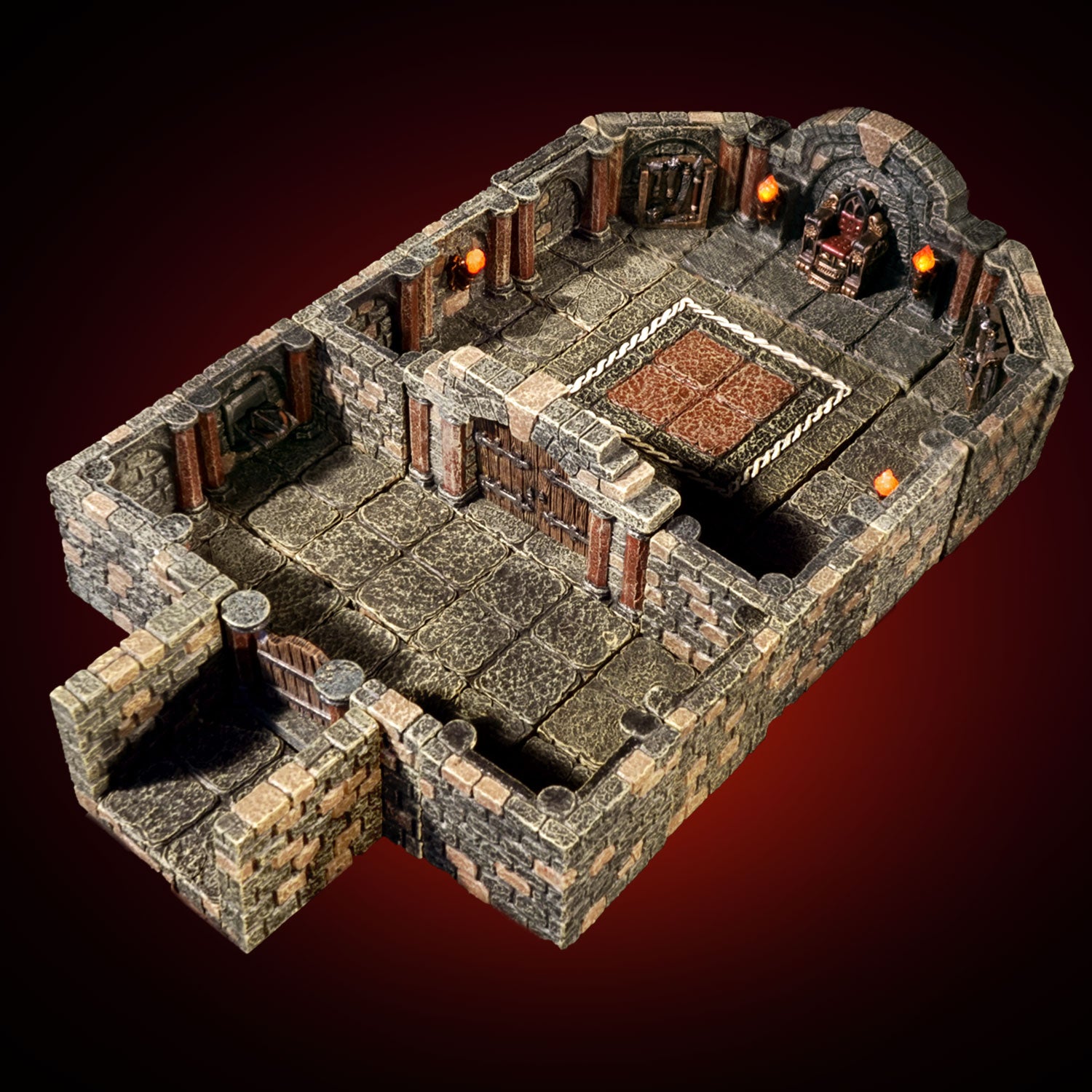

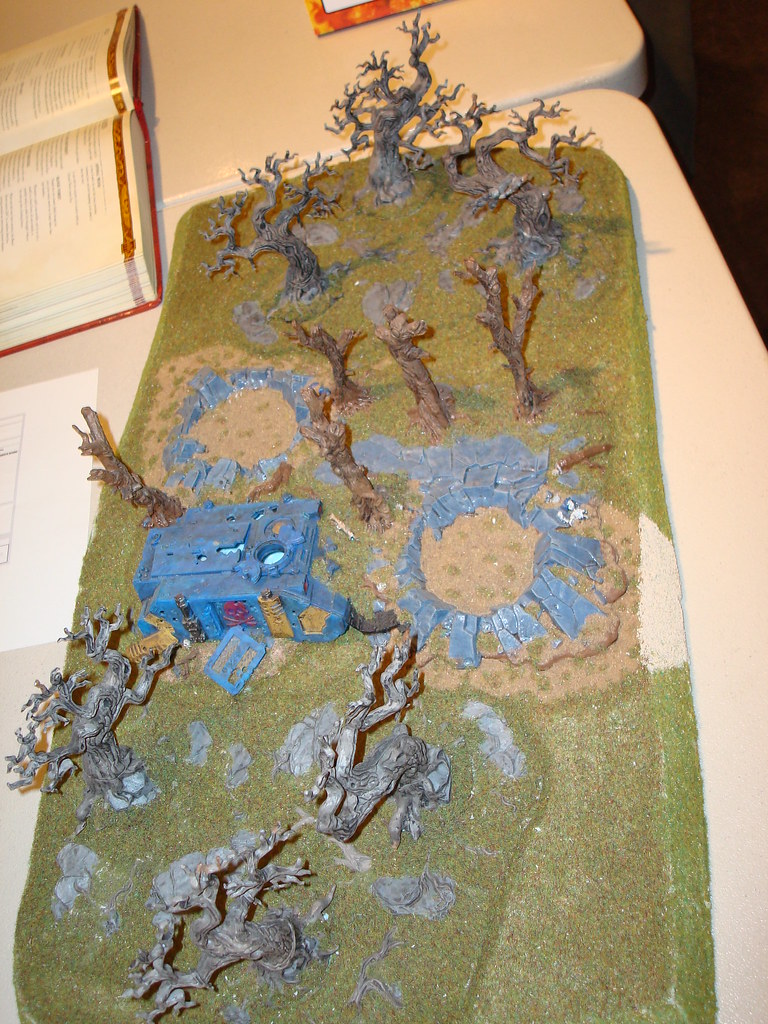
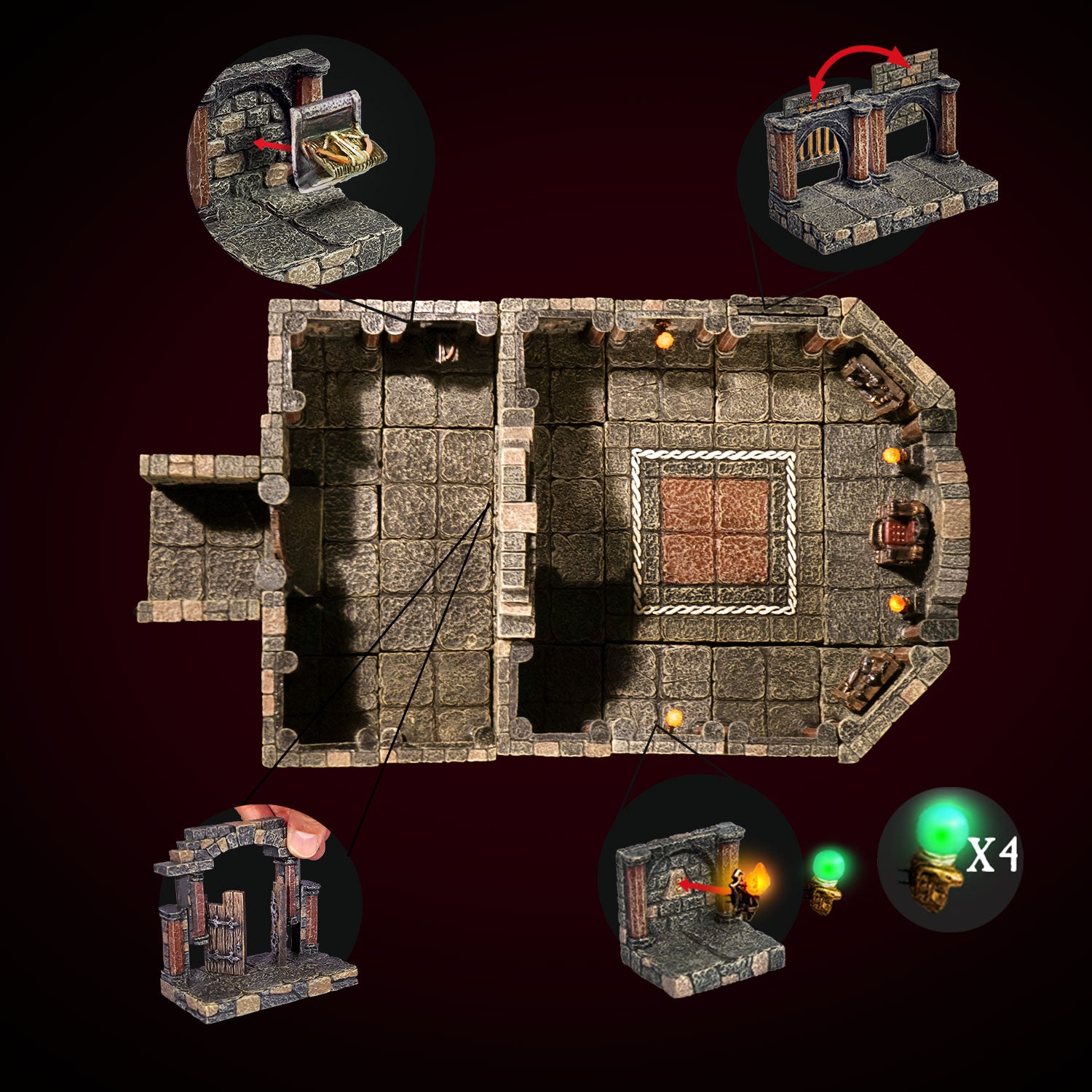
This is the great extravagance of the hobby, and it deserves an honest accounting. Dwarven Forge makes hand-sculpted, hand-painted modular terrain — dungeon walls, floors, doors that actually open, LED torches that actually light — that transforms a flat battle map into a three-dimensional place the miniatures can walk through. It is, without contest, the best splurge gift for a Dungeon Master, and it is also the most expensive category in this guide by a wide margin.
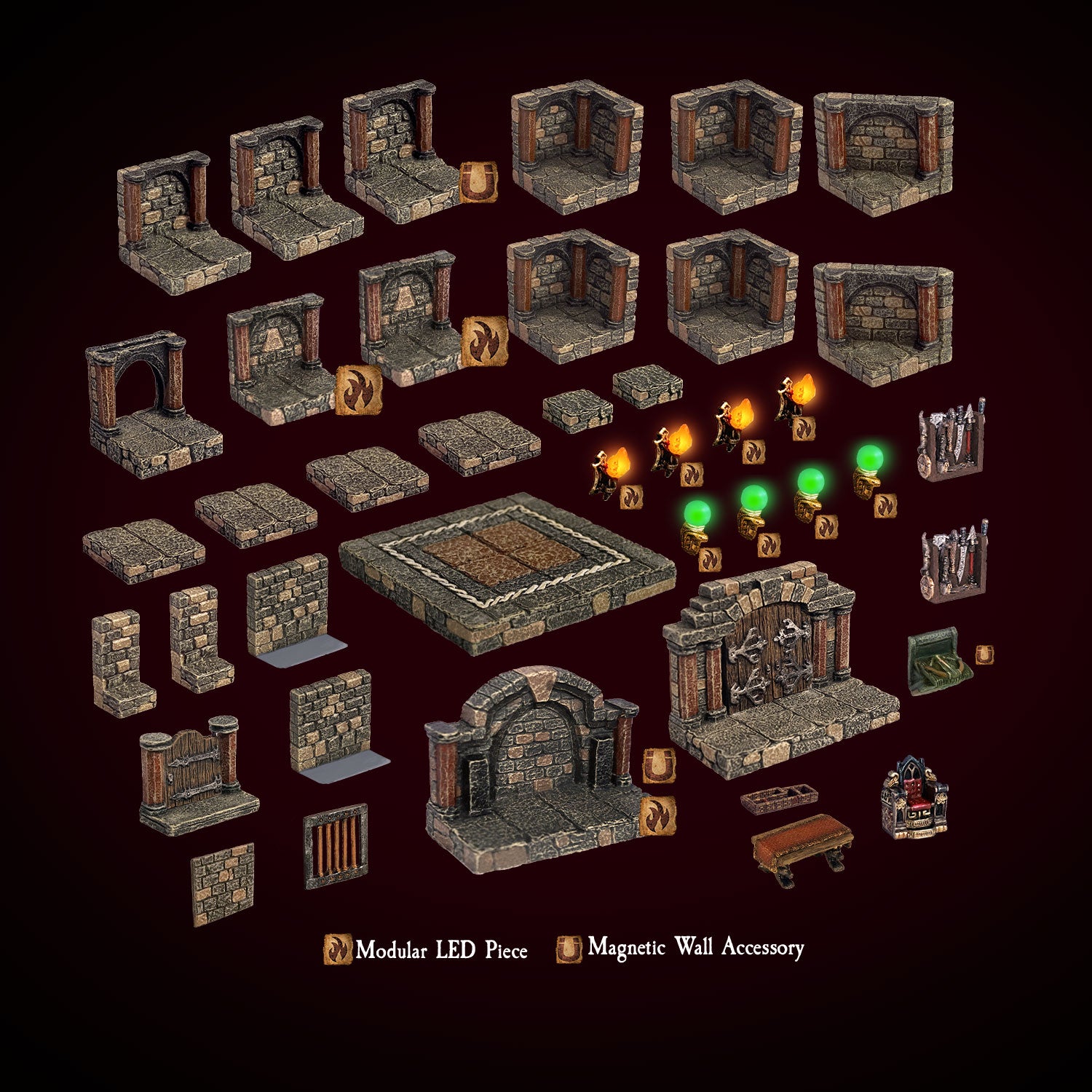
Let us be precise about the money, because a gift-giver should not be surprised at checkout. A painted Deluxe Starter Set — Dwarven Forge's 'Zaltar's Gameroom,' 44 pieces across 25 distinct types, with anchor magnets, working doors, and LED torches — runs roughly $167. That is the sane entry point and a genuinely complete gift. From there the catalog climbs steeply: full painted Encounter systems are quoted in the $400–$700 range, with individual large sets like the Gorgon Tiers near $497 and unpainted vaults past $700. These are not impulse purchases; they are the gift you give a DM who has run games for years and whom you wish to astonish.
Is it worth it? The honest answer from the community is: for the right DM, profoundly — and for the wrong DM, it sits in a closet. On Dwarven Forge's own forums, the recurring refrain even from devotees is a rueful 'so expensive,' immediately followed by an account of how the terrain changed the way their table plays. The value proposition is immersion: there is a documented, palpable shift when players stop looking at a grid and start looking at a room. A DM who delights in the theater of the table — who voices NPCs and describes the torchlight — will treasure it. A DM who runs lean, theater-of-the-mind games will find it a beautiful burden.
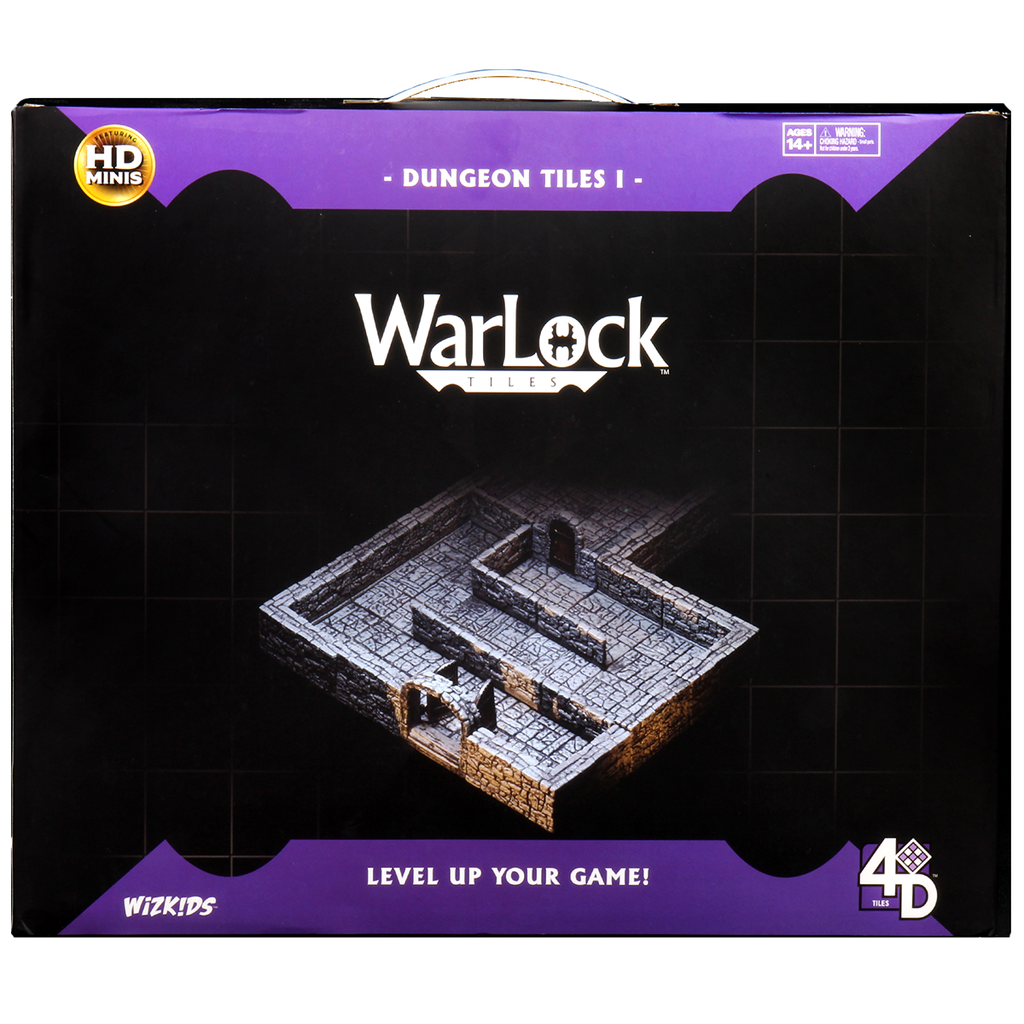
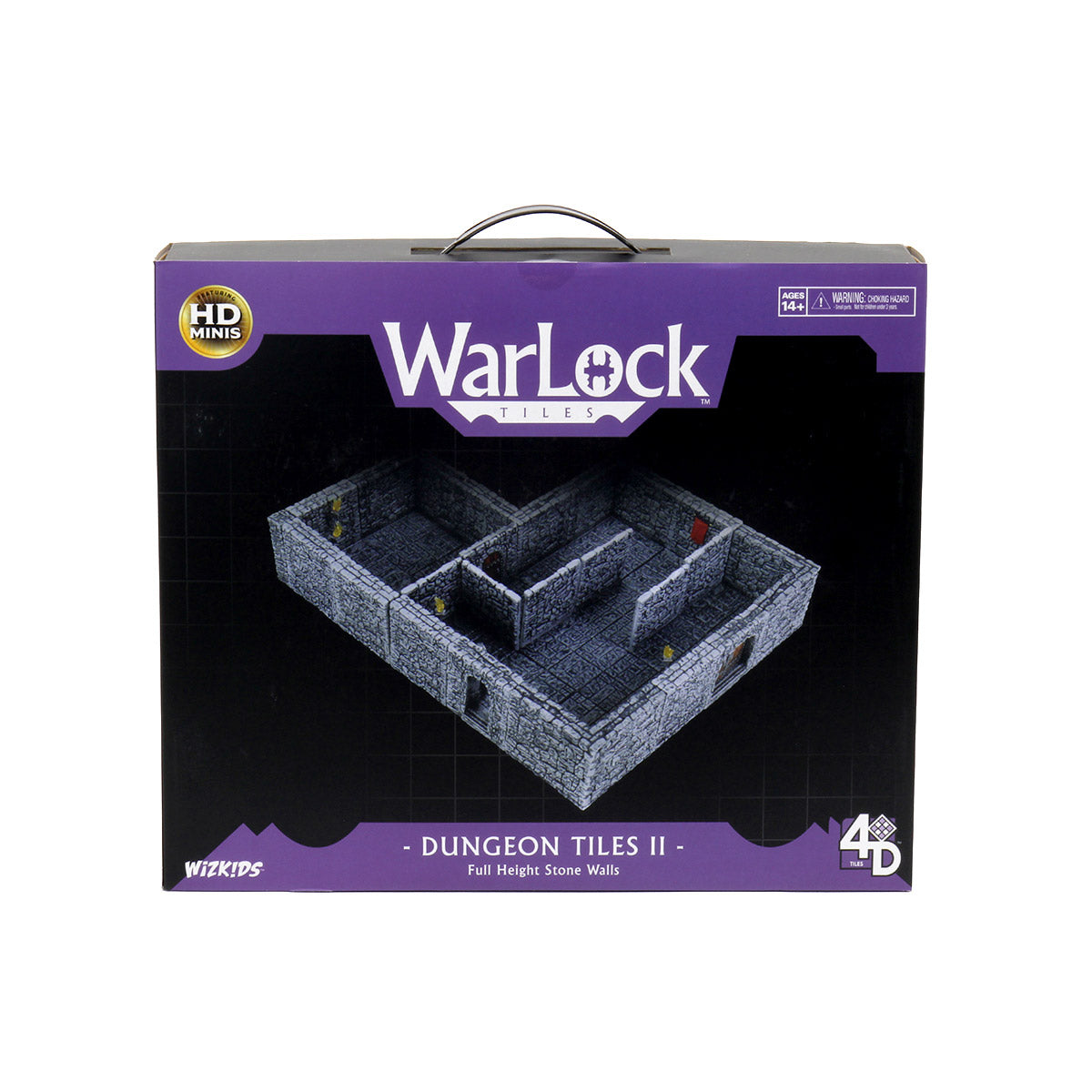
The mid-budget alternative deserves a place here too, because not every terrain gift needs four figures of pieces. WizKids WarLock Tiles (the '4D Settings' line) offer a patented ultra-slim modular wall system — base sets in the $100–$150 range, expansions $75–$100 — reversible with a stone face and a wood face. They are plastic rather than hand-painted resin, lighter on the wallet and the shelf, and they build a continuous gridded play space that satisfies most of the same hunger for dimensionality.
The curatorial caution: terrain is the one category where you should know your recipient's style of play before buying. It is the difference between the most memorable gift they will ever receive and an elegant object gathering dust beside the bookshelf.
What the archive notes about terrain is this: a battle map tells you where things are; terrain tells you where you are. The first is information. The second is a place. Some Dungeon Masters spend a lifetime chasing the difference.
A battle map tells you where things are; terrain tells you where you are. The first is information. The second is a place.
What's the best gift for a brand-new Dungeon Master?
A new DM is a particular and tender case. They are, almost always, terrified — of forgetting a rule, of the long silence when players go somewhere unplanned, of running out of things to say. The best gifts for a new Dungeon Master are not luxuries; they are confidence. They reduce the number of things the DM has to hold in their head at once.
The single most useful object here is, again, a DM screen — but for the novice, the value is the reference panels rather than the wood. A screen that puts the most-forgotten rules (conditions, cover, common DCs, action economy) at eye level lets a new DM keep the game moving instead of freezing mid-session to look something up. This is precisely why the customizable, insert-swappable screens are so prized: a new DM can load the panels that match the rules they keep fumbling.
The second pillar is the idea-generator deck, and for new DMs I cannot recommend the category highly enough. The GameMaster's Apprentice (Larcenous Designs) is a system-neutral deck where every one of its 60 double-sided cards is crammed with more than a dozen randomizers — names, motivations, sensory details, plot hooks, yes/no oracles, even dice and stat results printed on the card edges. When players ask the new DM 'what's the bartender's name?' and the DM's mind goes blank, a single card flip produces a name, a mood, and a secret. It is improvisational training wheels of the best kind, priced like a deck of cards rather than a luxury. Hit Point Press's The Deck of Many: NPCs (~$30, 33 tarot-sized illustrated cards) serves a parallel function with gorgeous art and ready-made characters.
The third, quietly, is a soundscape subscription, covered fully in its own section below — but worth flagging here because ambient sound covers the new DM's nervous silences better than almost anything, doing emotional labor the novice has not yet learned to do with their voice alone.
What I want to steer gift-givers away from, for the new DM specifically, is the splurge. Do not buy a terrified first-timer a $400 terrain system; you will add the weight of obligation to their stack of fears. Buy them tools that make the next session easier, not grander.
The archive's note on beginnings: every veteran Dungeon Master was once a person sweating behind a borrowed cardboard screen, certain they were about to be found out. The kindest gift you can give a new one is not splendor — it is a smaller list of things to be afraid of.
Every veteran was once a person sweating behind a borrowed cardboard screen. The kindest gift for a new DM is a smaller list of things to be afraid of.
What do worldbuilder DMs actually want under the tree?

Some Dungeon Masters run published adventures, lightly seasoned. Others are worldbuilders — the ones who have a binder, or three, of invented gods and trade routes and ten-thousand-year histories no player will ever fully see. For this kind of DM, the gift that lands is anything that helps them hold, organize, and grow the world inside their head.
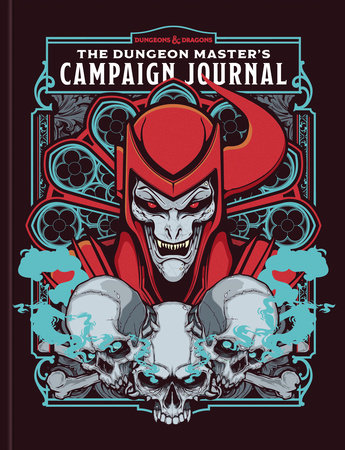
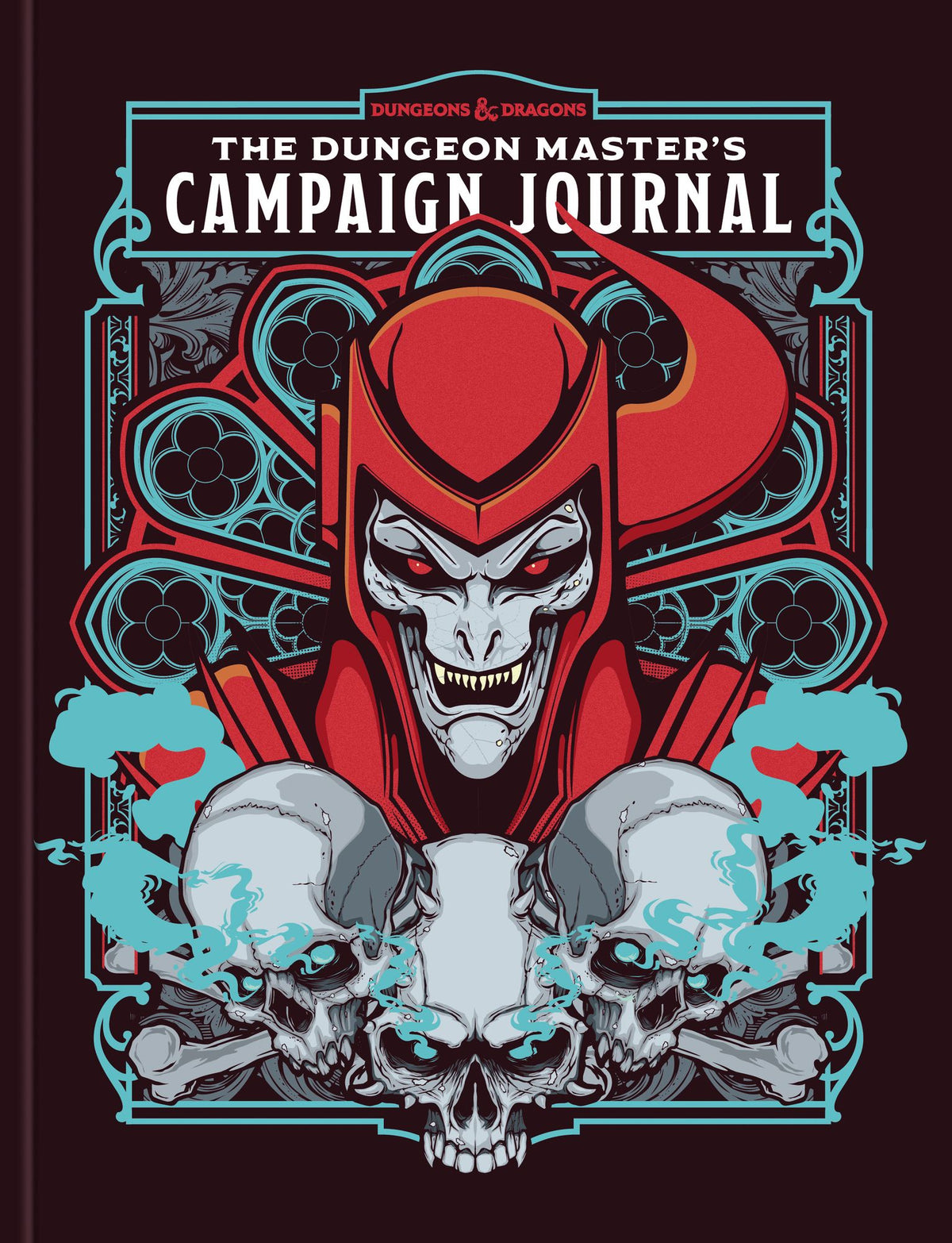
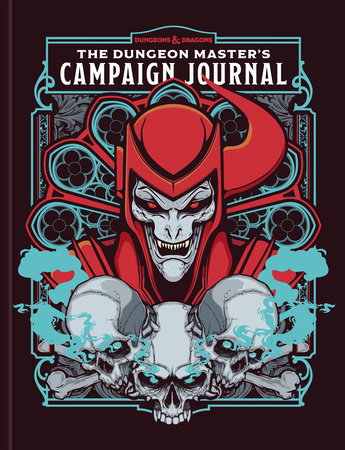
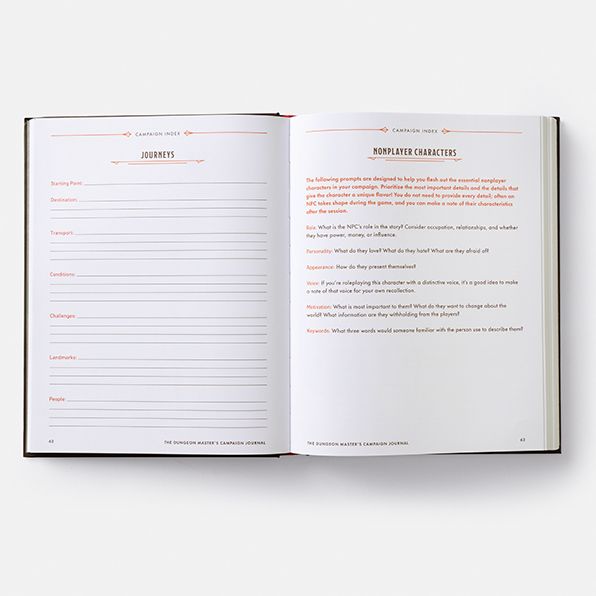
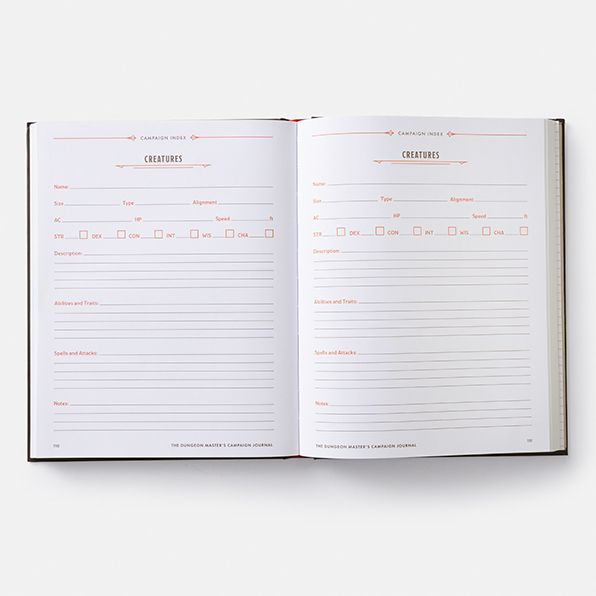
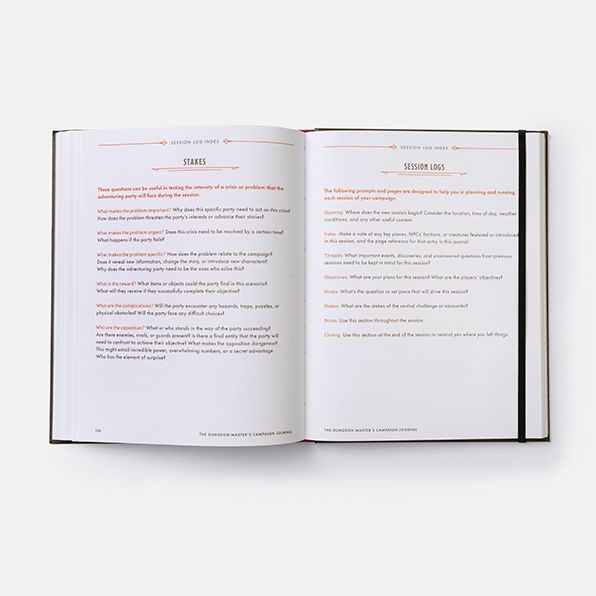
The flagship physical gift is the official Dungeon Master's Campaign Journal (~$25), released late 2025 in partnership between Wizards of the Coast and Clarkson Potter, with cover art by Hydro74 — Venger glowering from the front, Warduke from the back. It is a hardcover working tool: prompts, indexes, and templates for building monsters and settings, a back pocket for spell cards or loose notes, and an elastic closure band so a campaign's worth of scribbles doesn't scatter in a backpack. For a worldbuilder, a beautiful, durable, structured journal is not stationery — it is the cathedral they pour their world into.
Its companion is The Worldbuilder's Journal of Legendary Adventures (~$25, official D&D licensed), which poses 365 questions designed to drag a setting out of the fog — questions about myth, geography, character, and culture that a worldbuilder answers the way some people answer crossword clues: compulsively, joyfully, one a day. For the DM who prefers analog hex-mapping, plain hex-grid worldbuilding notebooks (the Sosha 'Game Master World Building Notebook' and its kin) run roughly $7–$12 and give the cartographer in them somewhere to draw.
The digital gift for this archetype is a World Anvil subscription — a wiki-style worldbuilding platform with interactive maps, historical timelines, linked articles, and an integrated campaign manager. For the worldbuilder whose ambitions have outgrown paper, a year of World Anvil is a gift that quietly expands every week they use it. (Subscriptions are tiered; gift the membership, not a one-time object.)
And here the inspiration deck returns, in its worldbuilder guise: Hit Point Press's broader Deck of Many reference lines and the encounter/NPC decks give a worldbuilder raw ore — a stranger, a ruin, an encounter — to fold into the setting they're forever expanding.
The caution for gift-givers: a worldbuilder is fiercely particular about their tools. A journal is safe — everyone needs somewhere to write. A specific piece of software or a specific aesthetic is riskier; when in doubt, give the open-ended object (the blank, beautiful journal) over the prescriptive one.
What the archive observes about worldbuilders: they are writing a book no one will ever read in full, and they know it, and they do it anyway. The best gift you can give such a person is simply a finer place to keep the parts of the world that never make it to the table.
A worldbuilder is writing a book no one will ever read in full, and they know it, and they do it anyway. Give them a finer place to keep it.
What's the best gift for the organized DM — and the one who runs games on the road?
There is a species of Dungeon Master whose love language is order. They arrive at the table with everything sorted, initiative tracked to the second, minis ranked in foam like a jeweler's tray. For this DM, the gift is infrastructure: the things that turn a chaotic pile of game materials into a system.
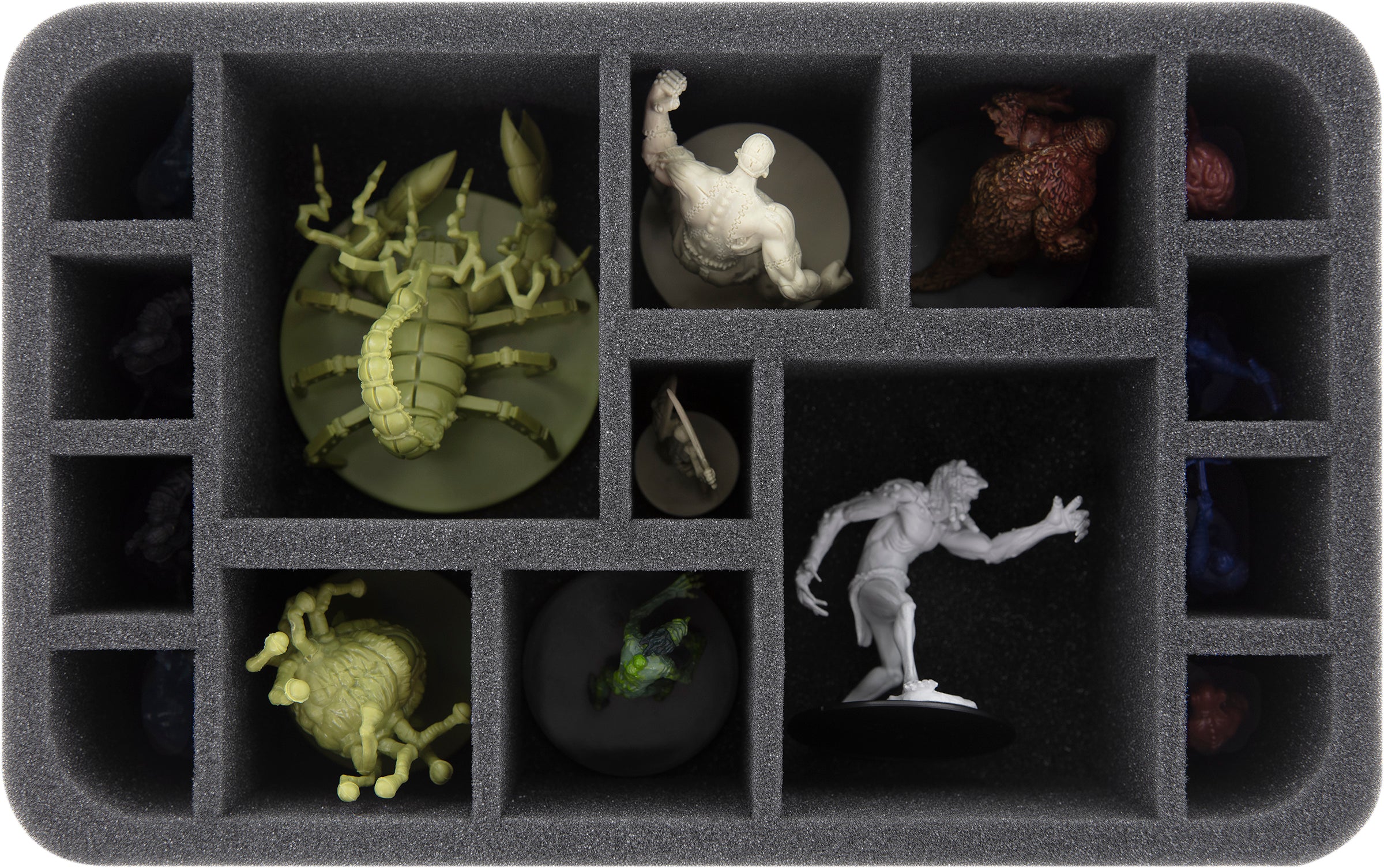
The foundational gift is miniature storage and transport, and the maker to know is Feldherr (German, the name means 'commander'). Feldherr makes custom-cut foam trays and cases sized precisely to D&D miniatures. The premium American alternative is Battle Foam, beloved and pricier. For the DM who hauls a kit to a friend's house or a convention, a case that ends the era of minis rattling loose in a ziplock bag is a genuinely beloved gift — the kind they use every single session and think of you each time.
The second pillar is the initiative tracker: a device, magnetic pad, or acrylic stand that displays turn order so the DM never loses the thread of combat. Paizo's current Pathfinder Second Edition Combat Pad is the dependable physical version: wet-erase magnetic labels can be reordered as combatants delay, fall, or join the fight, while the pad keeps initiative, conditions, duration, and notes in one visible place. It is Pathfinder-branded, but the turn-order job is system-neutral enough for any fantasy campaign. Screen-top trackers remain a good alternative when table space is tighter.
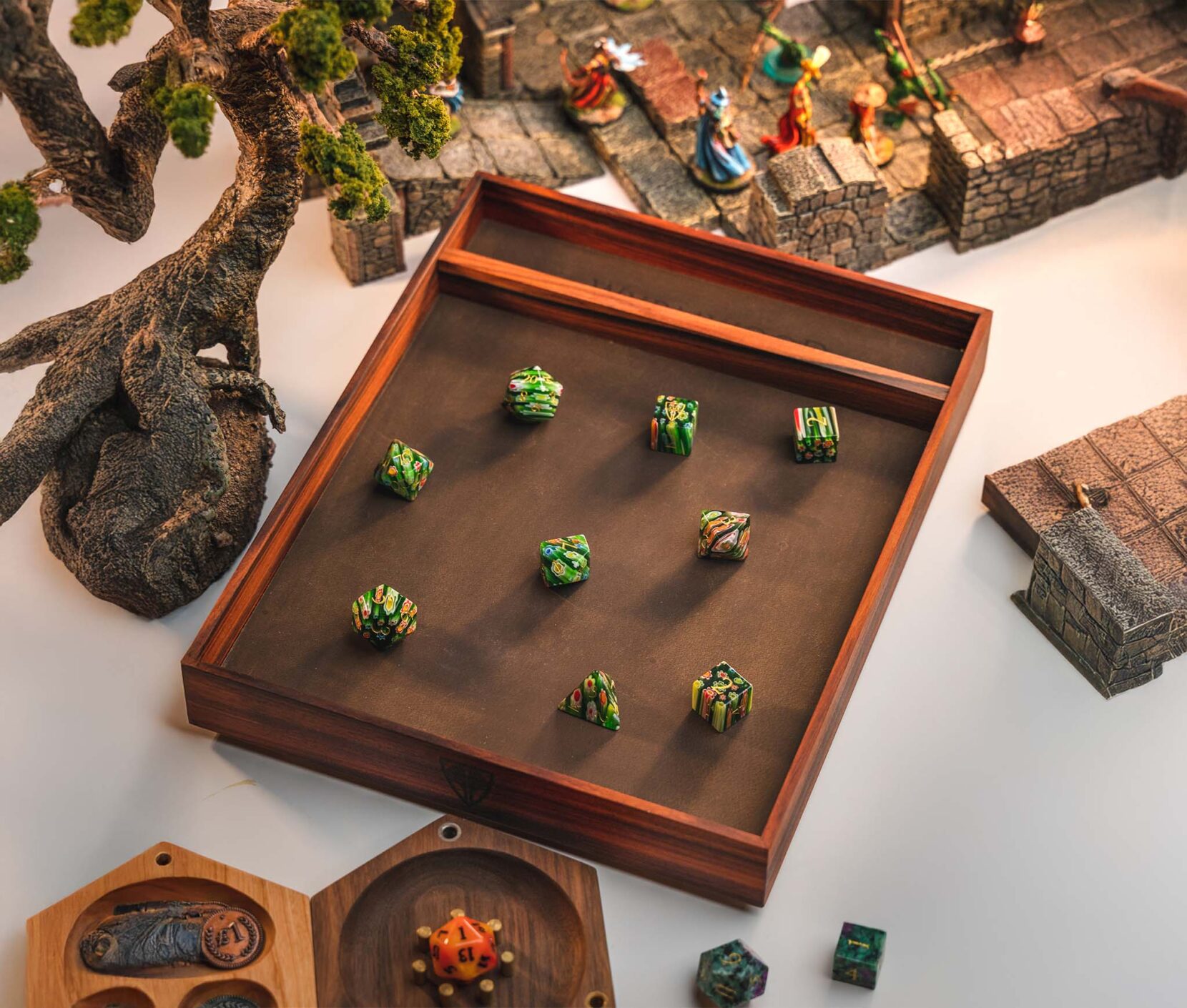
The third, and the most fun of the organized-DM gifts, is the dice tray and the dice jail — framed specifically as DM tools, not player trinkets. A DM screen-side dice tray gives the Game Master a contained, felt-lined surface for the dozens of secret rolls they make per session. The dice jail — a little laser-cut wooden cage or mimic-chest 'prison' for dice that betray their owner — is the rare gag gift that earns its place at the table.
The archive's note on order: the organized Dungeon Master is not fussy for its own sake. They sort the minis and track the initiative so that when the table erupts — when the ambush lands and five players talk at once — they alone remain unflustered. To gift them infrastructure is to gift their players a calmer game.
The organized DM sorts the minis so that when the table erupts, they alone remain unflustered. Gift them infrastructure and you gift their players a calmer game.
Can you gift atmosphere? The case for soundscapes and ambiance

The most underrated gift on this list is not an object at all. It is sound. A Dungeon Master spends a session conjuring places out of nothing but description, and the single most efficient force multiplier for that labor is ambient audio — the crackle of a tavern hearth under the players' banter, the drip and echo of a dungeon, the swelling dread of a boss revealing itself. Atmosphere is, it turns out, profoundly giftable.
The standard-bearer is Syrinscape, an official Wizards of the Coast audio partner that has produced soundtracks for hardcover adventures like Baldur's Gate: Descent into Avernus and Waterdeep: Dragon Heist. It is a soundboard-style app where each element — wind, footsteps, a roaring crowd — is independently controlled, randomized, and even spatially positioned, so a scene never loops obviously. It runs on a subscription model, roughly $8–$11 per month, with individual SoundSets purchasable à la carte and a free tier to test the waters. As a gift, a year of Syrinscape (or a generous bundle of SoundSets matched to the campaign the DM is running) is the kind of present that visibly elevates every session that follows.
And here I will let the practitioners speak, because the community's testimony on this category is unusually emphatic. On the EN World forums, the DM scrubkai — who professes to avoid electronic tools at the table — called Syrinscape 'my one major exception,' saying it 'absolutely enhances every one of my game sessions.' The user J0h0 put the dependency more starkly: 'Once you start using it in your games, gaming without it feels strangely flat and lifeless.' Another, kiligir, offered the cleanest endorsement a gift-giver could ask for — 'Give it a shot. It'll change the way you game' — and praised that 'there is nothing on it that doesn't just -work-.' That is rare consensus.
The physical-gift cousin of ambiance is the token and prop set — though here I tread carefully, because props edge toward player territory. The DM-appropriate version is the encounter token set: condition markers, status tokens, area-of-effect templates that the DM places on the map to track what's happening to whom. These are working tools of running combat, not character flair, and a well-made set saves a DM a hundred 'wait, are you still poisoned?' interruptions per campaign.
The caution on soundscapes: a subscription is a commitment, and a DM who runs entirely in-person at a quiet table may prefer SoundSets they own outright to a recurring charge. Gift the model that matches how they actually play.
The archive's closing note on atmosphere: of all the Dungeon Master's instruments, sound is the only one the players cannot see and never thank them for. It works on the room like weather — felt, not noticed. To gift a DM the means to summon weather is to gift them a power that operates below the threshold of gratitude, which is, perhaps, the truest kind of craft.

Of all the DM's instruments, sound is the only one the players never thank them for. It works on the room like weather — felt, not noticed.
DM gift or player gift? How to tell the difference before you buy
This is the question that separates a thoughtful gift from a well-meant miss, and it deserves its own reckoning, because the two audiences are genuinely different people with different needs — even when they sit at the same table.
The clarifying test is one question: does this object help someone run the game, or play in it? A player consumes the experience the DM builds. So player gifts are personal and expressive — their own dice, their character's portrait, a pin for their class, a dice bag in their favorite color. These are wonderful, and Puzzlewick keeps a separate guide for them. But give a DM a personal dice set and you have given them a thing they already own nine of and rarely roll in front of the table, since most of their rolls are secret.
DM gifts, by contrast, are operational. They serve the labor of running a world for other people. The screen that hides the notes. The terrain that stages the room. The deck that conjures an NPC. The journal that holds the campaign. The case that protects the minis. The tracker that orders the combat. The soundscape that sets the mood. Every one of these is pointed outward — at the table, at the session, at the players' experience — rather than inward at a single character.
A few honest edge cases, because the line genuinely blurs. Dice: a personal set is a player gift; a DM screen-side tray, a dice jail, or a set of NPC/loot dice the DM rolls on behalf of the world is a DM gift — the framing is everything. Books: a player wants splashy lore; a DM wants the Dungeon Master's Guide, screens, and running-the-game tools. Art: a character portrait is for the player who owns that character; a map or a worldbuilding journal is for the DM who owns the world.
There is also the dual-citizen complication: many DMs also play in other people's games. A gift can absolutely serve both lives — a beautiful dice set the DM uses as a player elsewhere is fair. But if your goal is to honor the person for being a DM, choose the operational gift. That is the side of them that goes unthanked.
The archive's note on the distinction: the player is given a character; the Dungeon Master is given a world to keep. To gift the player is to adorn their seat at the table. To gift the DM is to lighten the weight they carry to it. Both are kindnesses. Only one is for the person behind the screen.
The player is given a character; the DM is given a world to keep. To gift the player is to adorn their seat. To gift the DM is to lighten what they carry to it.
What experienced tables keep reporting
Recurring owner patterns, synthesized in Puzzlewick's words. Follow each evidence trail to read the original discussion.
Syrinscape is my one major exception [to avoiding electronic tools] — it absolutely enhances every one of my game sessions.
Read the evidence: EN World forums, user scrubkai (Syrinscape thread)
Once you start using it in your games, gaming without it feels strangely flat and lifeless.
Read the evidence: EN World forums, user J0h0 (on Syrinscape)
Give it a shot. It'll change the way you game. There is nothing on it that doesn't just -work-.
Read the evidence: EN World forums, user kiligir (on Syrinscape)
You're definitely going [to] get some serious screen envy from this masterpiece.
Read the evidence: Nerdist, on the Wyrmwood Magnetic Game Master Screen
A little ambient sound or music can really help set the mood... the tool itself is easy to use and easy to configure how you want it to be.
Read the evidence: EN World forums, user marroon69 (on Syrinscape)
Each card shows more than a dozen randomizers; with 60 double-sided cards showing 120 unique card faces, you can generate literally millions of possible adventures.
Read the evidence: Larcenous Designs, The GameMaster's Apprentice product description
The picks
Some links below are affiliate links — as an Amazon Associate, Puzzlewick earns from qualifying purchases, at no extra cost to you. It never changes a pick.

 6 photos
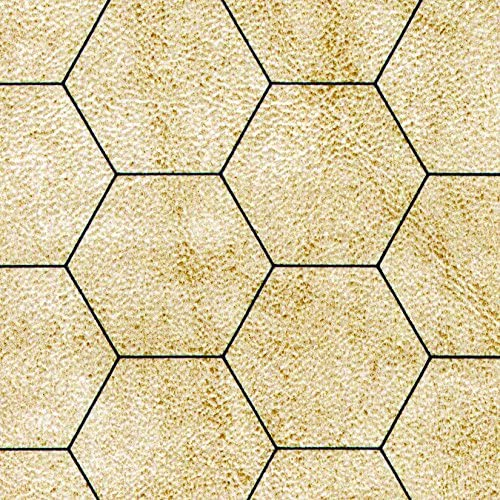
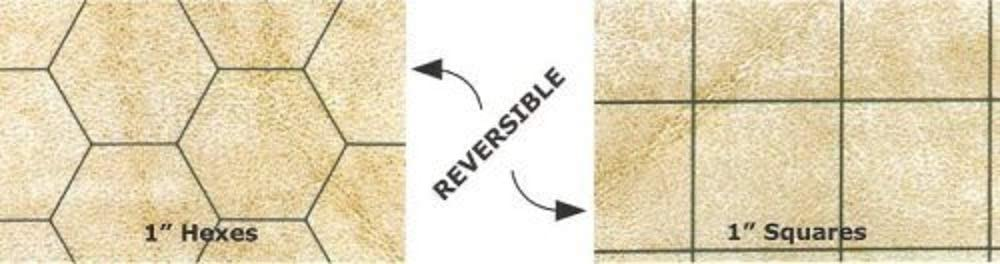
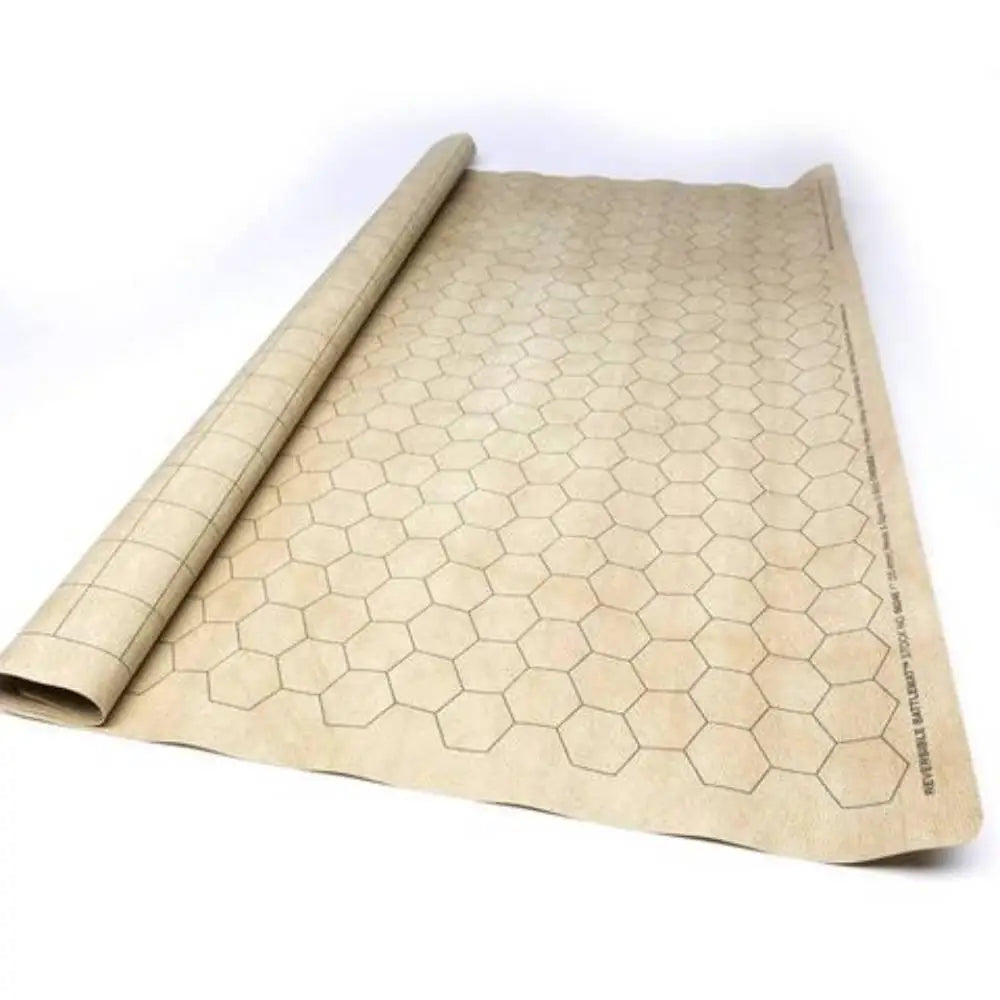
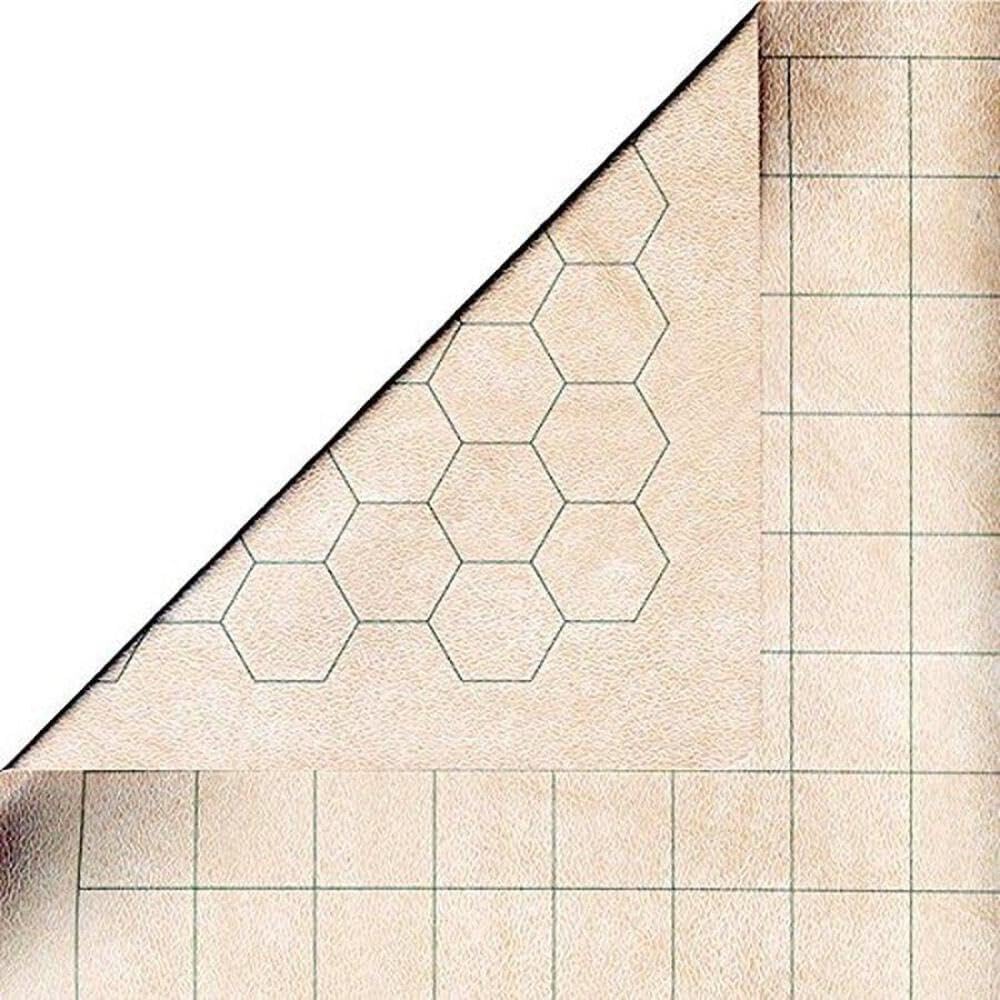
 Chessex Reversible Megamat (1" Squares & Hexes)
The wet-erase battle map nearly every long-running table eventually owns. At roughly 34.5 x 48 inches, the Megamat gives a DM a generous, durable surface — 1-inch squares on one side, 1-inch hexes on the other — to draw any encounter on the fly with wet-erase markers. It rolls up for transport, lies flat through a four-hour session, and survives years of use. For under thirty dollars it is the highest-floor gift on this list: there is no DM who runs grid combat who won't use it. Note it is wet-erase, not dry-erase — a feature, since wet-erase ink won't smudge under a sleeve mid-battle.
- Enormous, durable play surface for any drawn-on-the-fly encounter
- Reversible squares/hexes covers virtually every game system
- Wet-erase ink resists accidental smudging during play
- Under $30 and used by nearly every grid-combat table
- Requires wet-erase (not dry-erase) markers — easy to grab the wrong kind
- Large rolled format can hold a curl until weighted down
- Plain grid offers no terrain dimensionality on its own
 3 photos
 Dwarven Forge Modular Terrain — Deluxe Starter Set (Painted)
Hand-sculpted, hand-painted modular dungeon terrain that turns a flat map into a three-dimensional place the miniatures walk through — complete with working doors and LED torches. The painted Deluxe Starter Set ('Zaltar's Gameroom') packs 44 pieces across 25 distinct types with anchor magnets, and serves as the foundation for endless dungeon builds. It is the gift that astonishes a veteran DM. Know your recipient first: this is transformative for a DM who loves the theater of the table and a beautiful burden for one who runs lean. Full Encounter systems climb past $400, but the starter set is the sane, complete entry point.
- Transforms flat maps into immersive 3D rooms; players react to it audibly
- Hand-painted resin with working doors and LED torches
- Modular with anchor magnets — the starter set is an on-ramp to a larger collection
- A genuinely astonishing gift for an experienced DM
- Expensive; full Encounter systems run $400–$700+
- Heavy and storage-hungry — needs trays and shelf space
- Wasted on a theater-of-the-mind DM who doesn't stage encounters

 9 photos
 The Dungeon Master's Campaign Journal (Official D&D)
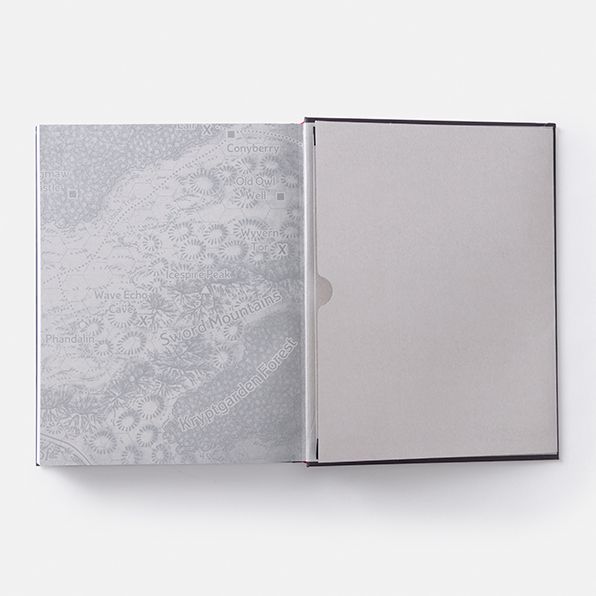
Arguably the highest utility-per-dollar gift on this entire list. A hardcover working journal — prompts, indexes, and templates for building monsters and settings — with Hydro74 cover art (Venger front, Warduke back), a back pocket for spell cards or loose notes, and an elastic closure band so a campaign's scribbles don't scatter in a backpack. For any DM who keeps notes (which is all of them), it is structured, durable, and beautiful. Released late 2025 in partnership between Wizards of the Coast and Clarkson Potter. Pairs naturally with a DM screen as a complete, thoughtful sub-$60 gift package.
- Roughly $25 for genuinely high, everyday utility
- Structured prompts/indexes/templates, not just blank pages
- Durable hardcover with back pocket and elastic closure for travel
- Official, collectible Hydro74 cover art
- A fixed structure may chafe a DM with their own established system
- Finite pages — a long campaign may need a second volume
- Less impressive as a standalone 'wow' gift; best paired
 2 photos
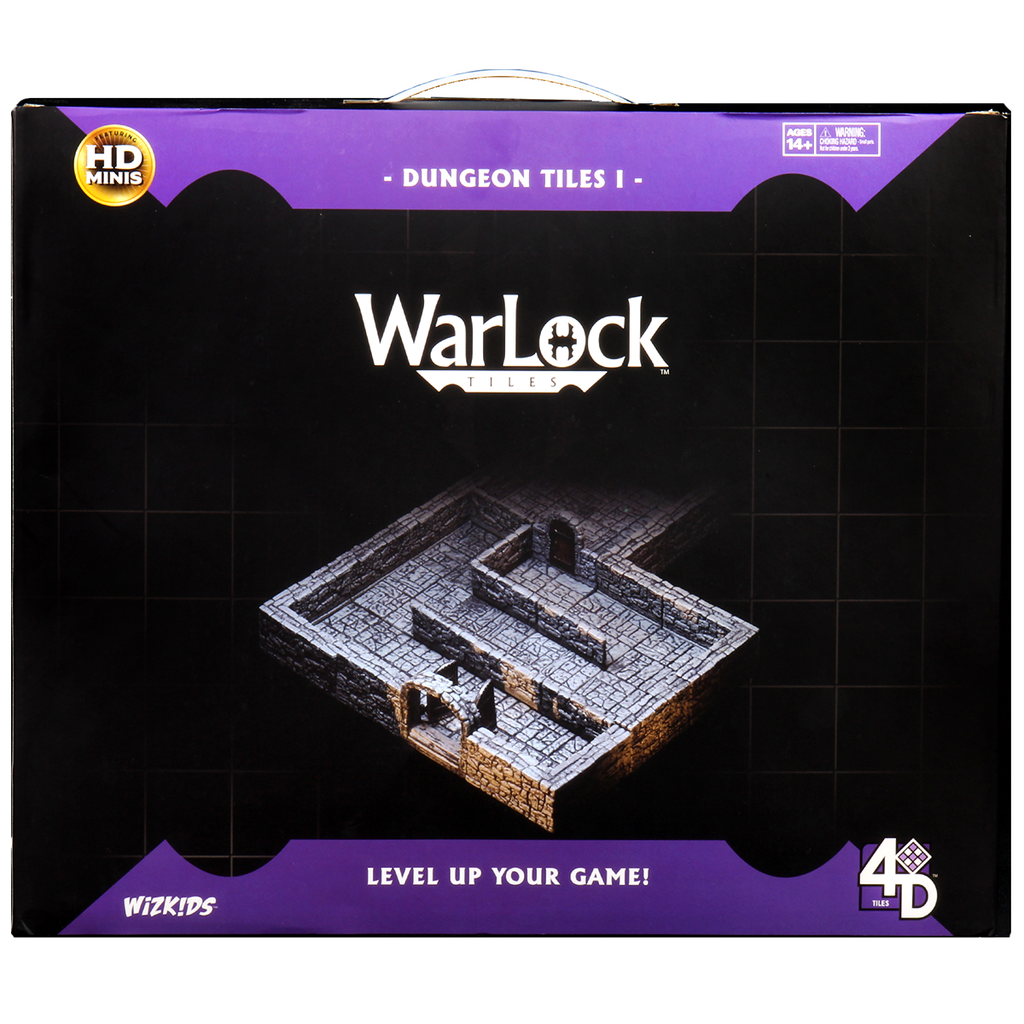
 WizKids WarLock Tiles (4D Settings — Dungeon Tiles)
The accessible on-ramp to 3D terrain. WarLock Tiles use a patented ultra-slim modular wall system that clips into a continuous gridded play space, reversible with a stone face and a wood face for double the utility. Base sets run roughly $100–$150 with expansions $75–$100 — markedly lighter on the wallet and the shelf than hand-painted resin, while satisfying most of the same hunger for dimensionality. For a DM curious about terrain but not ready for a Dwarven Forge mortgage, this is the thoughtful middle path: real walls, real rooms, real grid, at a third of the cost.
- Real 3D dungeon walls and rooms at a fraction of resin-terrain cost
- Patented ultra-slim walls keep a clean, continuous grid
- Reversible stone/wood faces double the configurations
- Lighter and easier to store than hand-painted resin
- Molded plastic lacks the hand-painted character of premium terrain
- Still a three-figure outlay for a full base set
- Clip system can feel fiddly during fast mid-combat reconfiguration
 9 photos
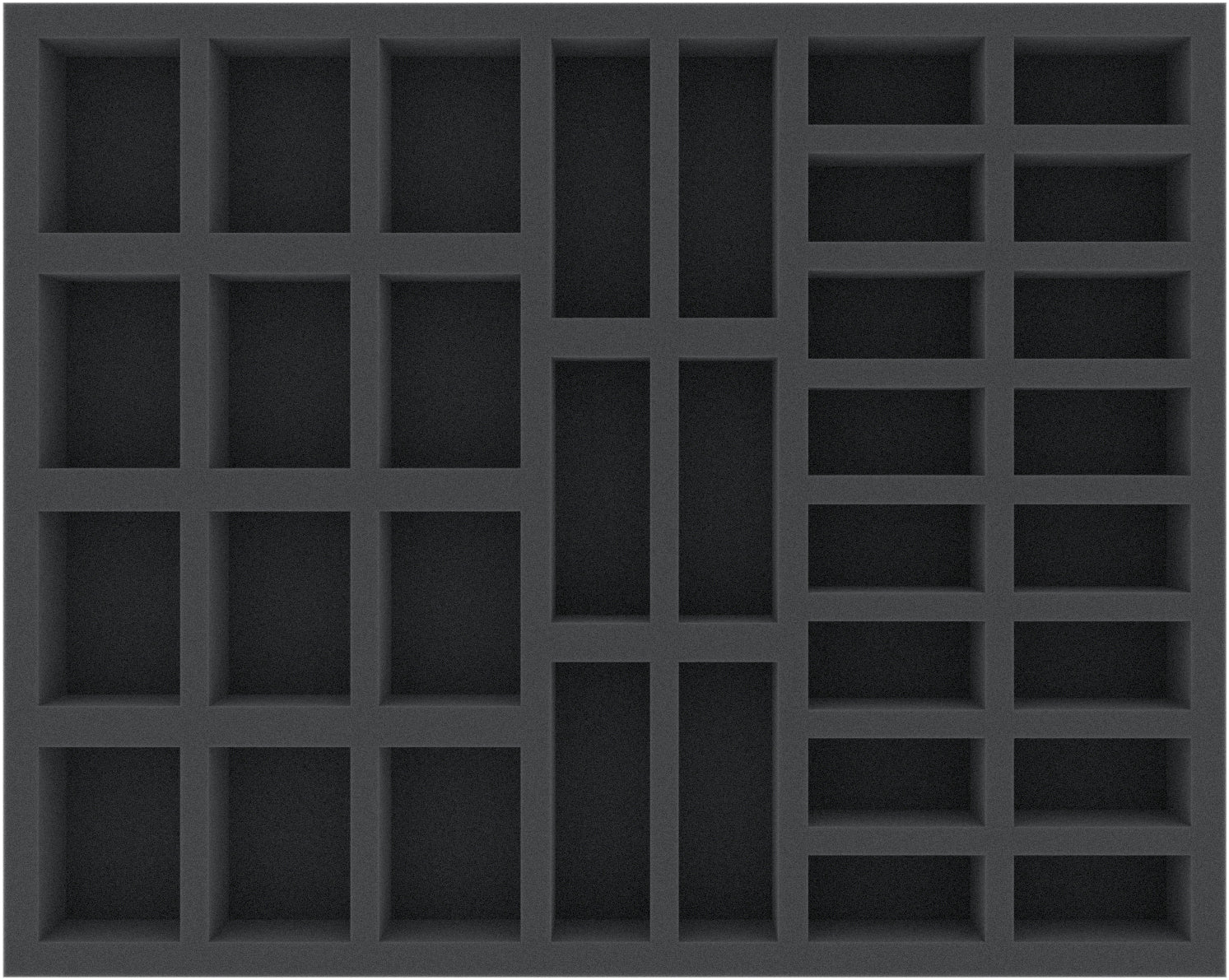
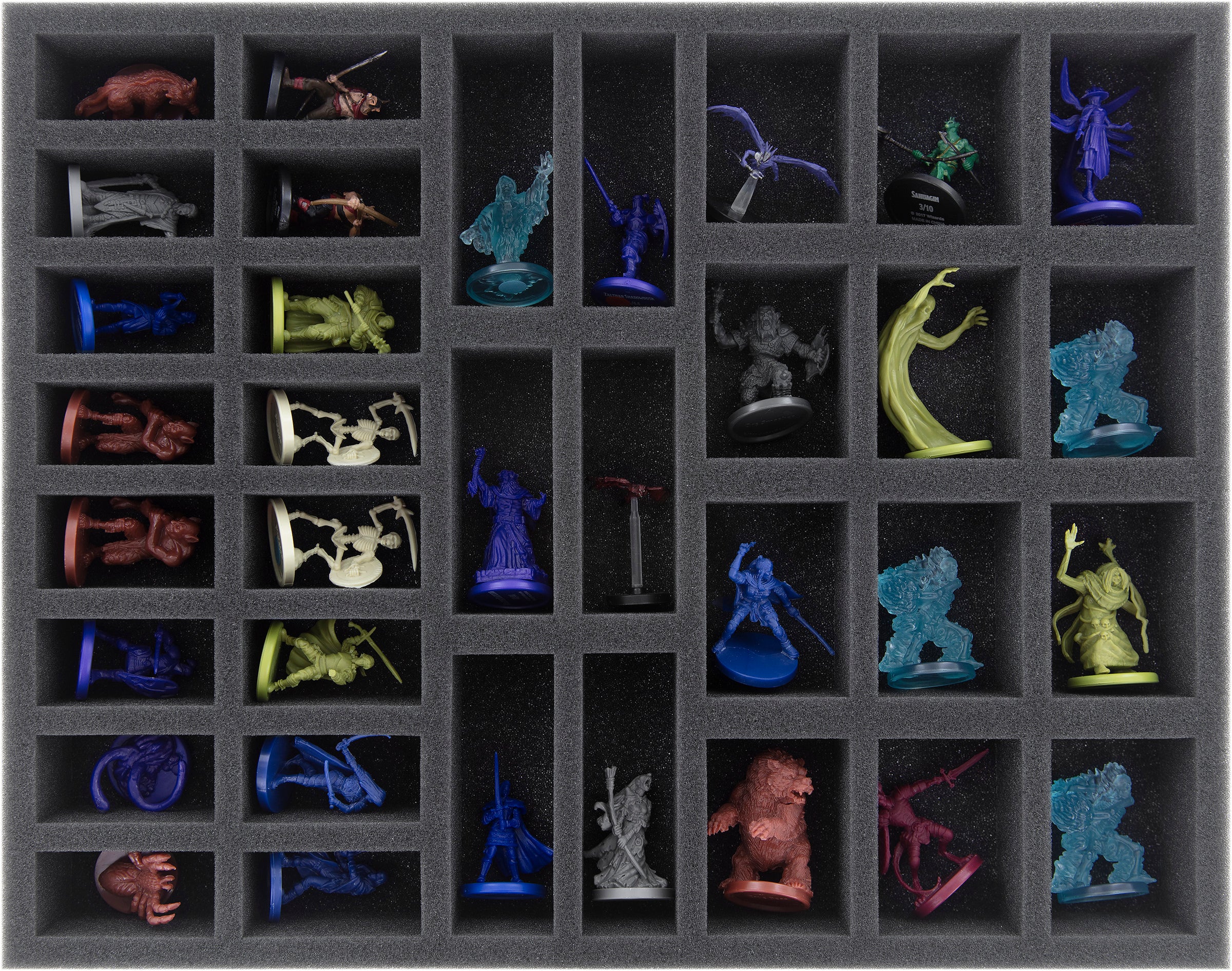
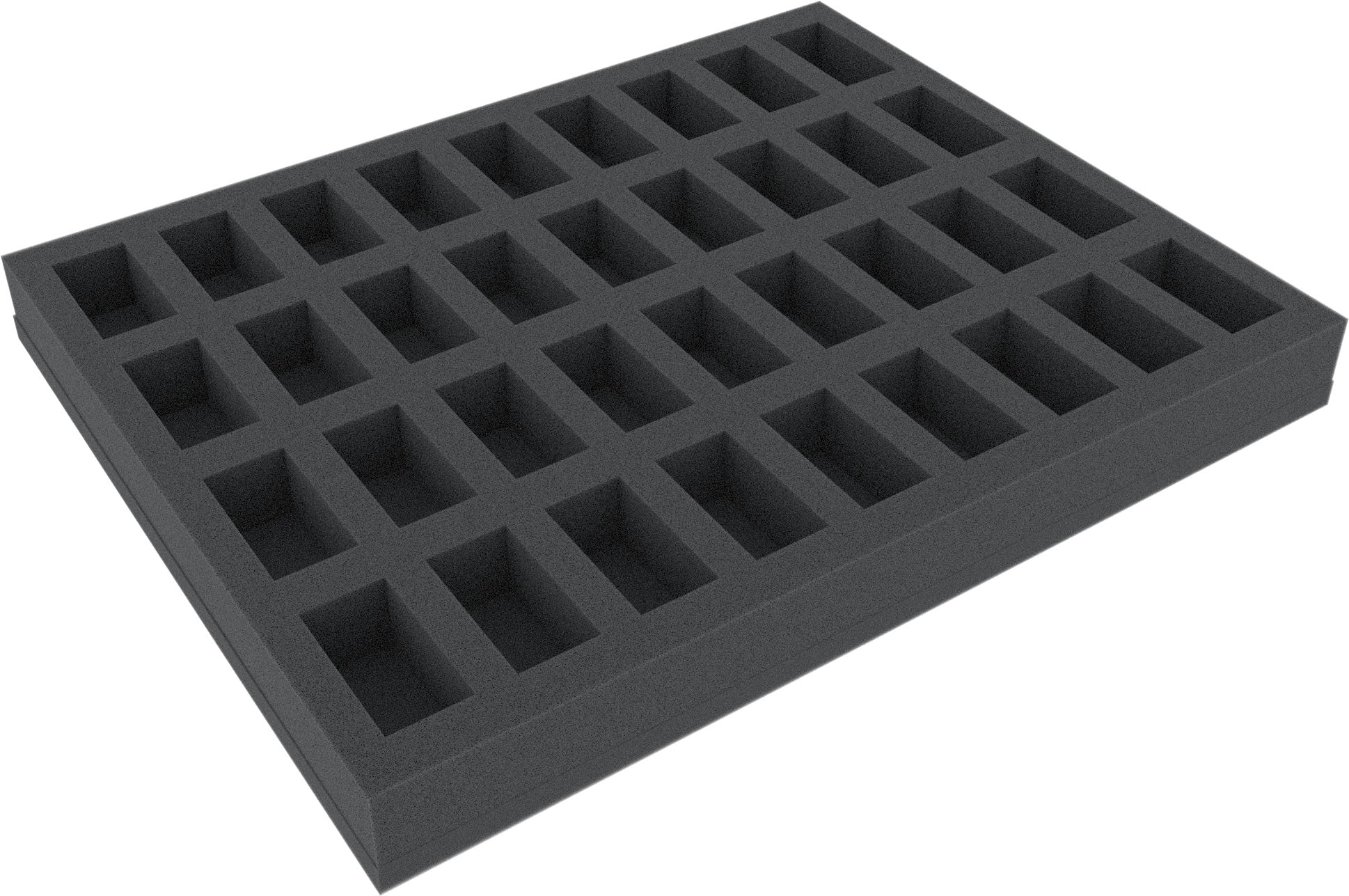
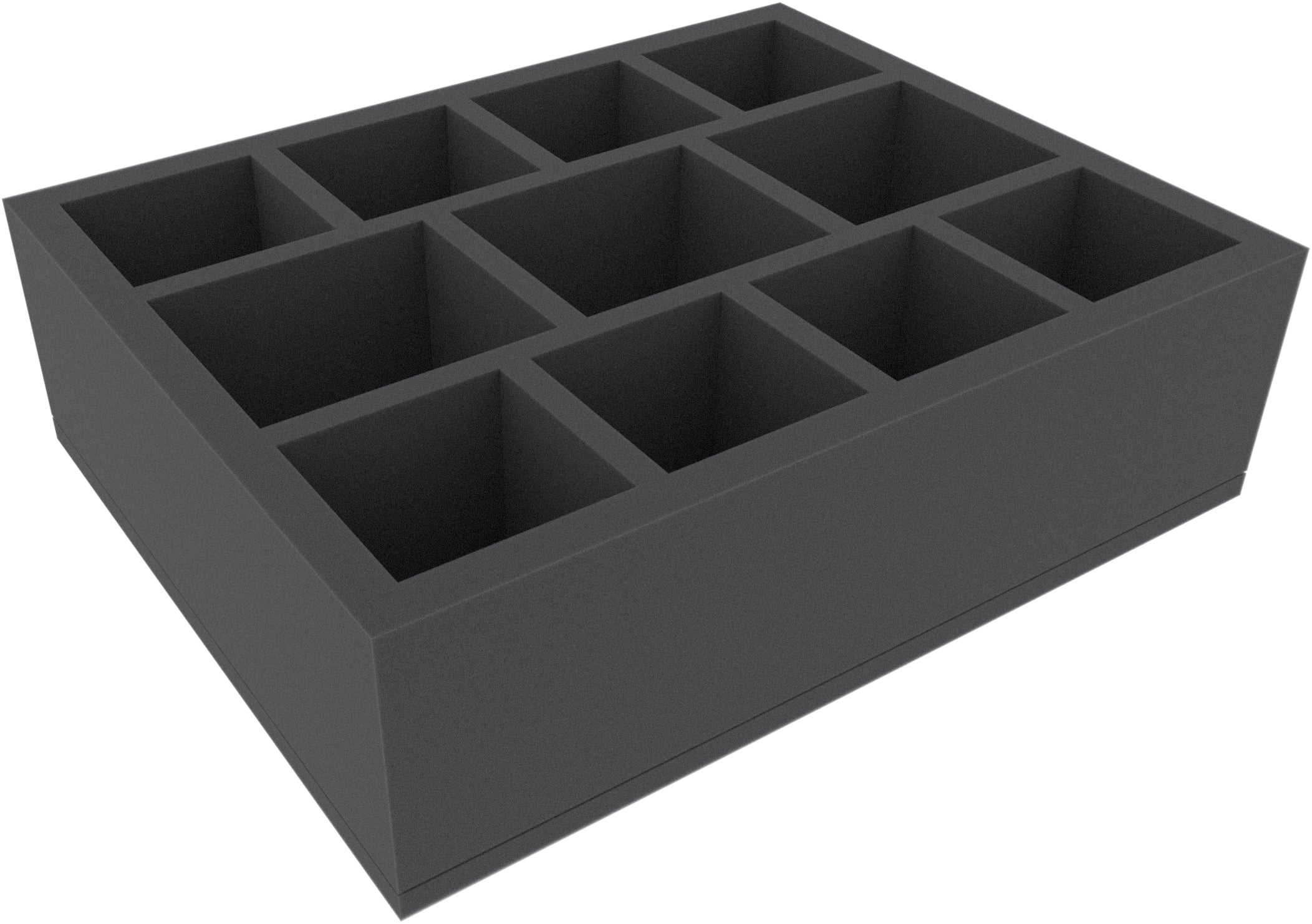
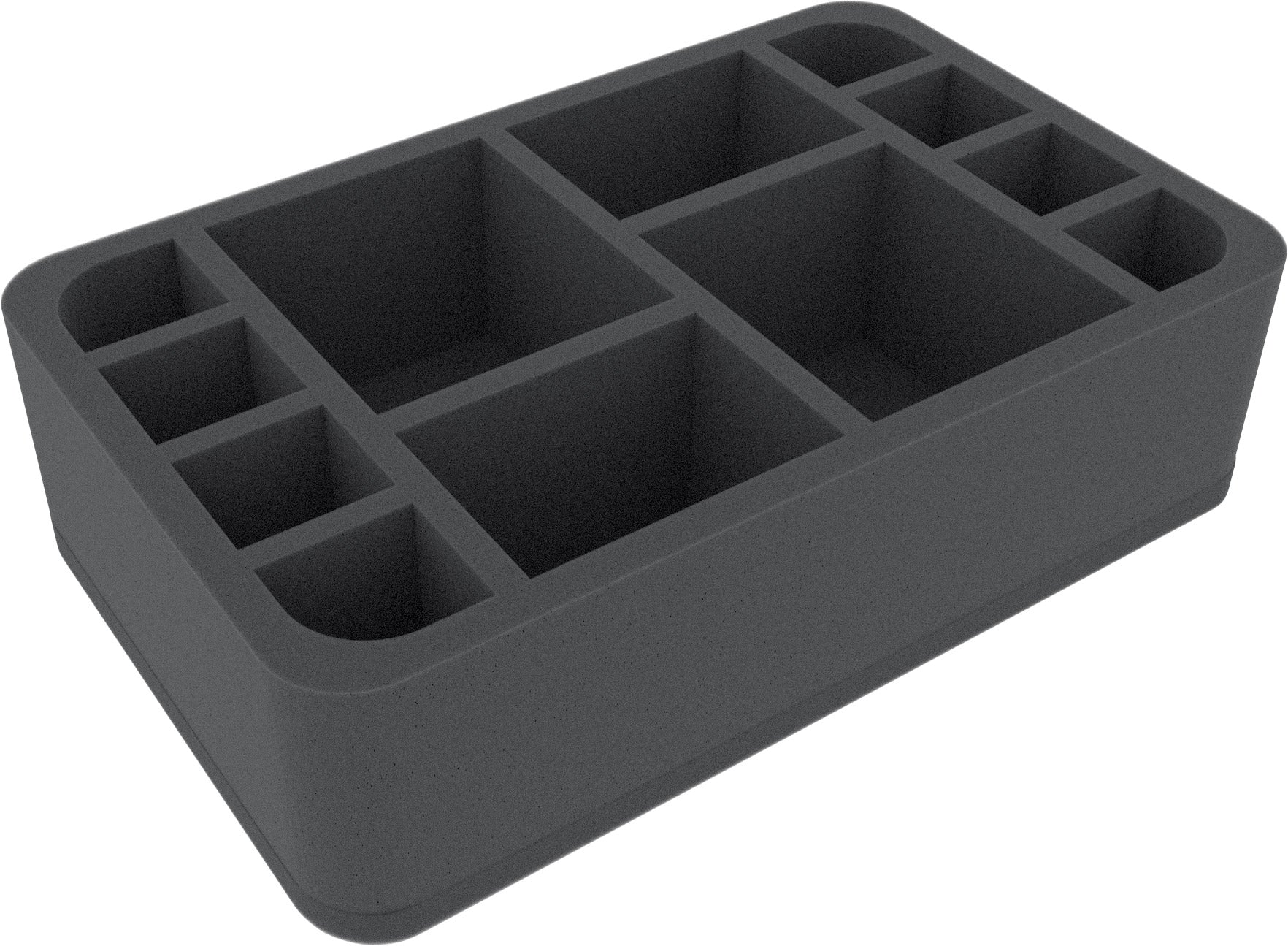
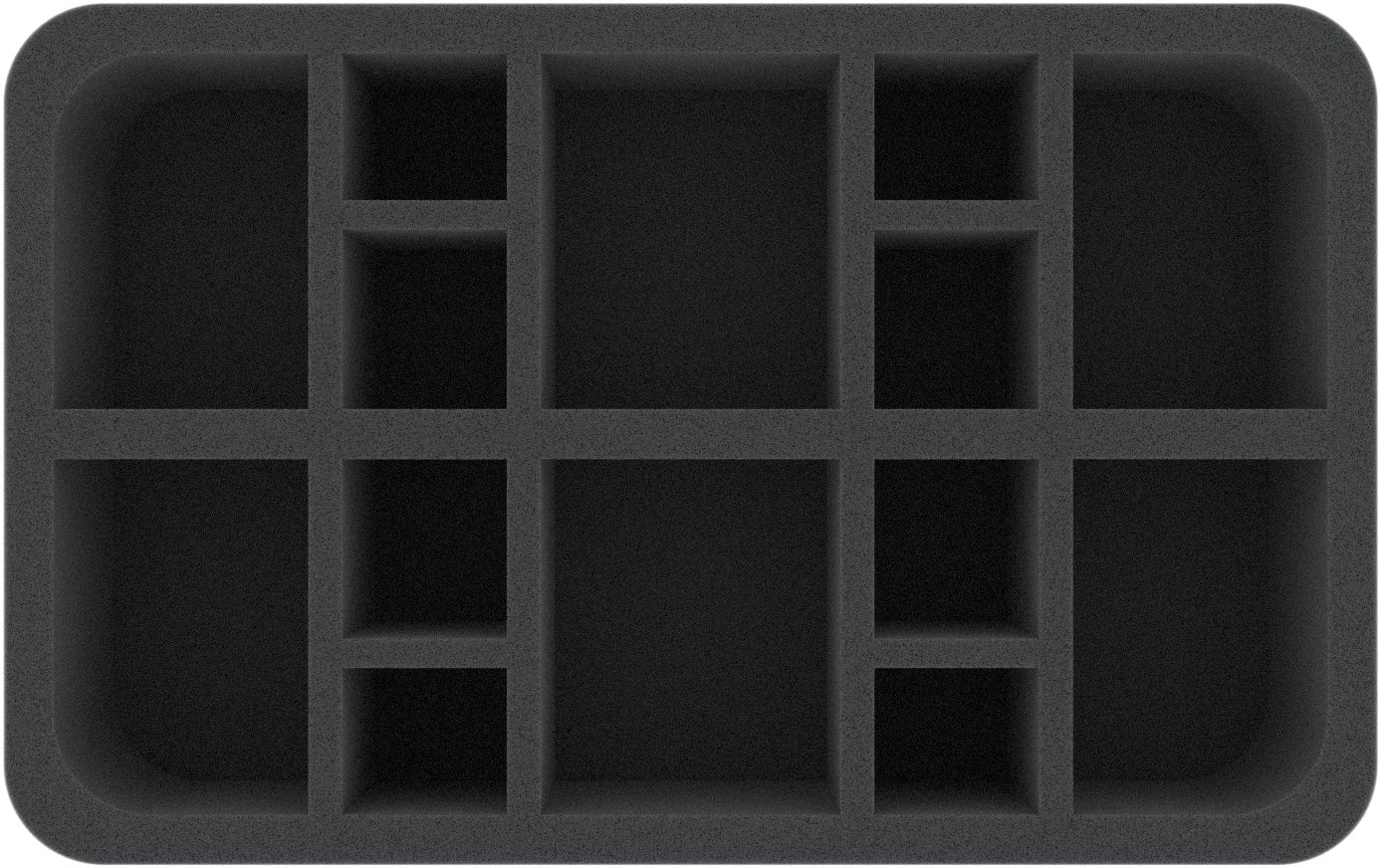
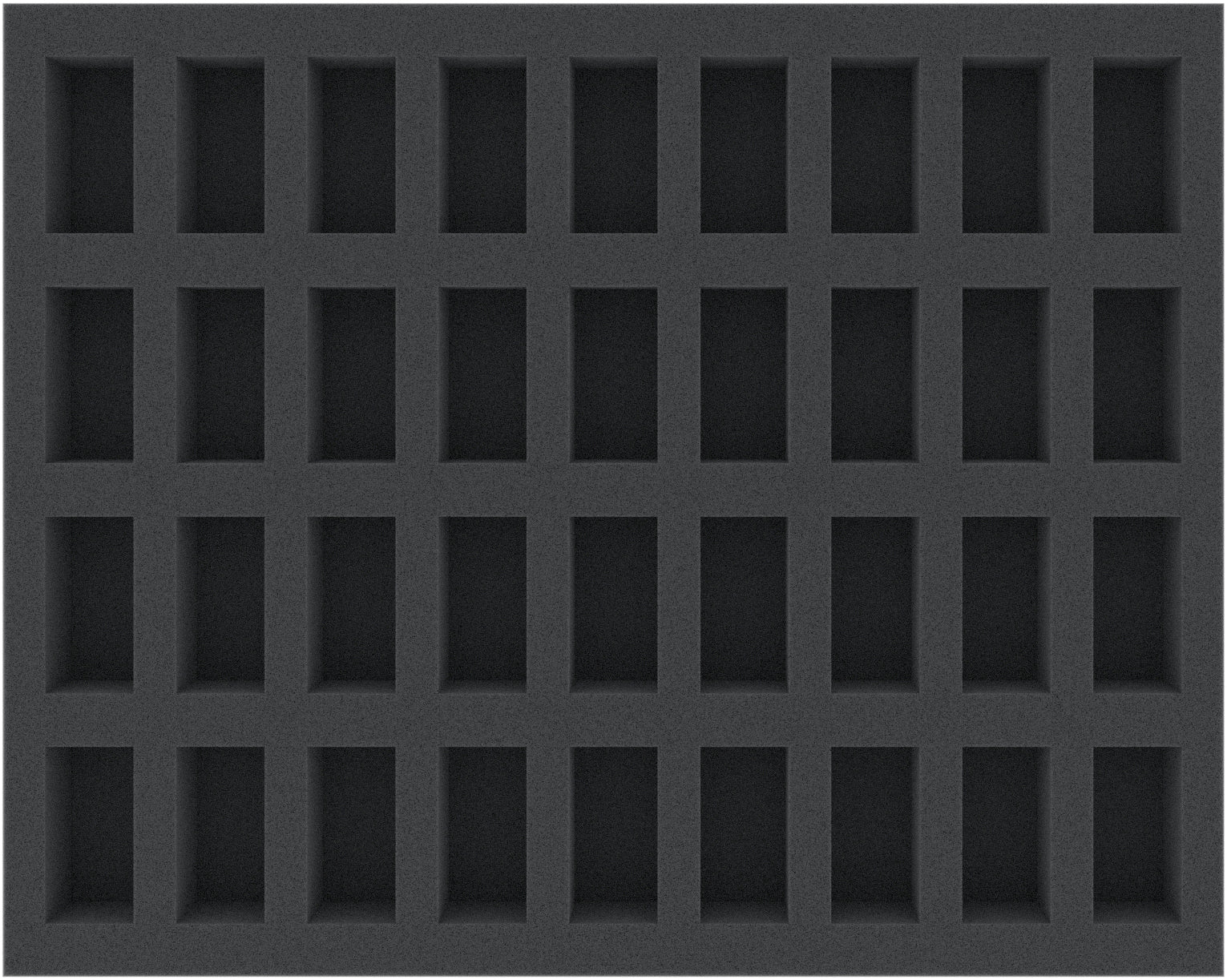
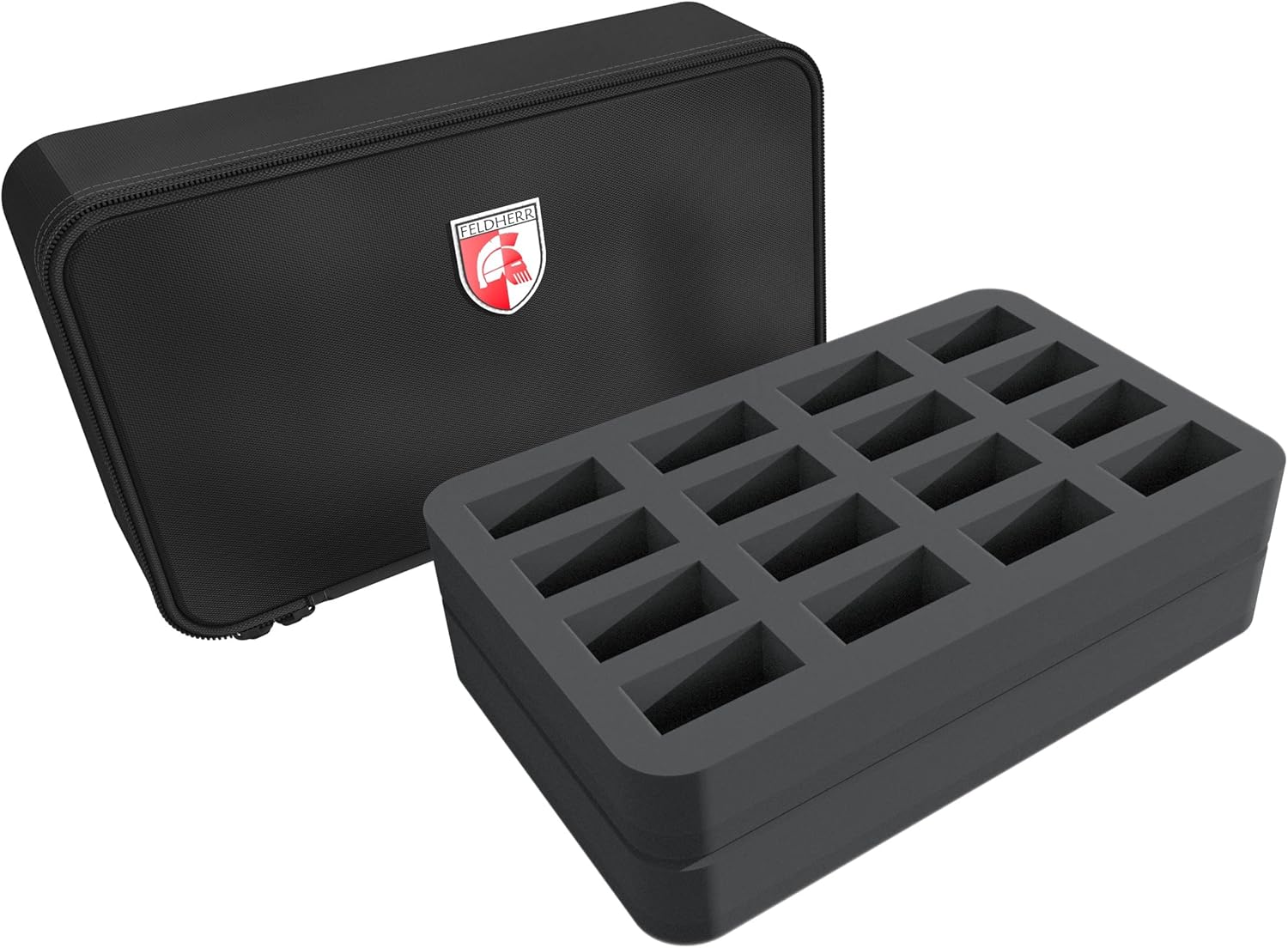
 Feldherr Custom Miniature Foam Trays & Cases (D&D)
Custom-cut foam trays and cases sized precisely to D&D miniatures, from the German maker whose name means 'commander.' A 34-mini D&D tray runs only ~€11, with fuller figure cases and Really Useful Box foam sets generally landing in the $28–$45 range. Reviewers consistently flag Feldherr as offering Battle-Foam-grade protection for notably less money. For the DM who hauls a kit to a friend's house or a convention, a case that ends the era of minis rattling loose in a ziplock bag is used every single session — the kind of practical gift they'll think of you each time they pack. Stretches a gift budget further than the premium American alternatives.
- Precision-cut protection sized to actual D&D minis
- Excellent value — Battle-Foam-grade protection for less
- Modular trays scale into Really Useful Box storage systems
- Used every session by any DM who transports a collection
- Based in Germany — US buyers should check shipping and EUR pricing
- Foam-only trays still need a box or case to become a full solution
- Sizing requires knowing the recipient's mini scale/collection
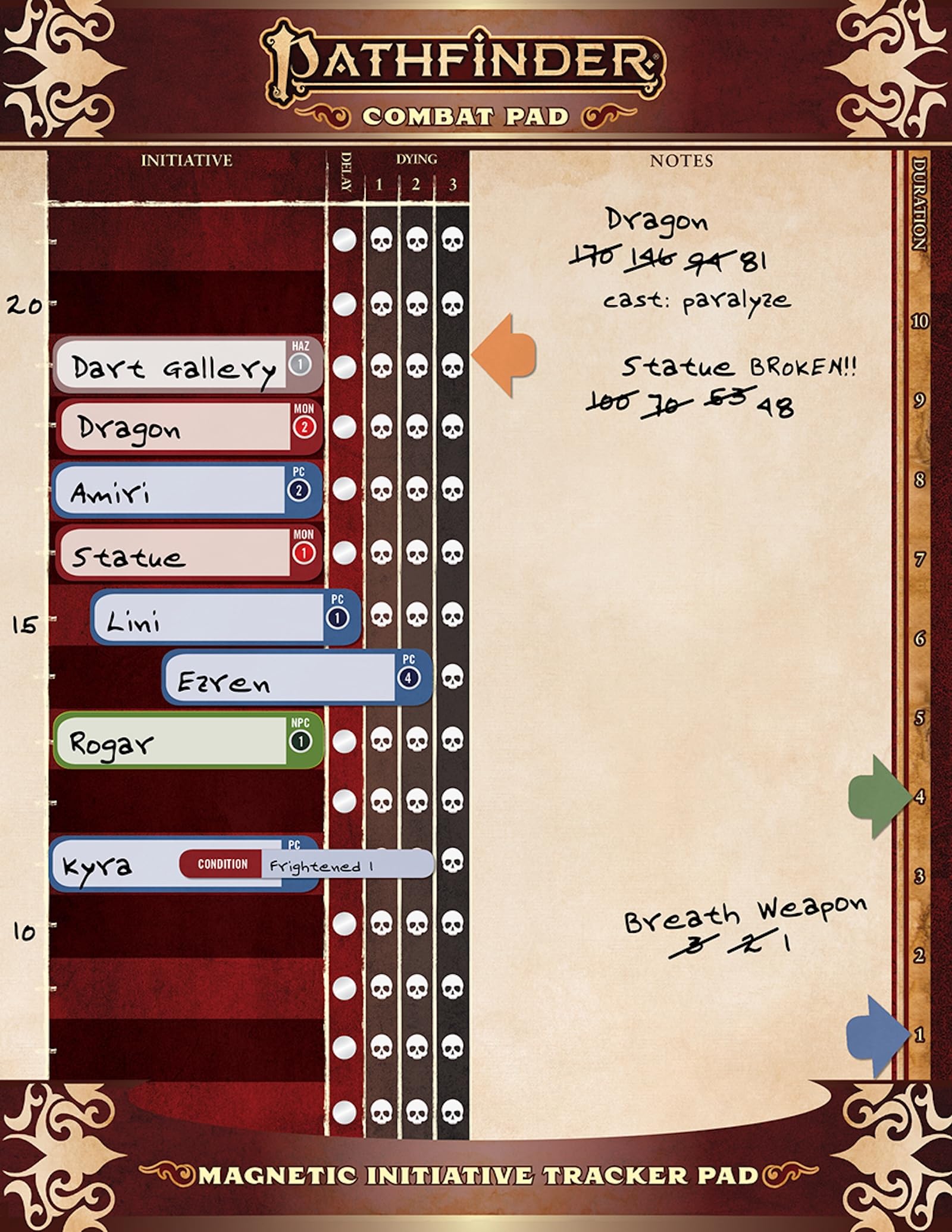
Paizo Pathfinder Combat Pad (Second Edition)
Paizo's wet-erase magnetic pad turns initiative, delay, dying, conditions, duration, and combat notes into one movable table record. The Pathfinder Second Edition labels are themed to that ruleset, but the core turn-order workflow is useful for any fantasy GM who prefers a visible physical state over an app. It is less theatrical than a screen-top tracker and much easier to audit at a glance.
- Makes turn order instantly visible — no more lost initiative
- Wet-erase magnets reorder cleanly as combatants drop or delay
- Mounts to the screen, keeping the DM's workspace tidy
- Inexpensive, high-frequency utility for combat-heavy tables
- Redundant for DMs who track initiative on a VTT or app
- Magnet sets can be lost piecemeal over time
- Light-up acrylic versions are more spectacle than added function
At a glance
| gift | maker | category | price | best for |
|---|---|---|---|---|
| Wyrmwood DM Screen System | Wyrmwood Gaming | DM screen (premium) | ~$70–$315+ per panel | Best overall DM gift |
| Chessex Reversible Megamat | Chessex | Battle map (wet-erase) | ~$28 | Best budget / best battle map |
| Dwarven Forge Deluxe Starter Set | Dwarven Forge | Modular 3D terrain | ~$167 (systems $400–$700+) | Best splurge (terrain) |
| Dungeon Master's Campaign Journal | Wizards of the Coast / Clarkson Potter | Campaign journal (official) | ~$25 | Best utility-per-dollar |
| The GameMaster's Apprentice (Base Deck) | Larcenous Designs | Inspiration / NPC deck | ~$10–$25 | Best for new DMs |
| Syrinscape | Syrinscape | Soundscape / ambiance | ~$8–$11/mo (free tier) | Best 'experience' gift |
| WizKids WarLock Tiles | WizKids | Modular terrain (mid-budget) | ~$100–$150 base set | Best mid-budget terrain |
| Feldherr Foam Trays & Cases | Feldherr | Miniature storage/transport | ~€11 tray / $28–$45 cases | Best for the DM on the road |
| Pathfinder Combat Pad (Second Edition) | Paizo | Combat/initiative tracker | ~$15–$30 | Best for the organized DM |
| DM Dice Tray + Dice Jail | Independent makers (Etsy/Amazon) | Dice tray / dice jail (DM-side) | ~$10–$25 | Best stocking-stuffer / gag |
| The Worldbuilder's Journal of Legendary Adventures | Official D&D Licensed | Worldbuilding journal (365 prompts) | ~$25 | Best for worldbuilders (analog) |
| World Anvil | World Anvil | Worldbuilding software (subscription) | Tiered subscription | Best for worldbuilders (digital) |
| The Deck of Many: NPCs | Hit Point Press | NPC reference deck | ~$30 | Best illustrated NPC deck |
Questions, answered
What is the single best gift for a Dungeon Master?
A premium modular DM screen — the Wyrmwood DM Screen System (panels from ~$70) — is the best overall gift, because it is both heirloom-beautiful and used every single session to hide notes, take secret rolls, and organize the game. If your budget is closer to $25, the official Dungeon Master's Campaign Journal is the highest utility-per-dollar choice. Both serve the labor of running a game, which is what separates a DM gift from a player gift.
What's the best DM screen to give as a gift?
For a premium gift, the Wyrmwood DM Screen System — solid hardwood, magnetic, modular panels (~$70 for a single elm panel, climbing into the hundreds for exotic woods and full multi-panel builds). For a more affordable but still excellent gift, choose a customizable screen with swappable reference inserts so the DM can load the rules they forget most. The wood is the luxury; the working magnetic note bar and dry-erase surface are the utility.
What's the best terrain gift for a DM, and is it worth the cost?
Dwarven Forge modular terrain is the best terrain gift — a hand-painted Deluxe Starter Set runs ~$167 and full Encounter systems exceed $400. It is worth it for a DM who loves staging encounters and the theater of the table, where it transforms flat maps into 3D rooms. It is not worth it for a lean, theater-of-the-mind DM. For a mid-budget alternative, WizKids WarLock Tiles (~$100–$150 base set) deliver real 3D walls at a third of the cost.
What's the best gift for a brand-new Dungeon Master?
Tools that reduce cognitive load, not luxuries. A screen with good reference panels keeps the game moving; an idea-generator deck like The GameMaster's Apprentice answers 'what's that NPC's name?' with a single card flip; and a soundscape subscription like Syrinscape covers nervous silences. Avoid buying a terrified first-timer an expensive terrain system — give them tools that make the next session easier, not grander.
What's the best budget gift for a DM (under $30)?
A Chessex Reversible Megamat (~$28) is the best budget gift overall — a large wet-erase battle map nearly every grid-combat DM eventually owns. The official Dungeon Master's Campaign Journal (~$25) is the best budget gift for note-keepers, and a magnetic initiative tracker (~$15–$30) or a DM dice tray and dice jail (~$10–$25) round out the sub-$30 field beautifully.
What's the best splurge gift for a Dungeon Master?
Dwarven Forge hand-painted modular terrain. A painted Deluxe Starter Set is ~$167 and full Encounter systems run $400–$700+. It is the gift that astonishes a veteran DM and visibly elevates the table — but buy it only for a DM whose games you've actually seen, since it rewards those who love staging immersive encounters and gathers dust for those who don't.
What's the best gift for a DM who is a worldbuilder?
Pair a beautiful structured journal with a digital toolset. The official Dungeon Master's Campaign Journal (~$25) and The Worldbuilder's Journal of Legendary Adventures (~$25, 365 prompts) give analog worldbuilders somewhere to pour the world; a World Anvil subscription gives the digital worldbuilder wiki articles, interactive maps, and timelines. When in doubt, the open-ended blank journal is the safest worldbuilder gift.
What does a Dungeon Master actually want?
Tools that help them run the table, not personal trinkets. DMs want things pointed outward at the session: a screen to hide notes, terrain or a battle map to stage encounters, a deck to generate NPCs on the fly, a journal to hold the campaign, a case to protect minis, a tracker to order combat, and soundscapes to set the mood. They very rarely want another personal dice set — most of their rolls are made in secret behind the screen.
What's the best battle map for a DM?
The Chessex Reversible Megamat (~$28, roughly 34.5 x 48 inches), with 1-inch squares on one side and 1-inch hexes on the other, used with wet-erase markers. It is large, durable, system-agnostic, and lets a DM draw any encounter on the fly. Just remember it's wet-erase, not dry-erase — a feature, since wet-erase ink won't smudge under a player's sleeve mid-battle.
What's the best miniature storage gift for a DM?
Feldherr custom foam trays and cases, sized precisely to D&D miniatures. A 34-mini tray runs only ~€11, with fuller cases generally $28–$45, and reviewers consistently rate Feldherr as offering Battle-Foam-grade protection for less. It's an ideal gift for the DM who transports a kit to friends' houses or conventions — they'll use it every session. You'll want to know their mini scale and collection size before buying a specific tray.
What's the difference between a DM gift and a player gift?
Ask one question: does it help someone run the game or play in it? Player gifts are personal and expressive — their own dice, character art, class pins. DM gifts are operational — screens, terrain, NPC decks, journals, mini cases, trackers, soundscapes — all pointed at the table and the session rather than a single character. The classic miss is giving a DM a personal dice set; they own nine and roll most dice in secret. If you want to give dice, give a DM-side tray, a dice jail, or NPC/loot dice instead.
Where's the best place to buy DM gifts?
Buy from an authorized seller and use the maker pages to verify specifications: Wyrmwood, Dwarven Forge, Chessex, WizKids, Syrinscape, Larcenous Designs, Hit Point Press, and World Anvil. The official D&D journals come from Penguin Random House / Clarkson Potter via major booksellers, while custom trays and screens often come from independent woodworkers. Puzzlewick may earn from qualifying Amazon purchases where a tagged Amazon link appears; maker and source links are editorial.
Margo's verdict
If you remember one principle from this guide, let it be the dividing line: a Dungeon Master is given a world to keep, and the gifts that honor them are the ones that lighten the weight of keeping it. Start with the screen — the Wyrmwood for an heirloom, the official Campaign Journal for the best $25 you can spend — because the screen is the architecture of the whole role. Splurge on Dwarven Forge terrain only for the DM whose games you've watched and who you know loves the theater of the table. Reach for an idea-generator deck and a Syrinscape subscription for the nervous newcomer, a worldbuilding journal for the cartographer of invented histories, and a Feldherr case and an initiative tracker for the DM whose love language is order. And if you give dice, give them as DM tools — a screen-side tray, a dice jail — never as a tenth personal set. Every product here is real, in production, and made by people who deserve careful consideration. Puzzlewick may earn from qualifying Amazon purchases where a tagged Amazon link appears; maker and source links are editorial unless plainly labeled otherwise. Buy for the labor behind the screen.
Research ledger 25 sources · reviewed 2026-07-17
Specifications, rules, current product information, community experience, and contrary evidence were checked against the sources below. Commercial links are kept separate from editorial evidence.
- wyrmwoodgaming.comwyrmwoodgaming.com/products/dm-screen-solid-panel
- wyrmwoodgaming.comwyrmwoodgaming.com/product-category/dm-screen
- wyrmwood.zendesk.comwyrmwood.zendesk.com/hc/en-us/articles/26909387659035-The-Wyrmwood-DM-Screen-System
- nerdist.comnerdist.com/article/wyrmwood-magnetic-game-master-screen-brings-class-to-the-table
- kickstarter.comkickstarter.com/projects/wyrmwood/the-wyrmwood-magnetic-game-master-screen
- dwarvenforge.comdwarvenforge.com/products/encounter-area-1-zaltars-gameroom-painted-1
- dwarvenforge.comdwarvenforge.com/collections/core-sets-dungeons
- dwarvenforge.comdwarvenforge.com/pages/new-to-dwarven-forge
- chessex.comchessex.com/tabletop-game-mat-reversible-battle-mega-mondo
- amazon.comamazon.com/dp/B003WZIOHQ?tag=puzzlewick-20
- penguinrandomhouse.compenguinrandomhouse.com/books/787528/the-dungeon-masters-campaign-journal-dungeons-and-dragons-by-official-dungeons-and-dragons-licensed
- cbr.comcbr.com/dnd-dungeon-master-player-campaign-journals-review
- amazon.comamazon.com/dp/1984824635?tag=puzzlewick-20
- worldanvil.comworldanvil.com
- larcenousdesigns.comlarcenousdesigns.com/gma
- drivethrucards.comdrivethrucards.com/product/125685/The-GameMasters-Apprentice-Base-Deck
- hitpointpress.comhitpointpress.com/deck-of-npcs
- amazon.comamazon.com/dp/0786969172?tag=puzzlewick-20
- syrinscape.comsyrinscape.com
- enworld.orgenworld.org/threads/syrinscape.444735
- shop.wizkids.comshop.wizkids.com/collections/4d-settings
- feldherr.netfeldherr.net/for/dungeons-dragons
- tangibleday.comtangibleday.com/top-10-great-miniature-transport-bags-and-cases
- theultimategamemaster.comtheultimategamemaster.com/collections/initiative-tracker
- etsy.cometsy.com/listing/589707975/dice-jail-prison-for-misbehaving-dice

Let me check that before we say it.


Keep exploring
The next smart rabbit holes.
⬡ Universe HubDungeons & Dragons: the whole buying pathDungeons & Dragons is the world's great storytelling engine — a few books, a fistful of dice, and a table of friends. This universe...✦ Topic PathBoard Game Buying Guides: compare the whole shelfStart with the decision, not the shelf. These guides compare the games, editions, expansions, player counts, and costs people...Best OfBest Solo Board Games, Ranked (2026): The One-Player NightTen games I'd actually hand you — the ones that didn't just earn a shelf, they stayed there. From the 20-minute weeknight puzzle to the...