Codenames Complete Guide 2026: How to Give Better Clues and Which Edition to Buy
Imani covers the refreshed 2025 base game, Duet, Pictures, XXL, the 2026 expansion packs, legal clue boundaries, spymaster technique, guesser discipline, and the tablecraft that keeps a word game from becoming a courtroom.


AI-assisted research and drafting in Imani’s voice · reviewed by Robert Pruitt · how this guide was made
Last editorial refresh: 2026-07-14 Gold-standard QA: 2026-07-14 11 sources reviewed Affiliate links checked during gold-standard pass

The short answer
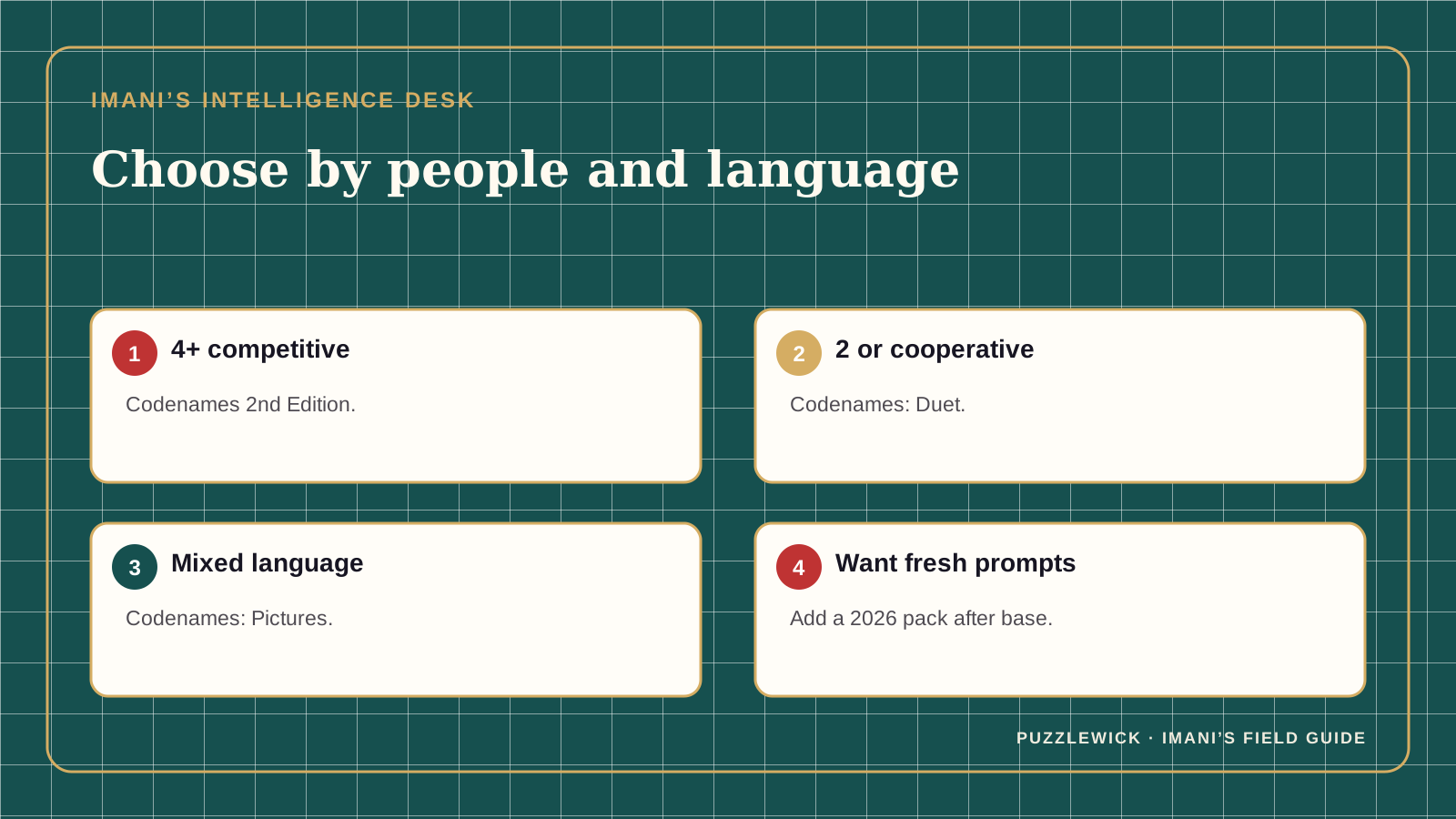
Buy the refreshed Codenames base game for four or more players and Codenames: Duet for a couple or cooperative pair. Choose Pictures for mixed-language or younger groups and XXL only when visibility is the problem. The 2026 Sci-Fi, Fairy Tales, and Cute Critters packs add words or images but require a base game. Better clues begin with the assassin: eliminate dangerous associations, then prefer a clean two-card link over a theatrical four-card clue that points everywhere.
Decision map
Choose in thirty seconds
Best for four or more players.
Best for two and cooperative play.
Best for frequent groups wanting fresh words.
Codenames is a party game that rewards the same skill good hosting does: knowing what your people will hear, not merely what you intended to say. The 2025 relaunch refreshed components and words, while 2026’s first official expansion packs created a new buyer question. Imani checked CGE’s current pages and creator-approved press photography, then rebuilt the guide around language, risk, and room management.
Start here, then go deeper
You are in the right cabinet.
 ✦ Universe HubHarry Potter Game Collection: the whole buying pathThe Harry Potter universe sorts licensed abundance into actual game nights. Imani protects the people and the table energy; Margo...
 ⌂ Topic PathFamily and Gateway Games: compare the whole shelfA good family game gets everyone playing quickly without becoming disposable after three nights. These guides prioritize clear...
 Buying GuideThe Complete Harry Potter Board Game Collection: What to Buy for Travel, Family Night, a Weekend at Hogwarts, and the Grail ShelfFifteen Harry Potter board and card games sorted by the night they actually create: the seven-box co-op campaign, the newest...
Which Codenames edition should you buy?
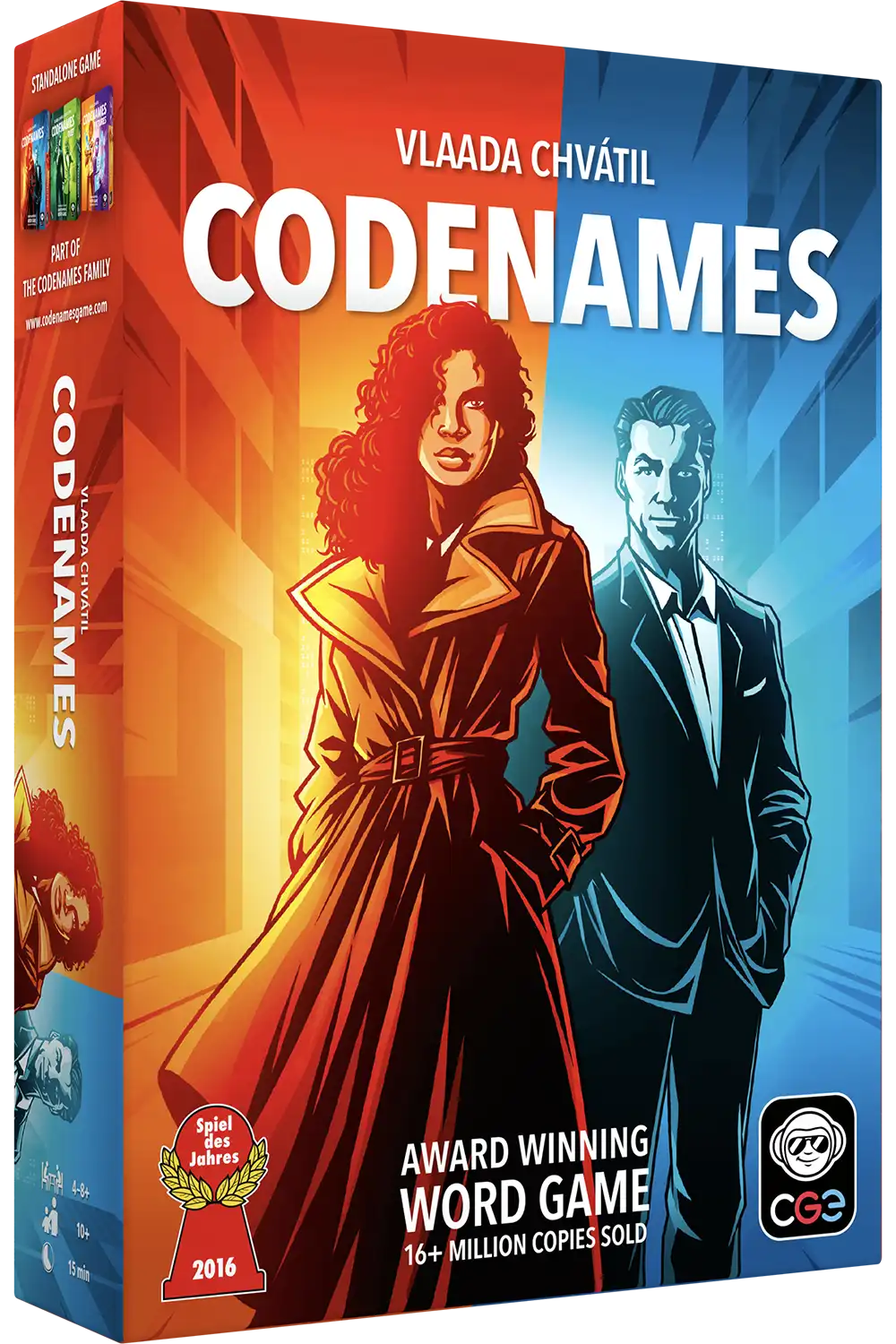
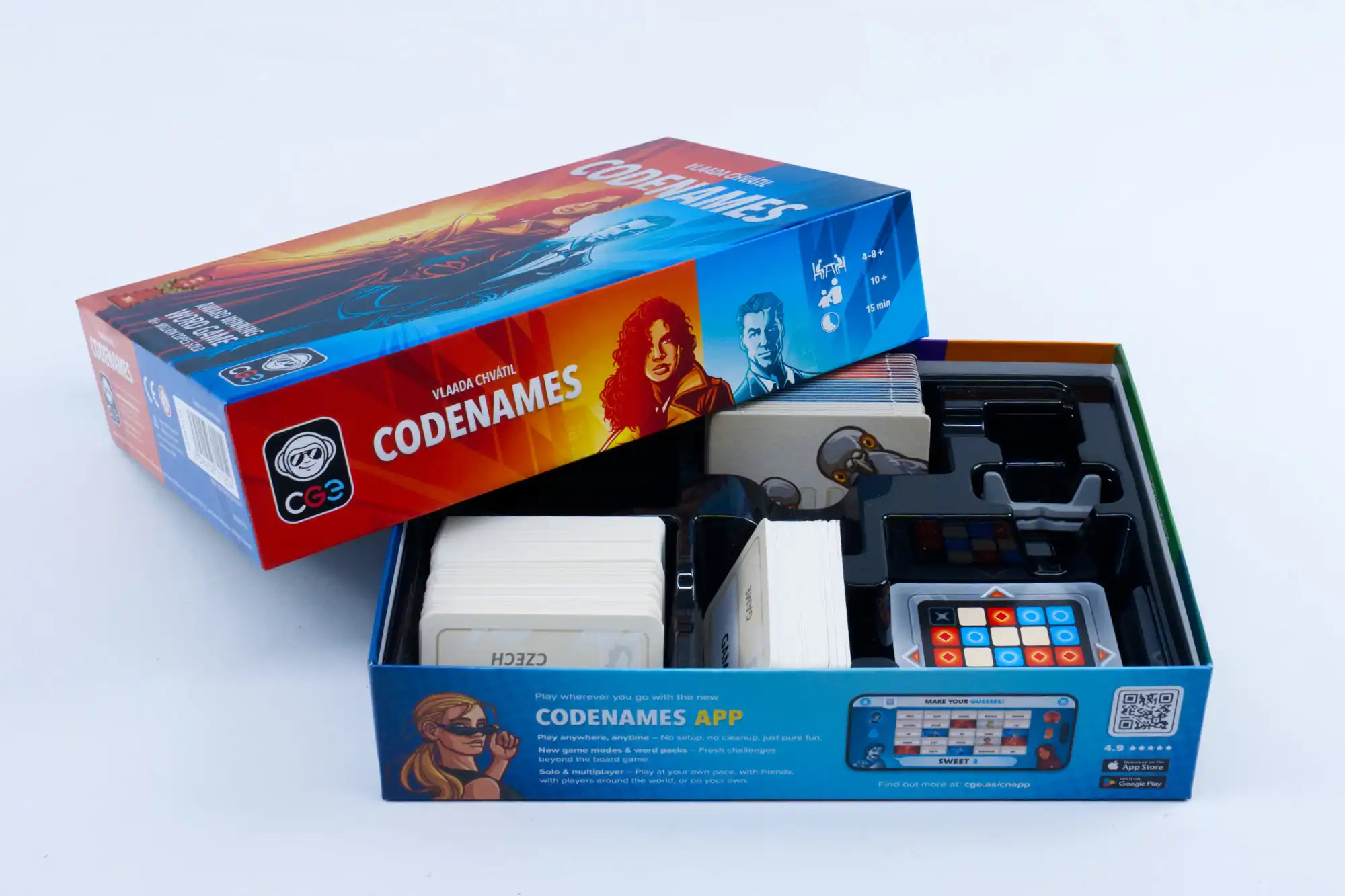
The refreshed Codenames Second Edition is the default for two teams and four or more players. Duet Second Edition turns the system cooperative and works beautifully for two, while supporting more people on one side. Pictures swaps words for surreal images, reducing language dependence. XXL increases visibility for big rooms. The new 2026 Sci-Fi and Fairy Tales packs add fifty words each; Cute Critters adds forty images. All require a compatible base experience.
Themes are seasoning. Buy the edition that fixes your player-count or language problem before buying a vocabulary pack.
The refreshed Codenames Second Edition is the default for two teams and four or more players.
How do you play Codenames?
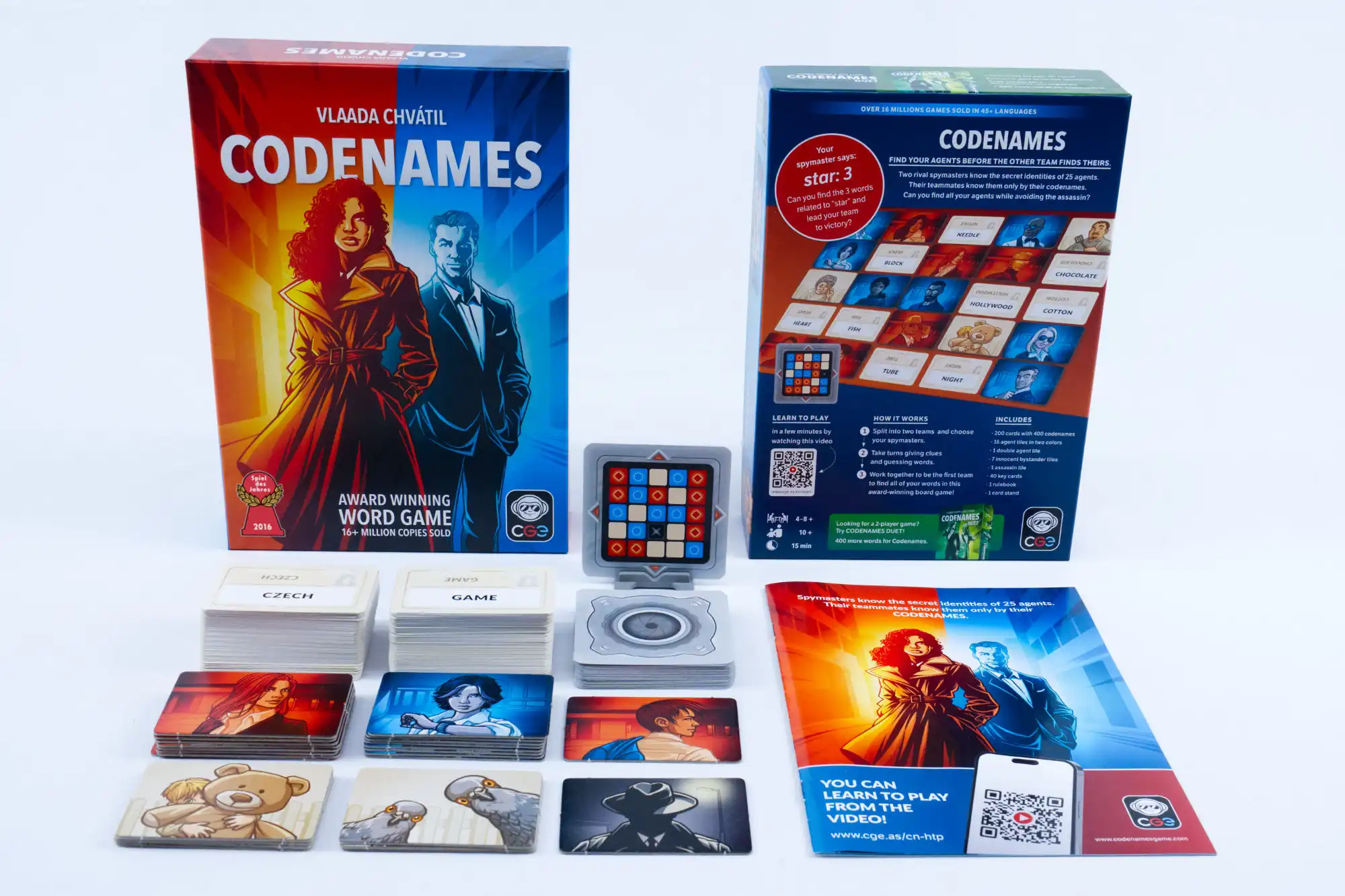
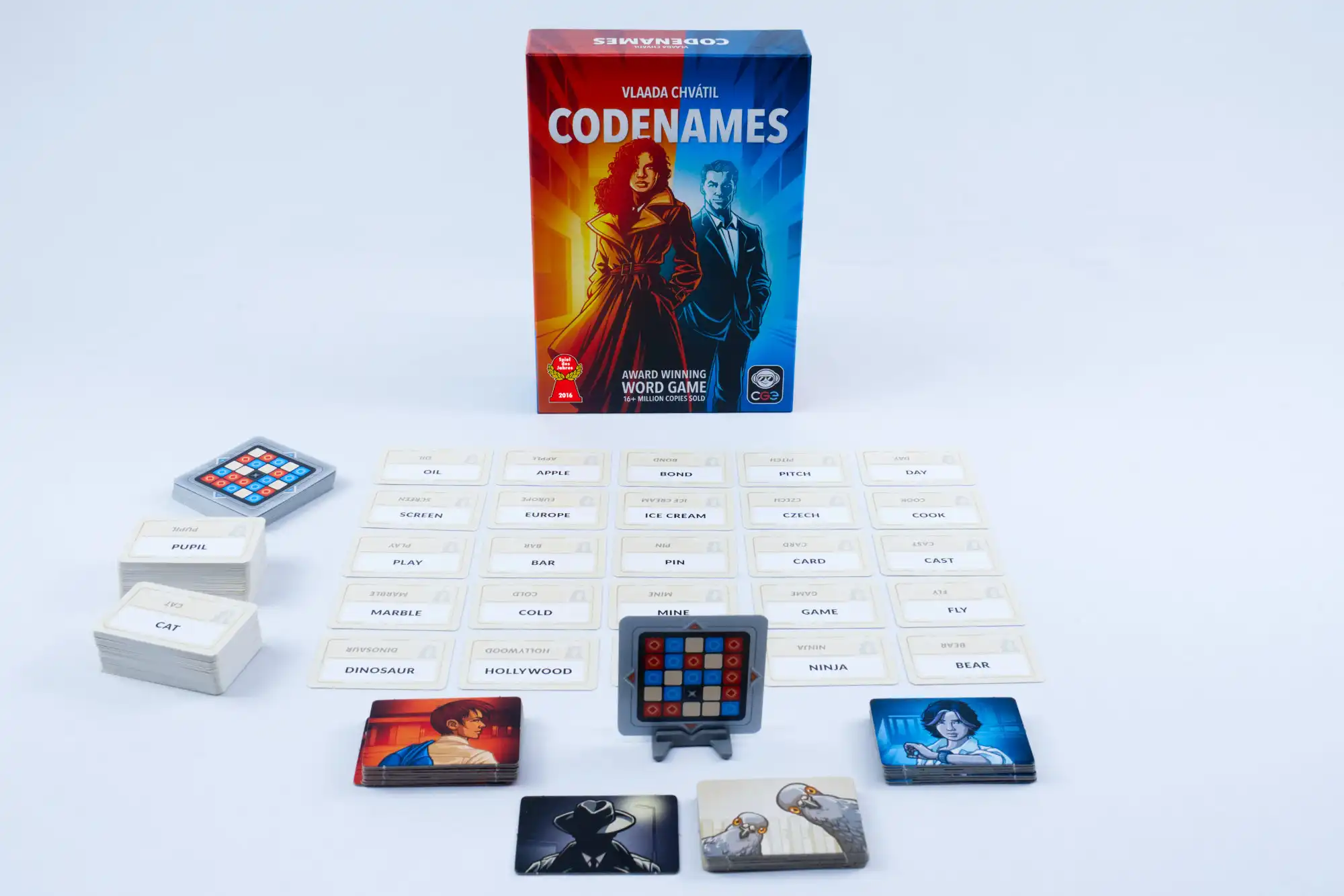
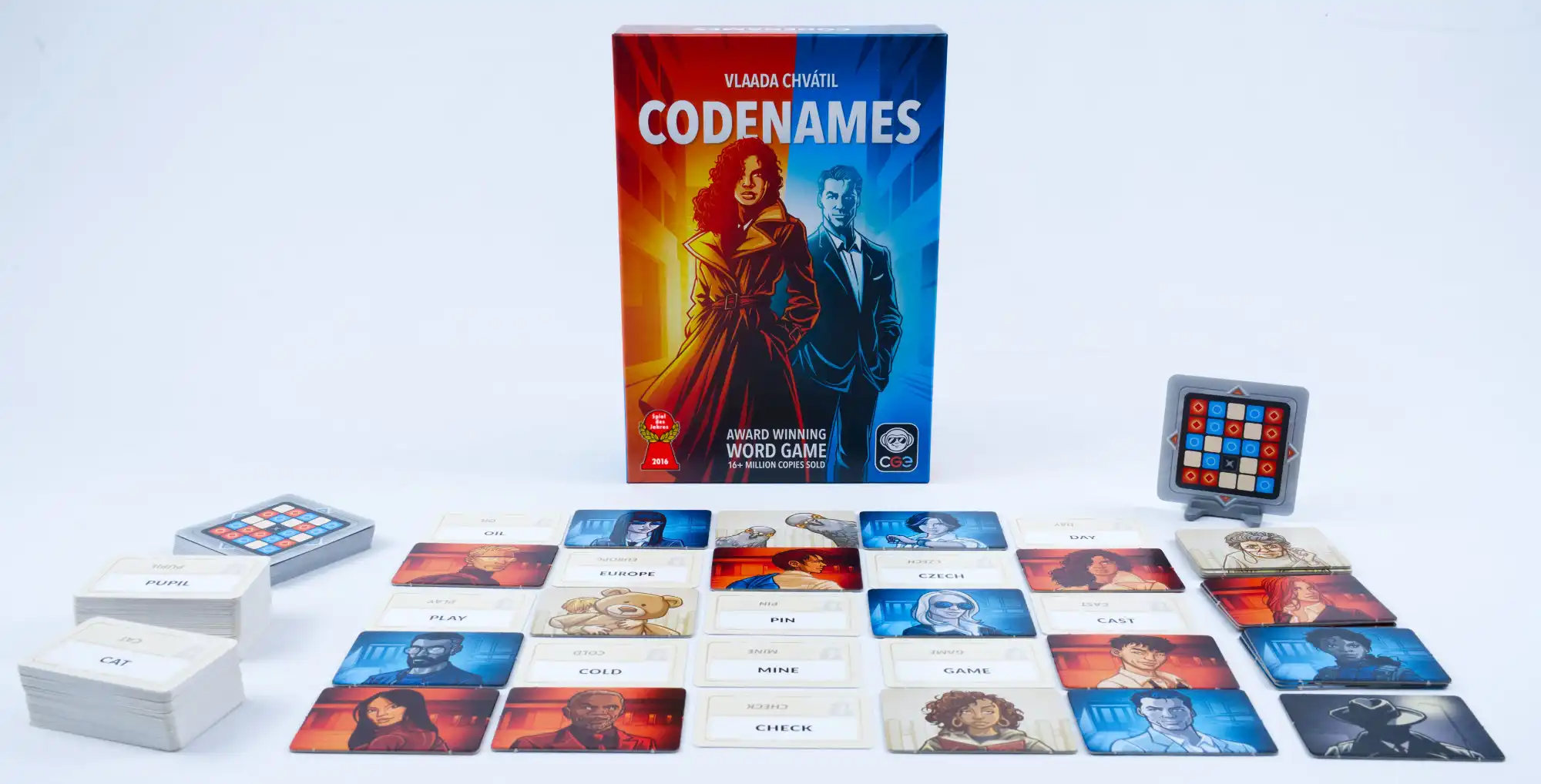
Lay out 25 word cards in a 5-by-5 grid. One spymaster from each team sees the key card showing both teams’ agents, neutral bystanders, and the assassin. A spymaster gives one word and one number. The word must relate to the intended team words; the number says how many. Guessers touch one card at a time and may stop whenever they wish.
A correct team word allows another guess, a neutral word ends the turn, an opponent word helps the other team and ends the turn, and the assassin loses immediately. Guessers may make up to the clue number plus one guesses, allowing an old missed clue to be recovered. Clues cannot use a visible grid word or illegal wordplay agreed against by the table.
Lay out twenty-five words in a five-by-five grid.
How do you give better clues?
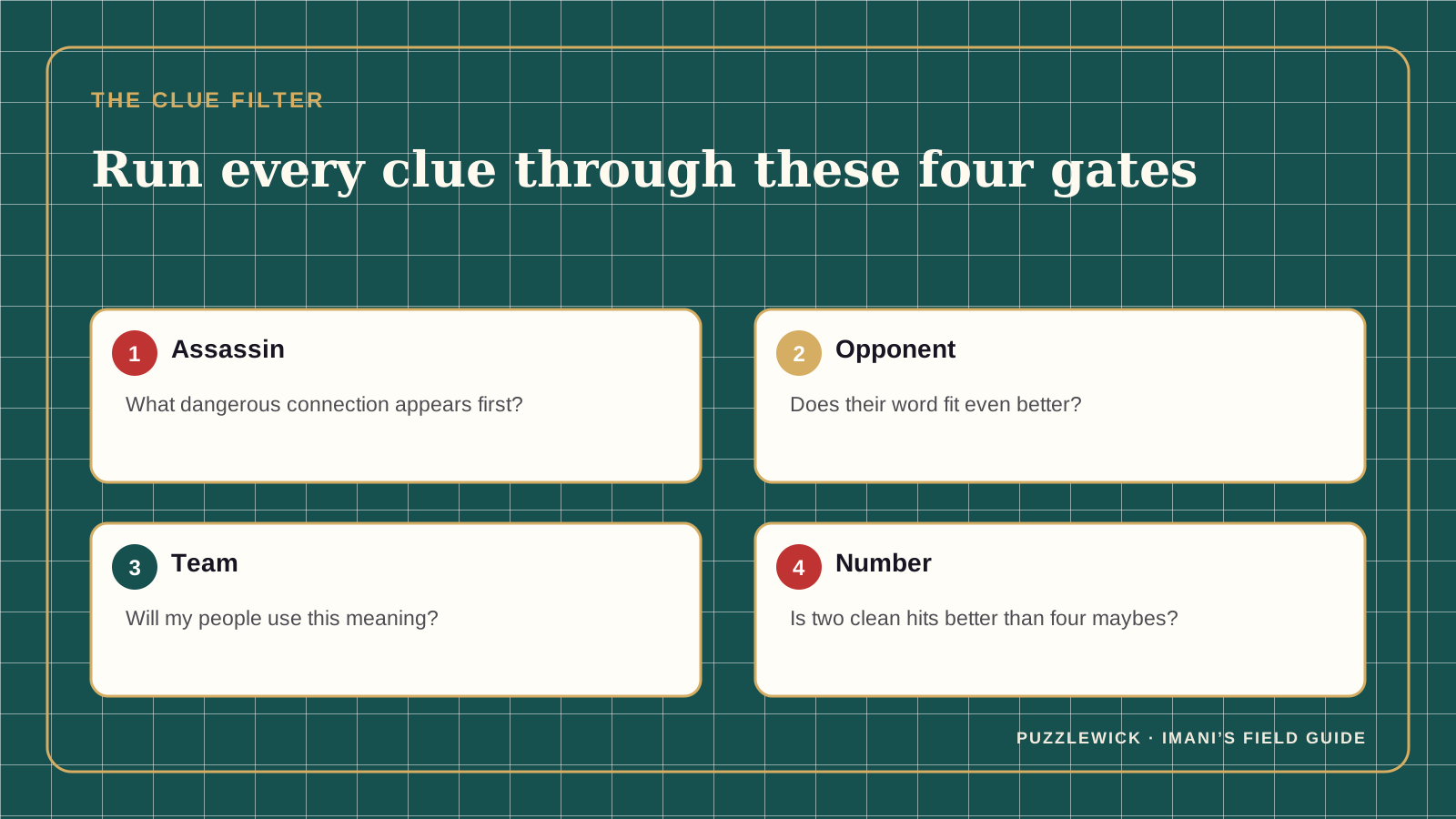
Begin with the assassin and enemy words. List the strongest accidental associations before searching for your own link. Then think in the vocabulary of the people guessing. A technically perfect category is worthless if your teammates use the word differently. Verbs, sensory properties, places, and cultural references often bridge words more naturally than dictionary categories.
Prefer a clean pair over a fragile triple. The number sets permission, not a quota; teammates may stop early. Good spymasters create an obvious first answer and a defensible second. Great spymasters also know when “one” protects the board for a later turn.
Begin with the assassin and enemy words.
What should guessers do differently?
Say every candidate aloud and rank them before touching. Ask which word fits the clue most specifically, then inspect whether a broader interpretation was needed to reach the others. Keep earlier clues alive: the extra optional guess can recover a missed agent later, but only when the current board is safe.
Do not read the spymaster’s face. They must remain neutral, and forcing emotional tells weakens the game. Debate meanings, not body language. When one teammate has domain knowledge the clue clearly invokes, let them explain—but require the group to state the final risk before committing.
Say every candidate aloud and rank them before touching.
How do you handle clue disputes?
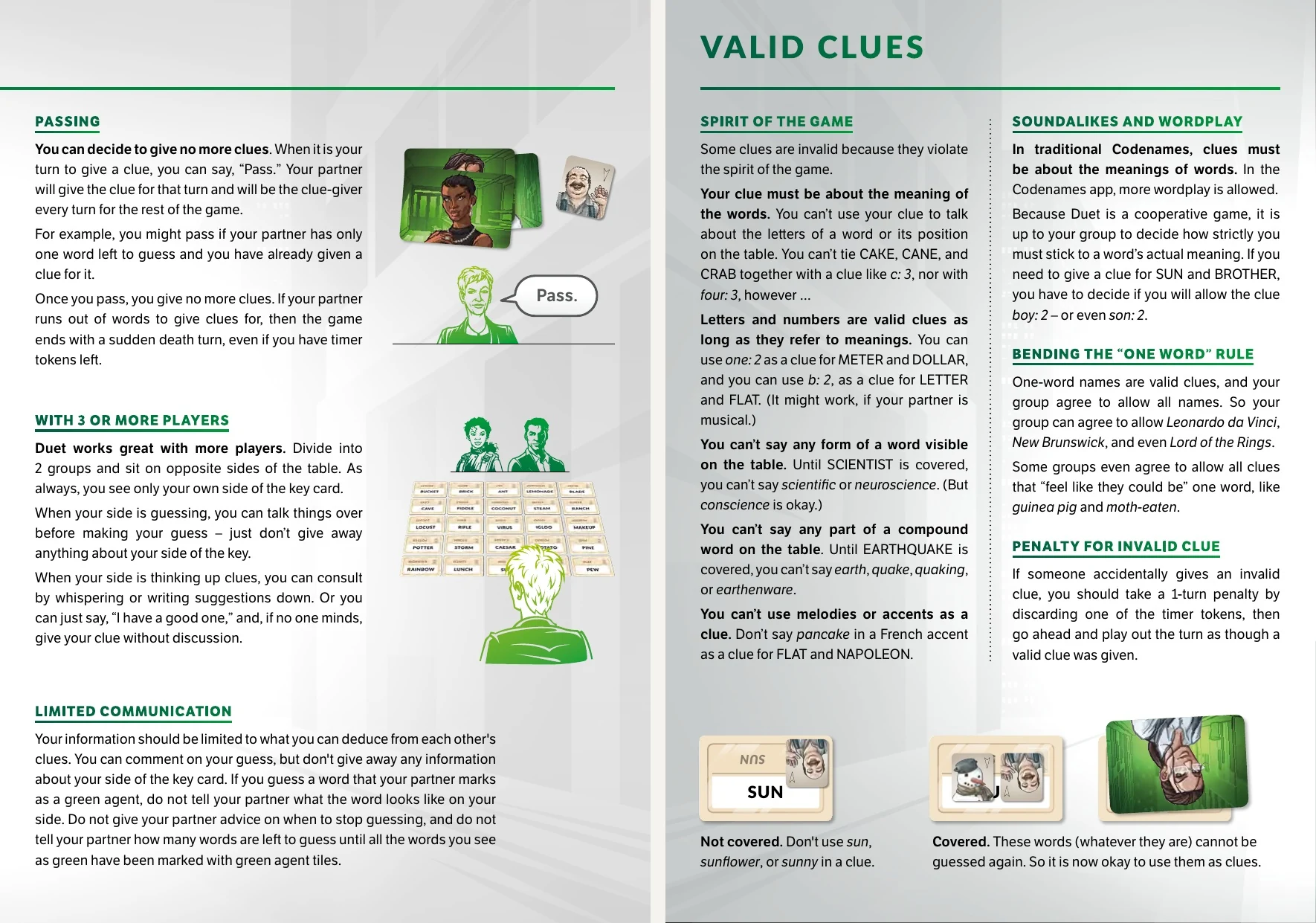
Use a generous but consistent standard. Proper names, abbreviations, compound words, and foreign words depend on the edition’s rule guidance and the group’s language. The core test is whether the clue communicates through word meaning rather than metadata or a secret agreement. Pause briefly, consult the rulebook if necessary, and accept the opposing spymaster’s ruling without litigating intent for ten minutes.
Before play, agree whether multiword proper names are allowed and whether all players share enough cultural context. A party game is not improved by winning a legal brief. When in doubt, choose a different clue.
Use a generous but consistent standard.
Are the 2026 expansion packs worth it?
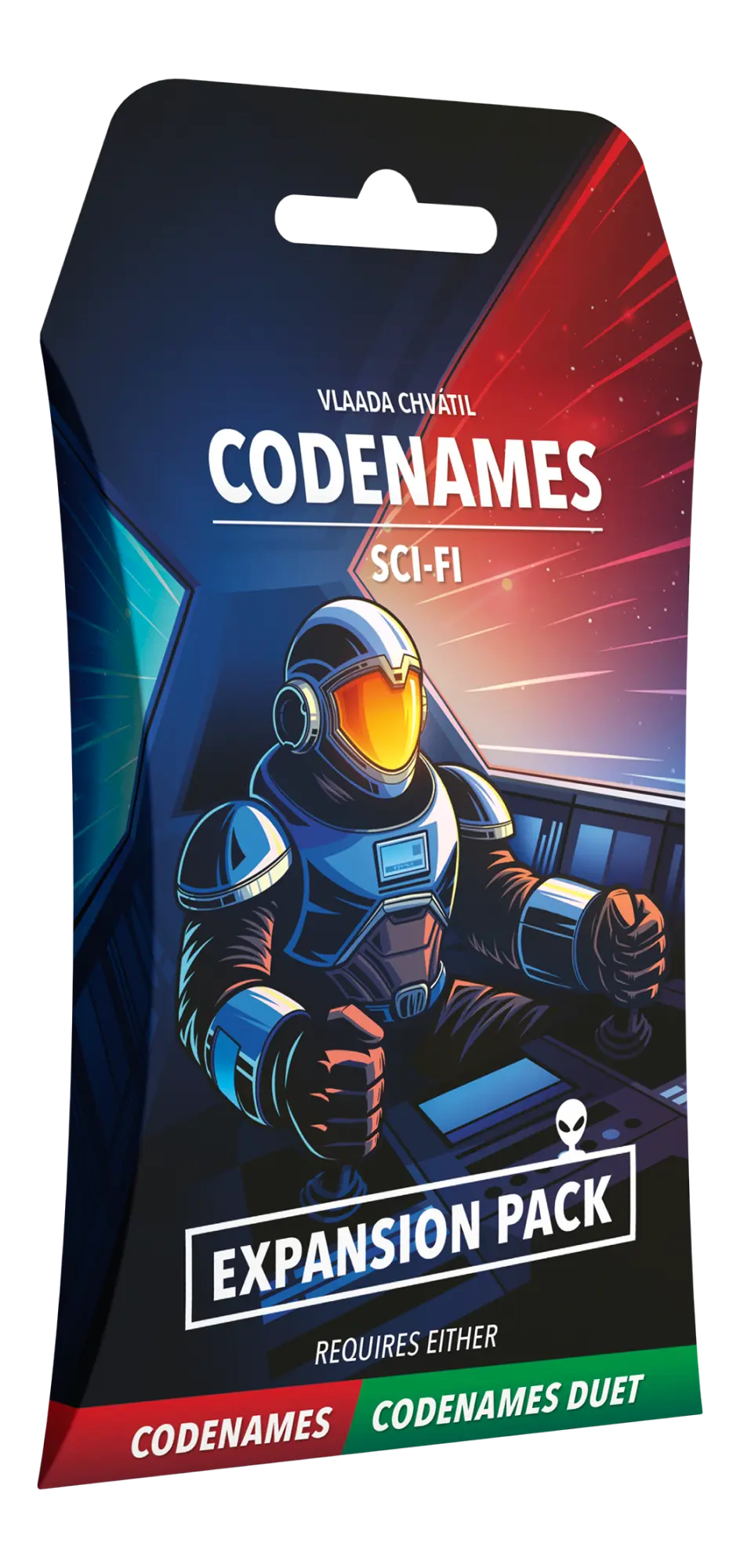
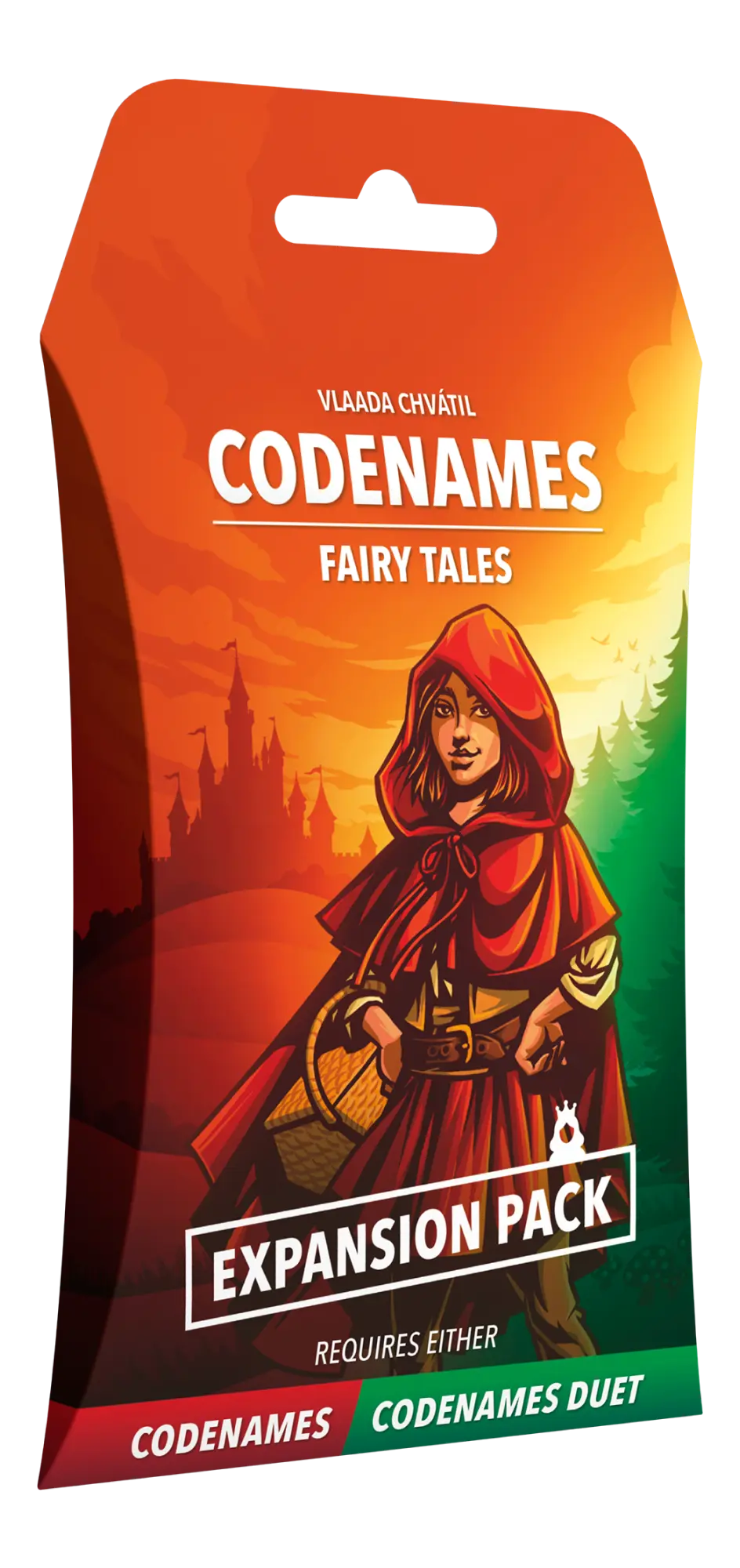
The 2026 Sci-Fi and Fairy Tales packs are word-content expansions, not standalone games. Each supplies a themed set of new words and related extras to refresh a base Codenames or Duet collection. Buy the theme your group can clue broadly; a fandom pack is weaker when half the table lacks the shared vocabulary.
Because these packs were newly released in July 2026 and no exact verified Amazon listing was available in this audit, Puzzlewick shows the manufacturer source but no retail button. That is deliberate: a source link is not an affiliate CTA.
They are worth it for frequent groups that recognize too many base words or want a specific theme.
Is Duet just Codenames for two?
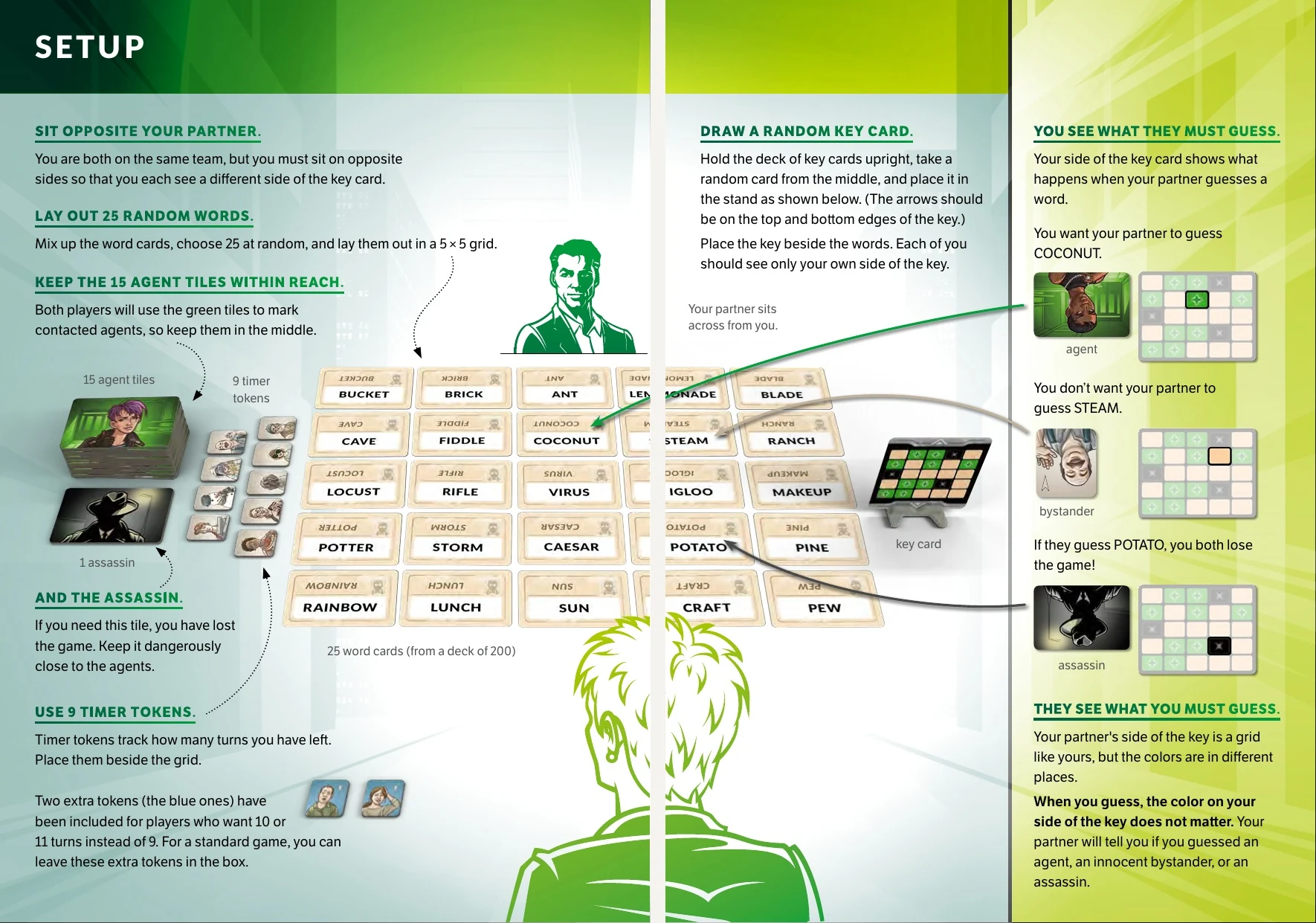
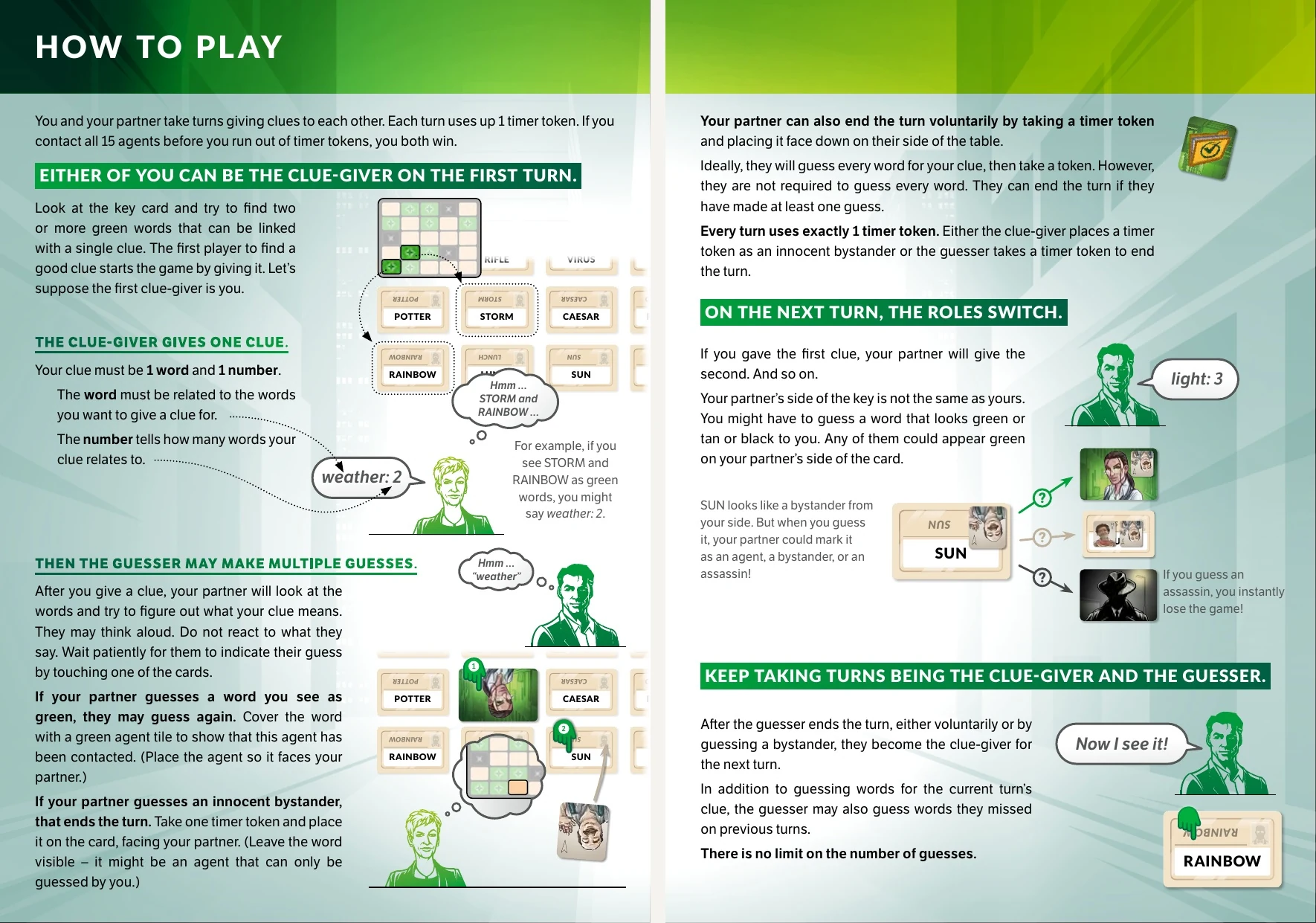
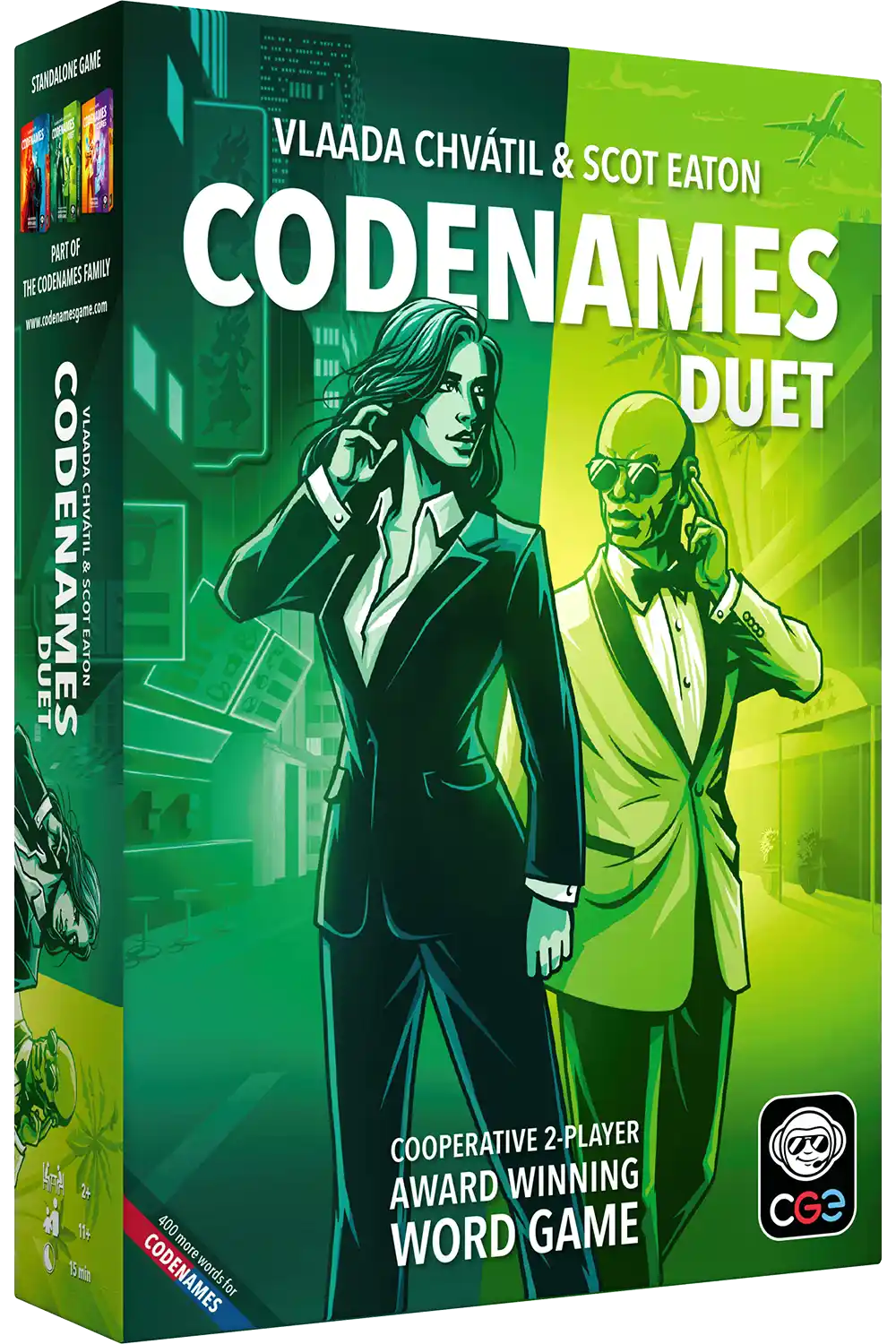
Duet preserves one-word clues and dangerous cards but changes the information structure. Both players know different halves of the agent map and take turns giving clues, working through a limited campaign-style sequence of turns. It is cooperative, tense, and more deliberate than improvised two-team Codenames with only two people.
Buy Duet for a couple, a travel pair, or a group that prefers winning together. The refreshed Second Edition is the current clean purchase. Owning base and Duet is not redundant if your player count changes; they create different conversations.
Duet preserves one-word clues and dangerous cards but changes the information structure.
How do you host a strong Codenames night?
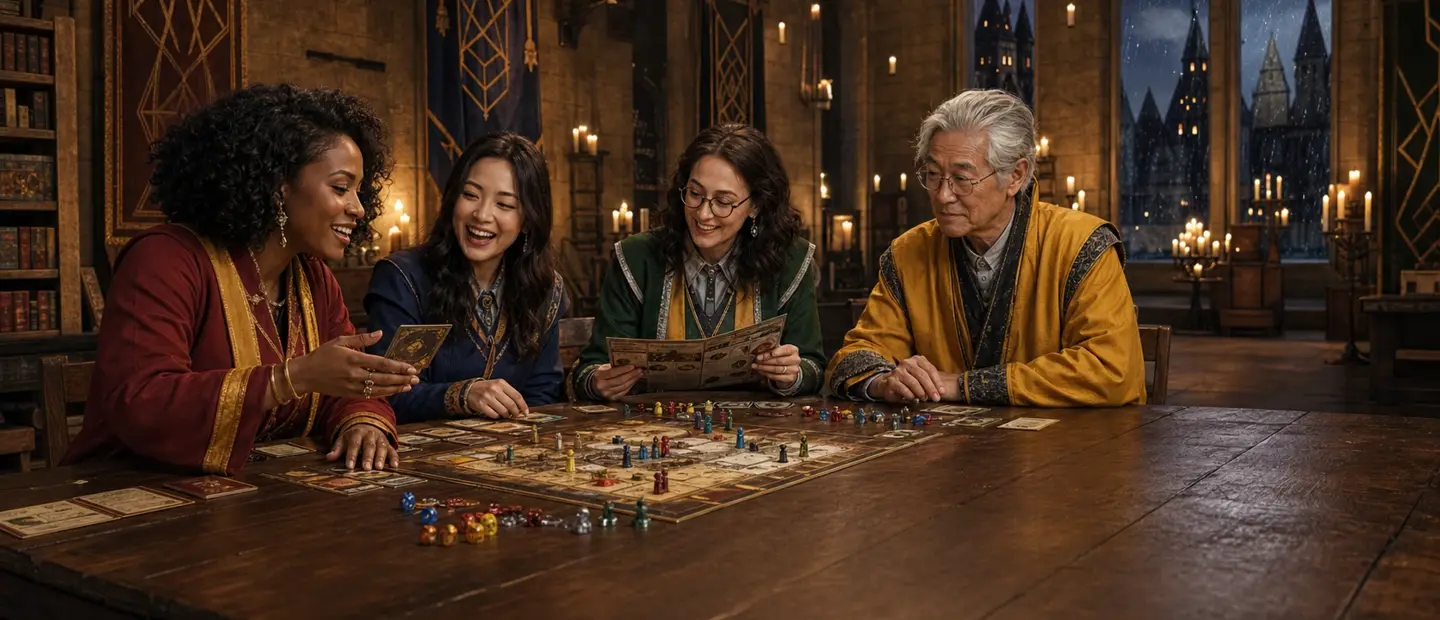
Use a table everyone can read, rotate the grid toward the largest sight line, and keep glare off sleeves. Make teams socially balanced rather than numerically perfect; distribute the loud clue-solvers. Rotate spymasters because the role is both pressure and pleasure. Set a soft thinking limit before analysis freezes the room.
For mixed-language tables, use Pictures or allow a shared language list. For children, remove obscure words rather than explaining twenty-five definitions. Imani’s best room rule is simple: praise a generous clue even when it misses. The next round depends on someone being willing to try again.
Use a table everyone can read, rotate the grid toward the largest sight line, and keep glare off sleeves.
What makes a great clue memorable instead of merely legal?
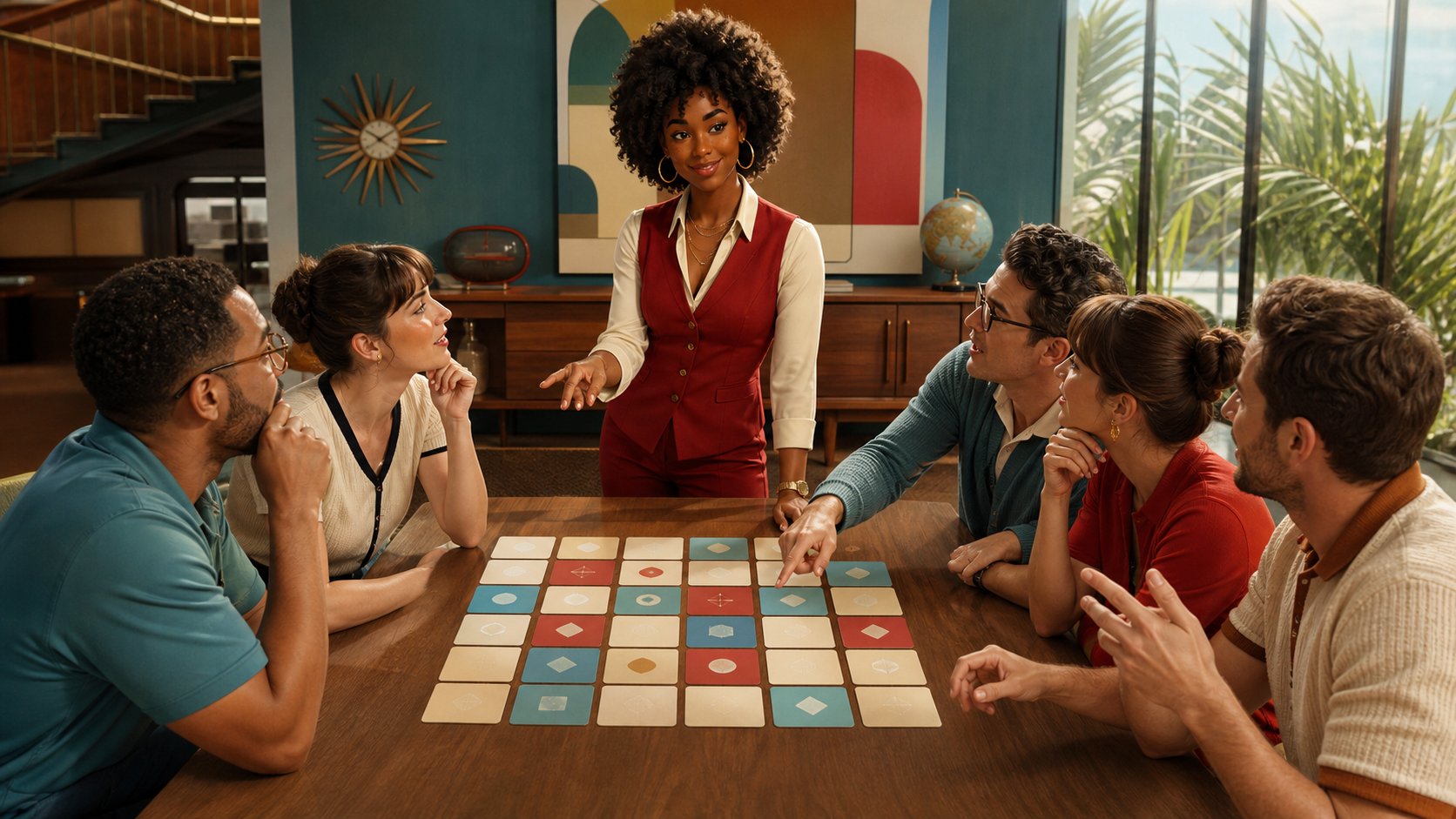
A memorable clue produces a small story in the guessing team’s heads. It may connect a place with an object through an activity, or two unrelated nouns through a shared sensation. The spymaster still begins with safety, but after screening danger, they should ask which relationship their specific friends will enjoy discovering. That is where Codenames becomes personal.
Avoid clues that depend on one obscure fact unless the relevant teammate can explain it to everyone. Avoid references that exclude half the room. If one teammate is certain and others are lost, ask them to articulate the bridge before the guess. Imani calls this the “gift test”: a clue should give the team a connection they can collectively unwrap. A technically legal clue that leaves everyone feeling ignorant is usually weaker than a modest two-word constellation that makes the whole side laugh when it lands.
A memorable clue produces a small story in the guessing team’s heads.
What should you do when the board offers no big clue?

Give a disciplined one or two. Large clues are not the objective; clearing agents before the opponent is. A safe single can also remove a word that blocks a broader clue next turn. Track how the grid’s meaning changes as words are covered. A dangerous association may disappear, turning an impossible triple into a clean pair. Conversely, an opponent’s cover can expose a new assassin connection.
Spymasters should prepare two candidate clues while the other team guesses, then re-screen both against the updated board. Guessers should remember that stopping is an action. Taking the permitted extra guess is valuable only when an earlier clue still points strongly to one remaining word. Restraint is not timid play. It is how teams preserve the next clue.
Give a disciplined one or two.
The picks
Some links below are affiliate links — as an Amazon Associate, Puzzlewick earns from qualifying purchases, at no extra cost to you. It never changes a pick.
 2 photos
 Codenames Second Edition
The refreshed competitive word-association classic with updated words and components.
- Best for four or more players.
- The refreshed competitive word-association classic with updated words and components.
- This is the default party purchase.
Codenames: Duet Second Edition
Both players give and guess clues against a shared limit.
- Best for two and cooperative play.
- Both players give and guess clues against a shared limit.
- Not merely a small-player patch for the base game.
2 photos Codenames: Sci-Fi Expansion Pack
Fifty additional themed words for a compatible base set.
- Best for frequent groups wanting fresh words.
- Fifty additional themed words for a compatible base set.
- Requires a base game and shared theme familiarity.
2 photos Codenames: Fairy Tales Expansion Pack
Fifty fairy-tale words with broad cultural reach.
- Best accessible themed word pack.
- Fifty fairy-tale words with broad cultural reach.
- Still an expansion, not a playable standalone box.
At a glance
| Edition | Best for | What changes |
|---|---|---|
| Base 2E | 4+ competitive | Classic teams and refreshed words |
| Duet 2E | 2+ cooperative | Shared mission and dual information |
| Pictures | Mixed-language tables | Images replace words |
| XXL | Large rooms | Bigger visibility, same game |
| 2026 packs | Frequent owners | New prompts, no new rules |
Questions, answered
What makes a legal Codenames clue?
It must connect through meaning rather than spelling, position, first letters, or a private code. Check the current rulebook for edge cases.
Is Codenames Duet worth it for couples?
Yes. It is a purpose-built cooperative version and one of the strongest two-player word games.
Are Codenames expansion packs standalone?
No. The 2026 packs add words or images and require a base Codenames product.
What is the best spymaster strategy?
Screen the assassin and enemy words first, clue to your team’s vocabulary, and prefer a clean pair to an unstable large number.
Can Codenames be played with two people?
Use Codenames Duet. It turns clue-giving into a cooperative exchange instead of simulating two undersized competitive teams.
Is the newer Codenames edition worth replacing an older copy?
Not automatically. Replace a worn deck or buy the refreshed word set for variety; a healthy older copy still contains the complete core game.
Imani's verdict
Codenames remains a superb party game because it turns knowledge of your friends into the real component. Buy base for teams, Duet for partnership, Pictures for language flexibility, and new packs only when your table has earned fresh vocabulary. The best clue is not the cleverest word in your head. It is the safest bridge into theirs.
Research ledger 11 sources · reviewed 2026-07-14
Specifications, rules, current product information, community experience, and contrary evidence were checked against the sources below. Commercial links are kept separate from editorial evidence.
- czechgames.comczechgames.com/games/codenames
- czechgames.comczechgames.com/games/codenames-duet
- czechgames.comczechgames.com/news/codenames-turns-10--and-its-getting-a-relaunch
- czechgames.comczechgames.com/news/codenames-expansion-packs
- czechgames.comczechgames.com/for-press-games
- boardgamegeek.comboardgamegeek.com/boardgame/178900/codenames
- boardgamegeek.comboardgamegeek.com/boardgame/224037/codenames-duet
- czechgames.comczechgames.com/games/codenames-pictures
- en.boardgamearena.comen.boardgamearena.com/gamepanel?game=codenames
- ultraboardgames.comultraboardgames.com/codenames/game-rules.php
- filemanager.czechgames.comfilemanager.czechgames.com/storage/files/codenames-duet/rules/codenames-duet-rules-en.pdf

Okay but have you seen what everyone’s saying about this?

Keep exploring
The next smart rabbit holes.
✦ Universe HubHarry Potter Game Collection: the whole buying pathThe Harry Potter universe sorts licensed abundance into actual game nights. Imani protects the people and the table energy; Margo...⌂ Topic PathFamily and Gateway Games: compare the whole shelfA good family game gets everyone playing quickly without becoming disposable after three nights. These guides prioritize clear...Buying GuideThe Complete Harry Potter Board Game Collection: What to Buy for Travel, Family Night, a Weekend at Hogwarts, and the Grail ShelfFifteen Harry Potter board and card games sorted by the night they actually create: the seven-box co-op campaign, the newest...