Wingspan Strategy Guide: How to Build a Point Engine That Snowballs
Most players lose Wingspan by collecting pretty birds. Winners build a machine. Here is how to read the board, sequence your turns, and turn a handful of eggs into a snowballing point engine — patiently, deliberately, the Sensei's way.

AI-assisted curator persona · research and editorial responsibility: Robert Pruitt · how this guide was made
Last editorial refresh: 2026-08-11 Gold-standard QA: 2026-08-11 15 sources reviewed Affiliate links checked during gold-standard pass

The short answer
To win Wingspan, stop chasing high-value birds and start building an engine: in the first two rounds, play cheap birds whose brown powers fire every single turn you take their habitat's action, then feed that engine eggs and food until each action you take generates points for free. You only get 26 actions in the whole game (8+7+6+5 across four rounds), so the player who converts the most actions into repeating value — eggs laid, cards tucked, food banked — wins. Lean into two habitats, not three; let your bonus card and the round-end goals bend your bird choices, not the other way around; and never play a bird that doesn't either score points or power the engine.
Decision map
Choose in thirty seconds
Every player — the complete engine-building experience in one box, and where you learn every pattern in this guide.
The first expansion to buy — players who love the base engine and want a new passive-scoring layer that rewards early, patient play.
Two-player households and big groups — the most versatile box, with a dedicated Duet mode and Flock mode for up to seven players.
Sit down. Breathe. Wingspan rewards the patient mind, and it punishes the greedy one.
I have watched a hundred players make the same mistake. A gorgeous high-value bird appears in the tray — a bird worth seven, eight points — and they reach for it like a child reaching for the brightest stone in the river. They pay the food. They pay the egg. They place it proudly. And they lose.
They lose because Wingspan is not a game of collecting birds. It is a game of time. You are given exactly twenty-six actions across four rounds — eight, then seven, then six, then five — and not one more. Every action you spend is a heartbeat you will never get back. The master does not ask "which bird is worth the most?" The master asks "which bird will pay me back, turn after turn, for the rest of the game?"
That is the engine. A small bird that hands you a worm every time you visit the forest. A crow that turns one egg into two grain. A crane that lets you tuck a card — one quiet point — every time you draw. Alone, each is humble. Together, played in the right order and fed with care, they compound. By the fourth round the engine-builder takes an action and three things happen at once, while the bird-collector takes an action and merely... places a bird.
This guide teaches the how and the why. Not a list of best cards — those change with every expansion — but the underlying logic that lets you read any board, in any box, and build the machine. We will walk through your opening turns, the four powers and when to fire them, the food-and-egg economy that fuels everything, how to read the round-end goals, and which habitat to lean into. Then I will show you the base game and the two expansions worth your money.
Learn the patterns. The points will follow.
Start here, then go deeper
You are in the right cabinet.
 ✦ Topic PathBoard Game Buying Guides: compare the whole shelfStart with the decision, not the shelf. These guides compare the games, editions, expansions, player counts, and costs people...
 ComparisonThe Best Engine-Building Board Games of 2026, RankedA sensei's tier list of the games that taught a generation what "the engine click" feels like — from the gateway masterpiece to the...
 Best Of9 Underrated Board Games Hiding in Plain Sight (That Aren't Wingspan or Catan)Nine games that critics adore and your group hasn't tried yet — under the radar, in print, and worth grabbing before the next reprint gap.
What should I actually do on my first few turns?
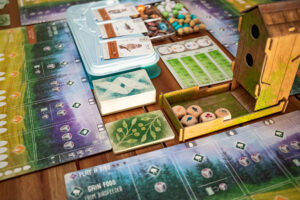
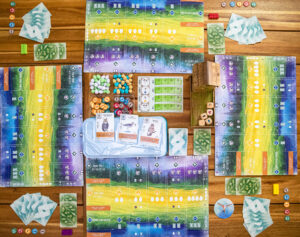
Your opening is not about points. It is about laying track for the engine that scores them later. The single most important principle, drilled by nearly every strong player, is this: prioritize cheap birds with powers that repeat, not expensive birds with big numbers.
Here is the opening logic of a disciplined player:
- Turn one, almost always: play a bird. You begin with five cards and five food. A low-cost bird whose brown power triggers on a habitat action is the ideal first play — it starts working immediately and costs you nothing in the columns (the first slot in every row has no egg cost).
- Favor birds you can pay for with worms and seeds. As the Meeple Mountain analysts put it, focus on birds playable with "only worms, only wheat, or some mixture of the two" — those food types appear far more often in the feeder (roughly a one-in-three chance versus one-in-six for a specific single food), so you are never stuck waiting on a die.
- Get your hand wide early. Cards are options, and options are power. "The more cards you're holding in your hand, the more options you have available to you," notes Meeple Mountain. A turn-one or turn-two draw, especially through a bird that draws for you, pays dividends all game.
- Do not chase the shiny eight-point bird in round one. It is a trap. You will spend three or four food and an action on a single static number while your opponent spends the same action planting a seed that grows.
Think of round one as planting. You will not harvest yet. You are simply making sure that when you do take the forest action in round two, a worm falls into your hand for free — and that when you take the grassland action, an egg appears that you did not have to pay full price for.
Round one is not for scoring. It is for planting the birds that will score for you in rounds three and four.
How do I build an engine instead of just collecting pretty birds?
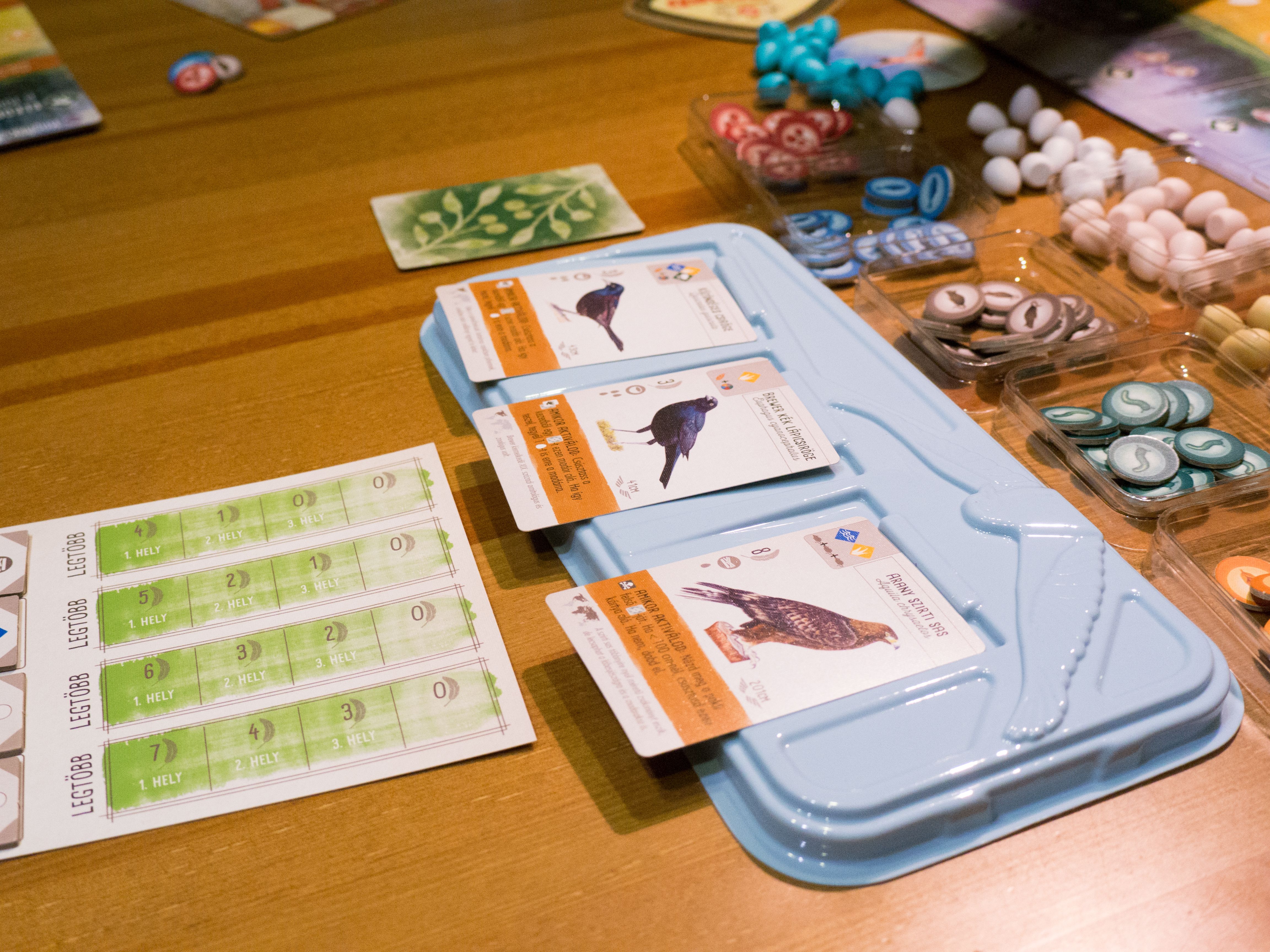

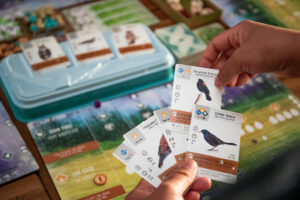
Community pattern (August 2026): Strong early birds reduce the number of habitats that require separate actions. Prioritize powers that produce food, cards, or eggs from another habitat's activation, then preserve enough card access to feed tucking and caching engines. The correct line changes with the base mat and expansions, so evaluate action efficiency rather than copying one habitat script.
A collection sits on the board and waits to be counted. An engine works for you every single turn. Build the engine.
When do I fire brown, pink, white, and teal powers?

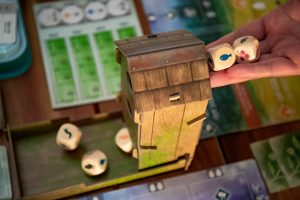
The colored banner on a bird tells you when its power fires. Mastering the timing of all four is the difference between a good engine and a great one.
- Brown — "once between turns" (the engine core). These trigger when you take that habitat's action, resolving right-to-left across the row. Play brown birds as early as you can, because every future visit to that row re-fires them. A brown bird played in round one might trigger fifteen-plus times by game's end; the same bird played in round four triggers twice. Earliness is value with brown powers.
- White — "when played" (one-shot value). These fire exactly once, the moment you place the bird. Treat them as instant rewards — extra cards, extra food, eggs — and time them for the turn you most need that resource. Because they don't repeat, a white power's bird is judged on its point value plus that single burst, not on long-term engine value.
- Pink — "once per turn, when another player takes an action" (interaction). Pink powers fire on your opponents' turns, so the earlier they hit the table, the more enemy turns they can leverage. Strong players play pink birds promptly so they "may be triggered more times." In solo or low-interaction games their value drops — judge accordingly.
- Teal — "end of round" (the expansion layer). Introduced in the European Expansion, teal banners trigger at the close of each round. As Wingsplain describes them, they "give you new and interesting options to passively generate more points and resources at the end of each of the game's four rounds." A teal bird played early collects its bonus up to four times; played in round four, just once. They reward exactly the patient, early-engine mindset this guide preaches.
The one caution the experts raise concerns brown and pink powers that depend on opponents. Some are "unreliable at best" — an opponent may simply avoid the action that helps you. Prefer powers that fire on your own actions, where you control the trigger.
Brown powers reward you for playing early. A brown bird in round one is worth four of the same bird in round four.
How do I manage the food and egg economy?

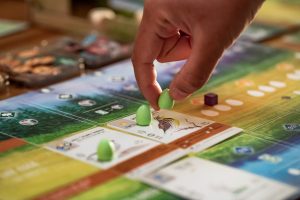
Food and eggs are not points. They are fuel. And fuel left in the tank at game's end is wasted — "unused food and unplayed bird cards do not help you at the end of the game." The discipline is to convert fuel into board presence and points before the final round closes.
Two rules govern food:
- Any two food substitute for any one. When the feeder refuses to give you the exact die you need, dump two of anything for the one you want. This flexibility is what keeps your engine from stalling — never sit paralyzed waiting on a single fish.
- Read the feeder before you take food. If every die shows the same face, taking the food action forces a re-roll afterward — a small tempo play that can deny opponents the faces they wanted while you bank what you need.
Eggs are subtler, because they wear two hats. An egg is a point at game end (one each), but an egg is also currency — you spend eggs to play birds in later columns and to fuel converter birds. The art is timing:
- Early game, eggs are currency. You need them to play your engine into the more expensive columns. Don't hoard them as points yet.
- Round four, eggs are points. When the engine is built and there are no more birds worth playing, pivot hard to laying eggs. The grassland action, supercharged by your egg-laying birds, can flood your board with end-game points in the final turns. As one player described the loop: "get something that lets you get grain from the supply or bird feeder, and just keep laying eggs."
The converter birds collapse the distinction entirely — they let you spend the currency (egg) to buy more fuel (food) to build more engine. That is why the crow/raven egg-trader is the heart of so many winning games.
Eggs are currency in round one and points in round four. The master knows exactly when to stop spending and start banking.
When should I chase the round-end goals and bonus cards?

Goals and bonus cards are guideposts, not destinations. The wise player lets them gently steer bird selection but never tears down a working engine to chase them.
Round-end goals (the four tiles on the goal board) reward things like most eggs in the forest or most birds in a habitat. Two truths temper them:
- The point spread is often small. In many goal configurations the gap between first and last place is only a few points. "Always focus on the goal that could potentially earn you the most points," says Meeple Mountain — but do not contort your whole turn sequence to edge out a single point on a minor goal.
- Free goal points are real points. If your engine is already piling eggs into the grassland and the round-three goal happens to be most eggs in the grassland, collect that reward — you earned it without deviating. The best goal points are the ones your strategy was going to generate anyway.
Bonus cards are your secret end-game objective, scored once at the very end. The guidance is twofold and firm:
- Pick the bonus that fits the board, not the biggest number. A high-scoring bonus you can't complete is "dead weight." A modest bonus that matches the birds you were always going to play is gold. As one writer puts it, "if they don't fit your board, they'll be dead weight."
- Keep their ceiling in perspective. Bonus cards "usually can earn you no more than 7 points in a game where you'll want to aim for at least 80 points." They are the seasoning, not the meal. Build the engine first; let the bonus reward the engine you built.
The synthesis: choose birds that serve multiple masters at once — a bird that scores points, powers the engine, advances a round goal, and counts toward your bonus card is the platonic Wingspan play. Hunt for that overlap.
Goals and bonus cards should reward the engine you were already building — never become the reason you tear it down.
Which habitat should I lean into — forest, grassland, or wetland?
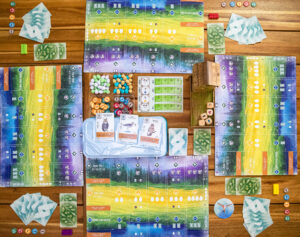
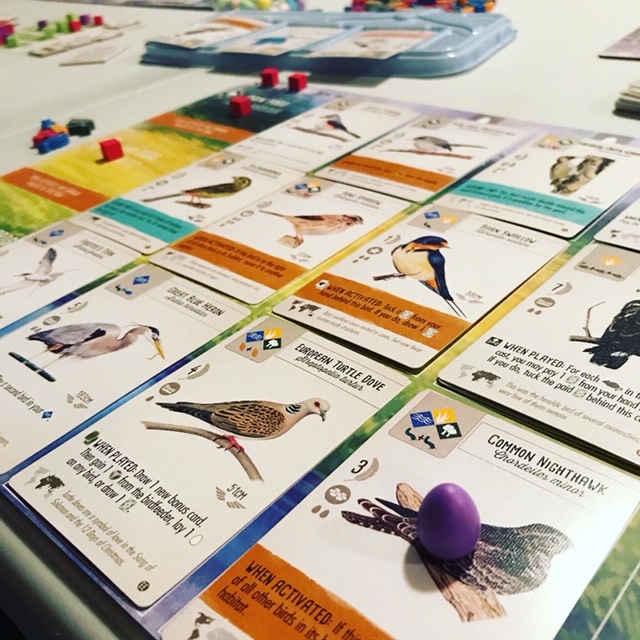
Each of the three habitats does one job, and the master's instinct is to commit deeply to two of them rather than dabble in all three. As the strategy consensus holds, focus on "two (usually Grasslands and either Forest or Wetlands) to maximise efficiency" — a balanced spread across all three leaves every engine shallow.
Here is what each habitat is:
- Forest = food. This is your fuel pump. "A steady supply" of food is what keeps the engine from grinding to a halt. Most engines need a forest presence simply to stay fed — but you rarely want forest to be your primary point source.
- Grassland = eggs. This is the points habitat, and "Grasslands are your best friend" for a reason: eggs are the most consistent, controllable score in the game, and the converter birds (raven, crow, geese, cranes) live here, "trading eggs for food, which is incredibly powerful." If you lean anywhere, lean grassland.
- Wetland = cards and tucking. This is your draw engine and your passive-point machine. Tuck powers, which "slide cards underneath" birds for a point each, "are a goldmine for passive points — the more you can tuck in a single activation, the better."
The winning archetype for most players is grassland-forward, forest-supported: a grassland that lays and converts eggs, fed by just enough forest to keep the food flowing, with the wetland used opportunistically when a strong tuck bird appears. But the deeper lesson is the cross-habitat trick: certain birds "live in one habitat while providing the benefits of another" — a bird that draws a card in the egg-laying row, for instance. These let one cube do two jobs and are the secret to a truly dense engine.
Choose your two pillars by round two, and pour your actions into deepening them. Depth beats breadth every time in Wingspan.
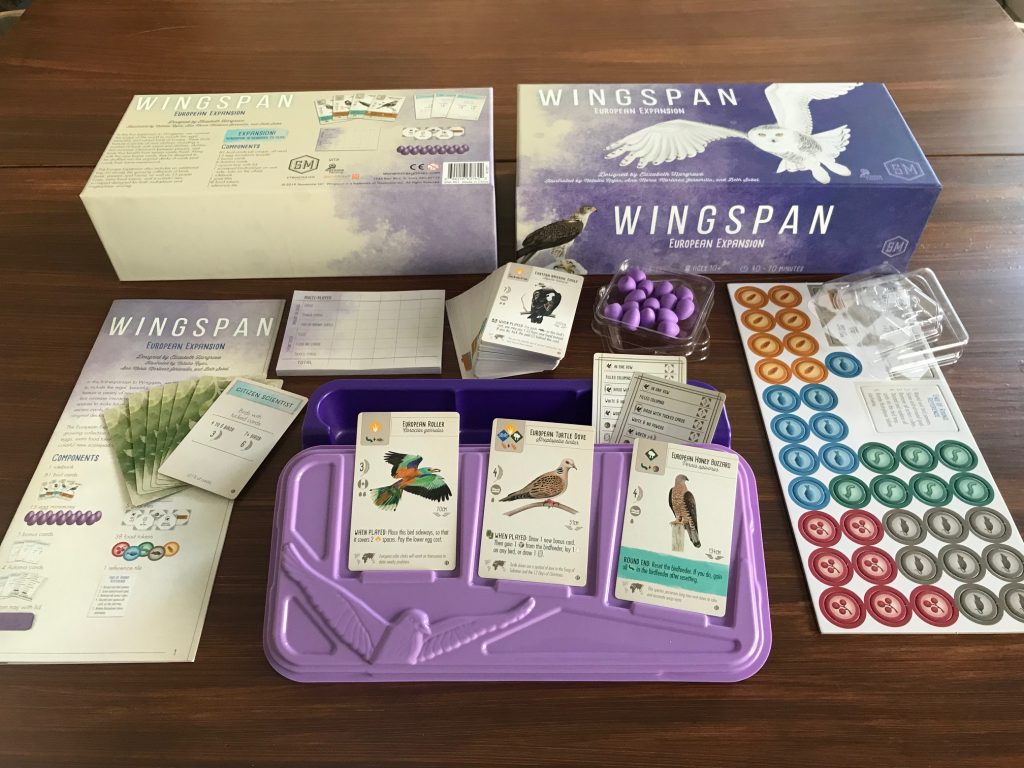
Pour into two habitats, not three. Grassland to score, forest to feed — and let the wetland tempt you only when a great tuck bird appears.
Which Wingspan should I buy — and which expansion first?

The base game is one of the finest engine-builders ever printed, and it stands completely alone — you need nothing else to learn everything in this guide. But the expansions deepen the very systems we've discussed, and they are card expansions: they shuffle into the base box and play seamlessly together.
- Start with the base game. 170 bird cards, 26 bonus cards, the full four-power engine (minus teal), 1–5 players. This is where you learn the patterns.
- First expansion: European. It adds 81 birds and introduces the teal "end of round" powers — a whole new passive-engine layer that rewards the early-and-patient style this guide teaches. Reviewers call the base-plus-European combination "the definitive Wingspan experience," and note it "sticks to the core of what made Wingspan great." If you love the base game's engine, this is the purest deepening of it.
- Then Asia, for versatility and player count. Asia is the most flexible box: 90 birds, plus a head-to-head Duet mode for two and a Flock mode that pushes the table to six or seven players. One reviewer called it "currently my favorite of all the Wingspan expansions, largely because of its versatility." If your table is often large, or you mostly play two-player, Asia may even leapfrog European in priority.
A note for the curious: the Oceania expansion (not ranked here) introduces a nectar wildcard food and new player boards — an excellent box, and the one to explore third once the engine in your bones is second nature. But for a player learning to build the machine, base + European is the canonical path, with Asia close behind for flexibility.
Base game to learn the engine. European to deepen it with teal end-of-round powers. Asia when your table grows past five.
What experienced tables keep reporting
Recurring owner patterns, synthesized in Puzzlewick's words. Follow each evidence trail to read the original discussion.
Just get a sandhill crane/canada goose out with a repeat power bird and/or a Raven/crow that gives 2 food per egg.
Read the evidence: Dazrix, Steam Community (Wingspan discussions)
pay one egg to get 2 wheat, rinse, repeat. Ended up with 30 birds tucked under crane.
Read the evidence: emondf, Steam Community (Wingspan discussions)
get something that lets you get grain from the supply or bird feeder, and just keep laying eggs.
Read the evidence: MasterKriebel, Steam Community (Wingspan discussions)
I could get three activations of my Northern Harrier each turn.
Read the evidence: Quamosthy, Steam Community (Wingspan discussions)
Birds with activated abilities get triggered more often than during an average 1v1 match — don't hesitate to use cards that hand out eggs, birds or food for free.
Read the evidence: Yousorobot, Steam Community (Wingspan discussions)
I drafted it along with the food it needed (one of fruit/invertebrate/seed) and a second bird, then played it into the habitat on the first round.
Read the evidence: Doug, Steam Community (Wingspan discussions)
A bird that produces a resource outside its printed habitat can erase an entire action from the round. Those bridges are often more important than a flashy point total on one card.
Read the evidence: February 2026 r/wingspan beginner strategy discussion
Keep cards that form a near-term engine, not merely the highest printed points. Expensive birds without an income plan are ambitions, not an opening.
Read the evidence: April 2026 r/wingspan opening-strategy discussion
Base Wingspan and expansion mats change resource pressure. Adapt to the tray, goals, bonus cards, and opponents instead of forcing a memorized grassland or egg strategy.
The picks
Some links below are affiliate links — as an Amazon Associate, Puzzlewick earns from qualifying purchases, at no extra cost to you. It never changes a pick.
 3 photos
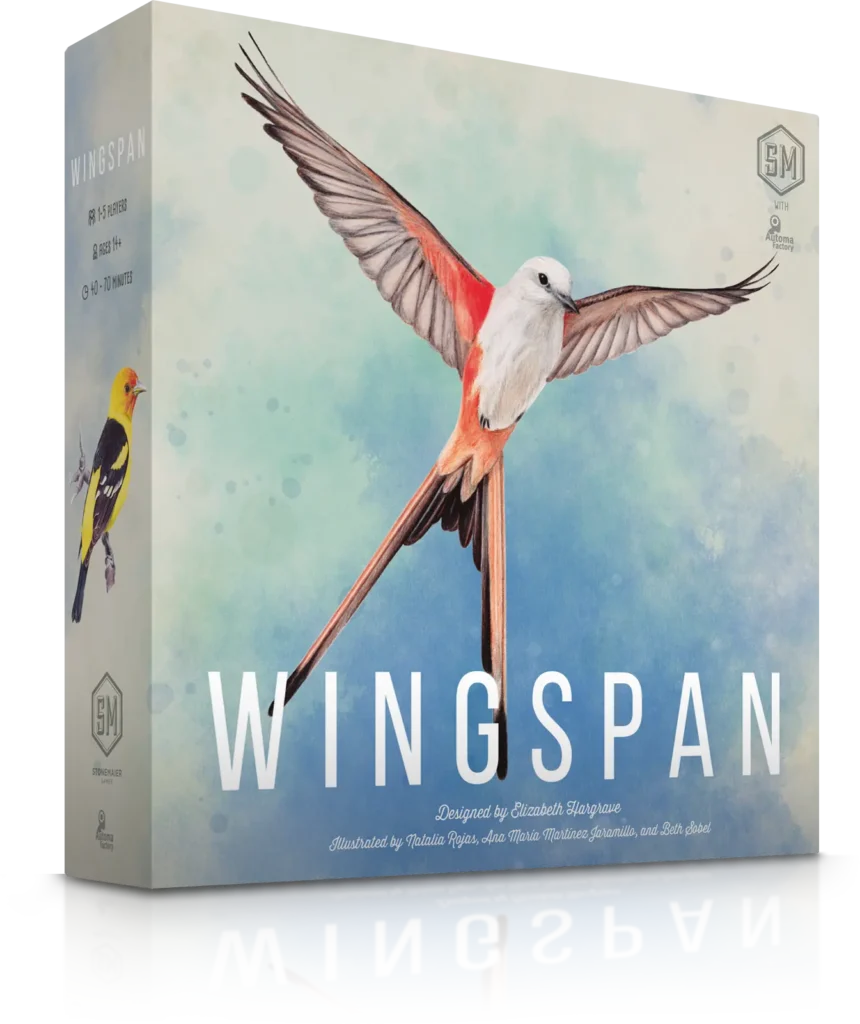
 Wingspan (Base Game)
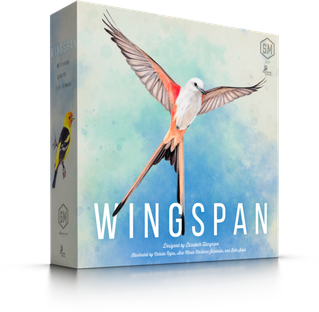
Elizabeth Hargrave's modern classic for 1–5 players: 170 unique birds, 26 bonus cards, eight round-end goal tiles, and the four-power engine (brown/white/pink, with teal arriving via expansion). The genius is that every bird is both a point and a potential cog — and the twenty-six-action limit forces the patient, deliberate play this guide is built around. It stands entirely on its own; no expansion required to master it.
- One of the best engine-builders ever printed; teaches the core loop completely on its own
- 170 birds means enormous replay variety — no two games draft the same
- Gorgeous components (the bird feeder dice tower, screen-printed eggs) without sacrificing depth
- Plays 1–5 including a genuinely strong solo Automa mode
- No teal end-of-round powers until you add the European Expansion
- Some randomness in the feeder and tray can frustrate players who want pure control
- Caps at five players without an expansion
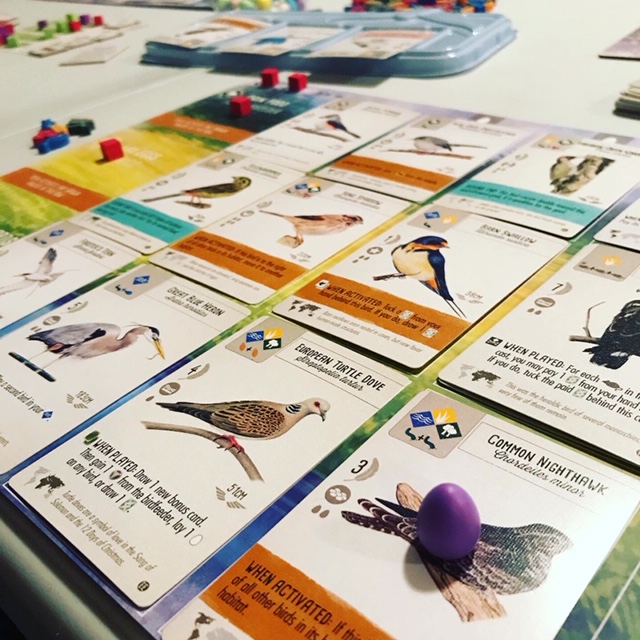
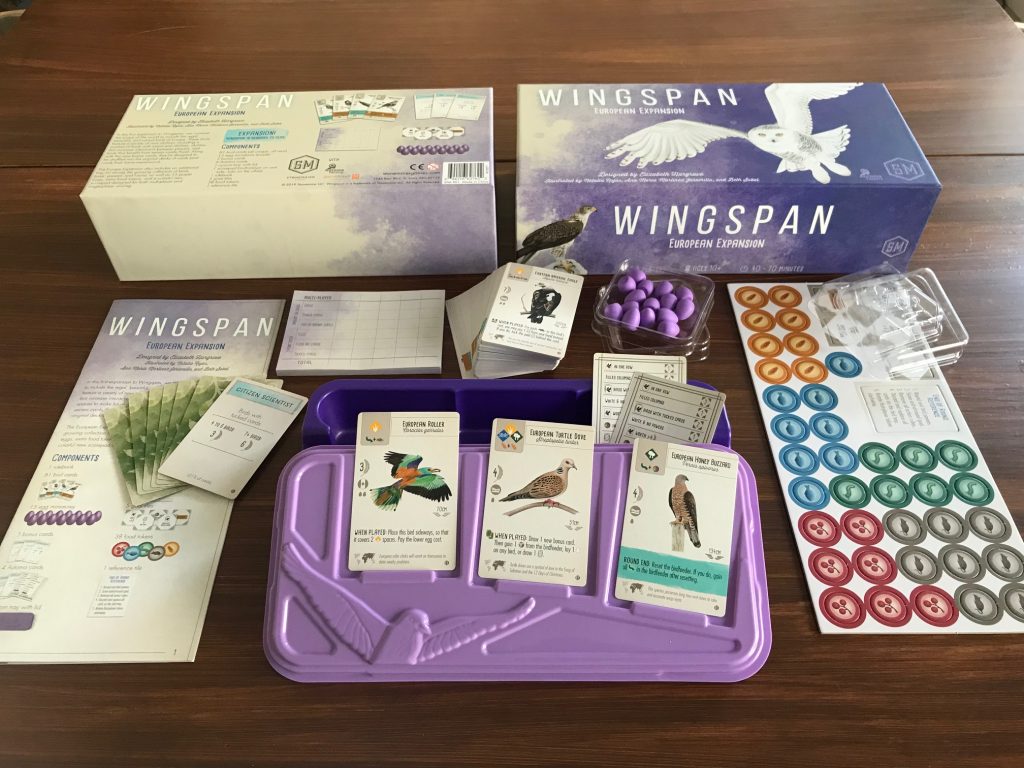 4 photos
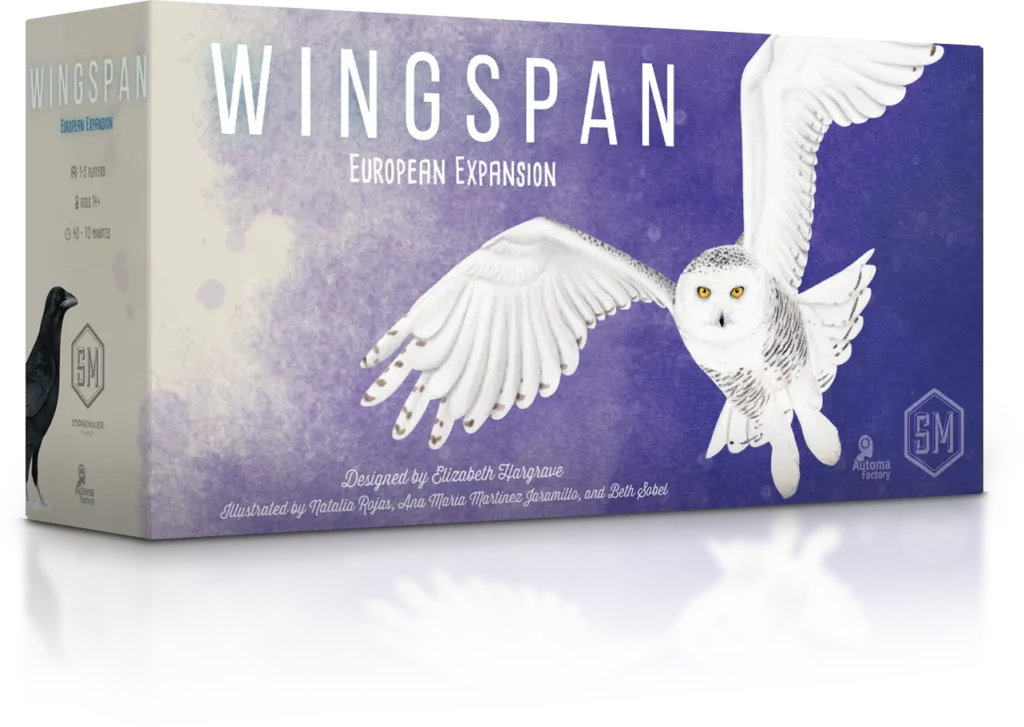
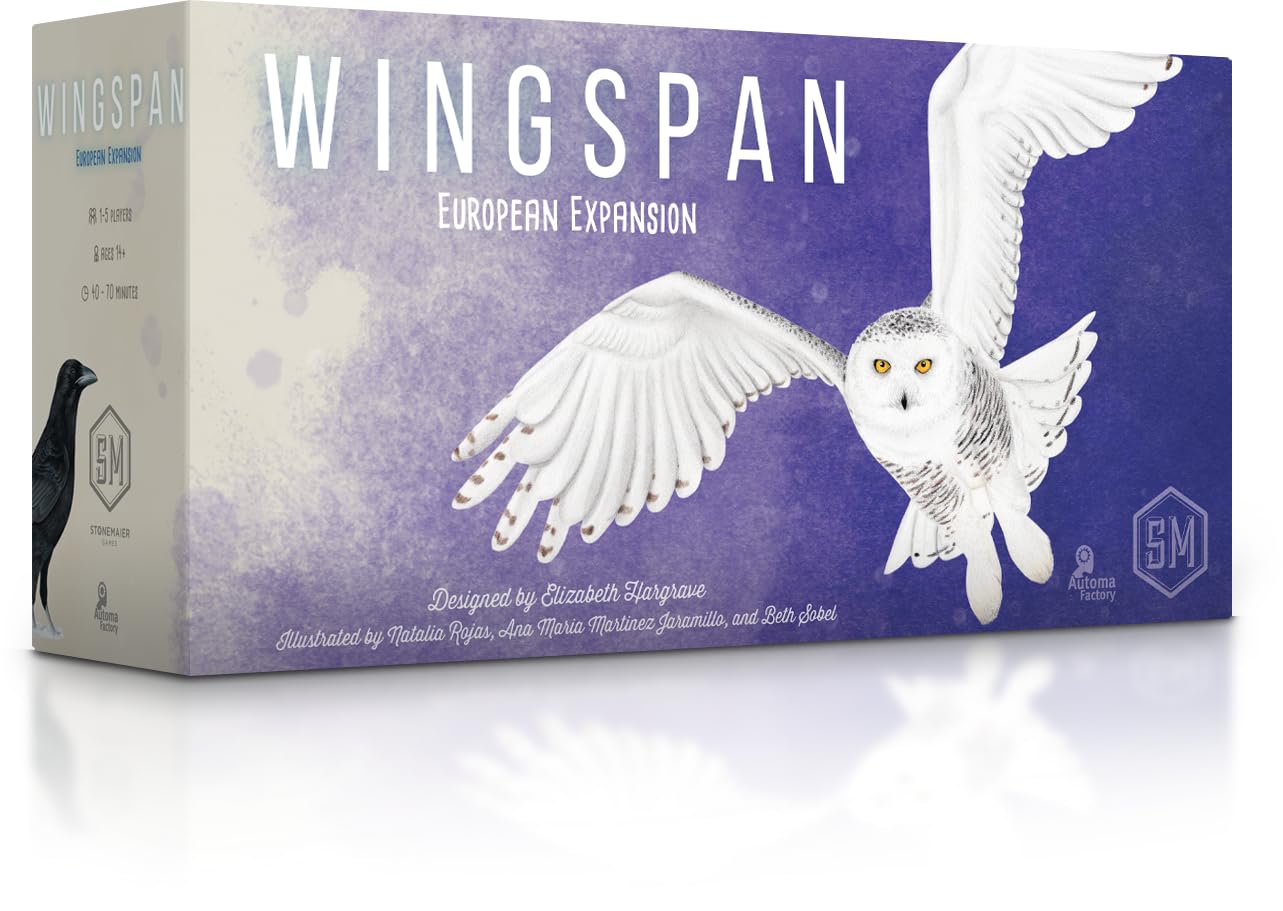
 Wingspan: European Expansion
Adds 81 new birds, 15 purple eggs, fresh bonus cards and goal tiles, and — the headline — the teal "end of round" power, a whole new way to passively generate points and resources at each round's close. It deepens the existing engine rather than reinventing it, which is exactly why reviewers call base-plus-European the definitive Wingspan. The teal layer rewards the early-engine mindset, making it the most natural extension of everything taught here.
- Teal end-of-round powers add a rich new passive-scoring dimension
- 81 birds plus new bonus/goal tiles dramatically expand variety
- "Sticks to the core of what made Wingspan great" — no rules bloat, no longer playtime
- Shuffles seamlessly into the base box and stacks with every other expansion
- A few European birds have intricate powers that take a game or two to grasp
- It's a 'more and deeper' expansion, not a reinvention — no new resource like nectar
- Requires the base game; not standalone
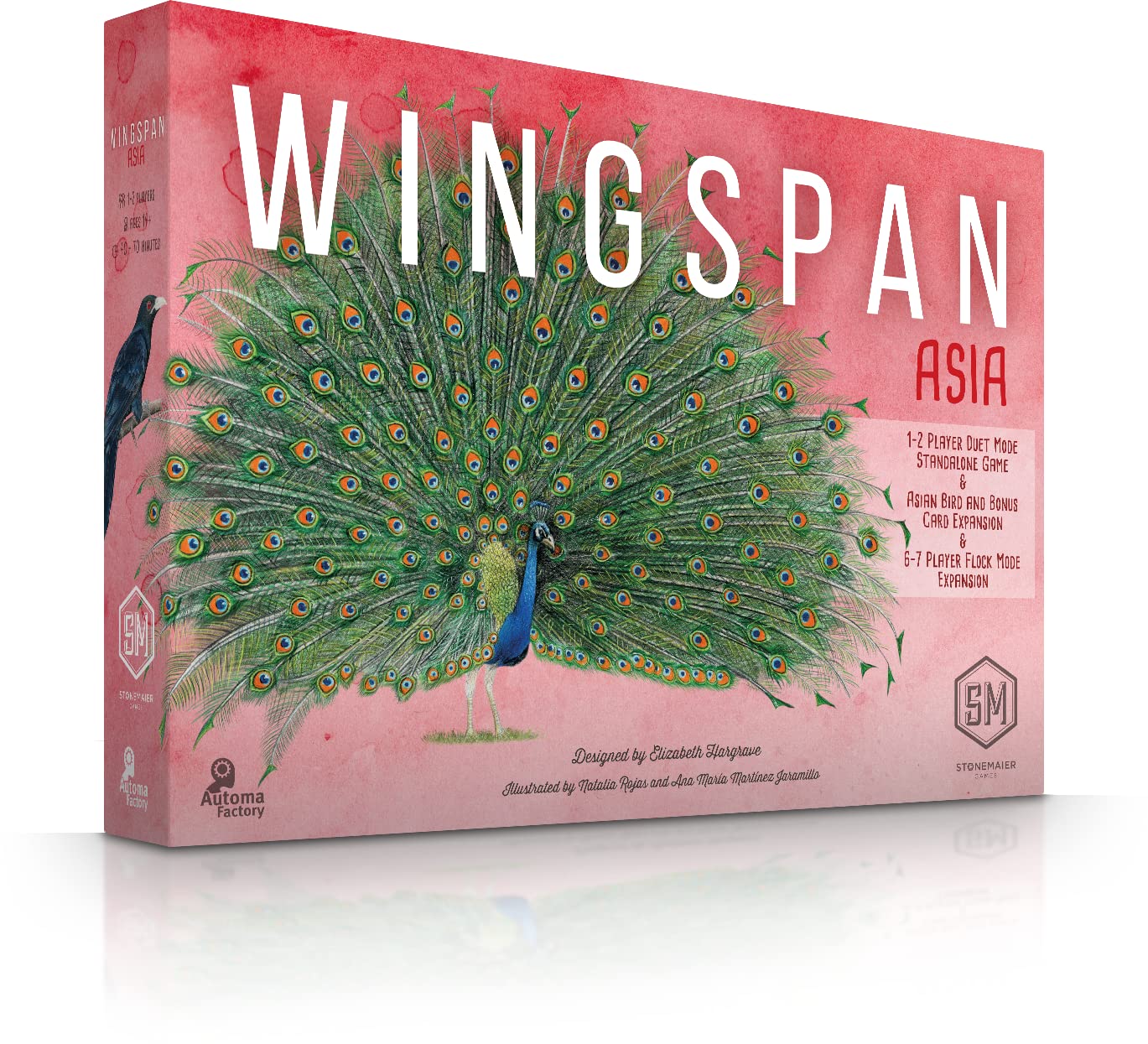
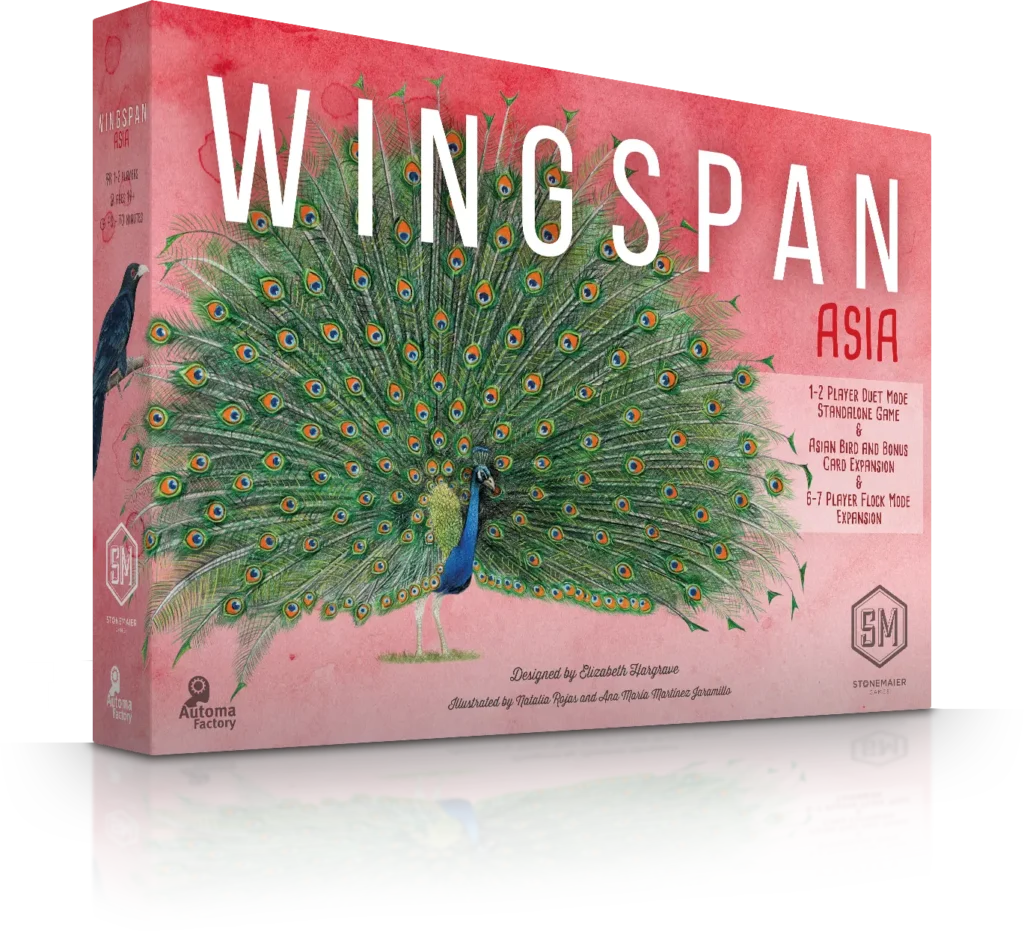

 4 photos
 Wingspan: Asia
The Swiss-army expansion: 90 Asian birds and 14 bonus cards that shuffle into any Wingspan deck, plus two new ways to play — a head-to-head Duet mode tuned for two, and a Flock mode that scales the table to six or seven. It can be played fully standalone or bolted onto the base game. Reviewers prize it precisely for that flexibility, with one naming it their favorite expansion overall for versatility. If your table is often just two, or often a crowd, this may outrank European for you.
- Duet mode is a purpose-built, excellent two-player experience
- Flock mode extends Wingspan to six or seven players — rare for this weight of game
- Playable standalone OR as a card expansion to the base game
- 90 birds and new bonus cards add major variety
- Doesn't add a brand-new core mechanic to the standard 1–5 player game the way teal/nectar do
- Flock mode for 6–7 still needs base-game player components
- If you only ever play the standard mode, European's teal layer may deepen the engine more
At a glance
| edition | new birds | headline addition | players | standalone | buy it for |
|---|---|---|---|---|---|
| Wingspan (Base Game) | 170 total | The full base engine — brown/white/pink powers | 1–5 | Yes (this is the core game) | Learning and mastering the engine; the canonical starting point |
| European Expansion | 81 new | Teal "end of round" passive-scoring powers + purple eggs | 1–5 (adds to base) | No — requires base game | First expansion; deepening the engine with a new passive-points layer |
| Wingspan: Asia | 90 new | Duet (2p) mode + Flock mode for up to 7 players | 1–2 standalone; up to 7 with base | Yes (or expansion) | Two-player focus and large groups; maximum versatility |
Questions, answered
What is the single most important strategy in Wingspan?
Build a repeating engine rather than collecting high-value birds. You get only 26 actions all game (8+7+6+5 across four rounds), so the player who makes each action generate ongoing value — eggs, tucked cards, converted food — out-scores the player who spends actions placing big static birds. Points-per-action is the only currency that matters.
Should I play high-point birds or low-cost engine birds early?
Low-cost engine birds, almost always. A cheap brown-power bird played in round one fires on every future visit to its habitat — potentially fifteen-plus times by game's end. A high-point bird is just a static number. Plant the engine early; harvest the trophy birds in rounds three and four when you can afford them.
What do the brown, white, pink, and teal bird powers mean?
Brown = "once between turns," re-triggered whenever you take that habitat's action (the engine core — play early). White = "when played," a one-time burst on placement. Pink = "once per turn," triggered on opponents' actions (interaction). Teal = "end of round," passive points each round's close (added by the European Expansion).
How does the engine actually 'snowball'?
When you take a habitat action, you re-trigger every brown power in that row, right to left. So a forest with three food-birds gives the action's food plus all three birds' food. Feed that surplus into egg-to-food converter birds (raven, crow, geese), spend the food on more engine birds, and each loop funds the next — that compounding is the snowball.
Which habitat is the best to focus on?
Grassland, for most players — eggs are the most consistent points in the game, and the powerful egg-to-food converter birds live there. Commit deeply to two habitats (usually grassland plus forest for fuel) rather than spreading thin across all three. Use the wetland opportunistically when a strong tuck bird appears.
How important are eggs, and when should I lay them?
Eggs wear two hats. Early game they're currency — you spend them to play birds in later columns and to fuel converter birds. Round four they become points (one each), so once your engine is built and no bird is worth its action, pivot to flooding your grassland with eggs for raw end-game points.
What's the best use of the food / 'gain food' action?
Keep your engine fed and exploit the feeder. Remember any two food substitute for any one, so never stall waiting on a specific die. If every feeder die shows the same face, taking food forces a re-roll afterward — a tempo play that can deny opponents while you bank what you need.
Should I chase the round-end goals?
Only take the ones you back into for free. Goal point spreads are often narrow, so sacrificing a strong engine turn to climb from third to first on a minor goal usually loses more than it gains. If your engine already piles eggs where the goal rewards eggs, collect it — but don't contort your strategy to chase goals.
How much do bonus cards matter?
They're seasoning, not the meal — usually worth no more than about 7 points in a game where you aim for 80+. Pick the bonus that fits the board you're already building, not the biggest number; a high-scoring bonus you can't complete is dead weight. Let the bonus reward your engine, not redirect it.
What is the famous Canada goose / raven egg-trader combo?
It's the canonical engine: a bird that lets you lay or gain eggs cheaply (Canada goose, sandhill crane) paired with a converter (raven/crow) that turns one egg into two food. Lay an egg, convert it to surplus food, spend the food on more engine. As a player put it: "pay one egg to get 2 wheat, rinse, repeat."
Which Wingspan expansion should I buy first?
The European Expansion, if you love the standard 1–5 player game — it adds 81 birds and the teal end-of-round powers, deepening the core engine. But if you mostly play two-player or in large groups, buy Asia first: its Duet mode is purpose-built for two and Flock mode scales to seven players.
Can I mix the base game and expansions together?
Yes — every Wingspan bird and bonus card is fully cross-compatible. You can shuffle the base game, European, and Asia into one large deck and play with all of it. Asia can also be played entirely standalone. There's no wrong combination; buy in the order that fits your table.
Kenji's verdict
Wingspan rewards the patient mind. Do not reach for the brightest bird in the river — reach for the one that will pay you back, turn after turn, until the fourth round closes. Plant cheap brown-power birds early, commit to two habitats (grassland to score, forest to feed), build the egg-to-food converter that lets your machine fund itself, and let the goals and bonus cards reward the engine you were already building rather than redirect it. Twenty-six actions, no more — make each one work twice. Buy the base game to learn the engine in your bones; add the European Expansion to deepen it with teal end-of-round powers; reach for Asia when your table grows past five or shrinks to two. Master the patterns, and the points will follow.
Research ledger 15 sources · reviewed 2026-08-11
Specifications, rules, current product information, community experience, and contrary evidence were checked against the sources below. Commercial links are kept separate from editorial evidence.
- amazon.comamazon.com/dp/B07YQ641NQ?tag=puzzlewick-20
- amazon.comamazon.com/dp/B07YQ6FS8G?tag=puzzlewick-20
- amazon.comamazon.com/dp/B0BH72GXZ5?tag=puzzlewick-20
- stonemaiergames.comstonemaiergames.com/games/wingspan/wingspan-asia
- meeplemountain.commeeplemountain.com/top-six/top-6-strategies-for-flying-high-in-wingspan
- letsplaygames.ukletsplaygames.uk/how-to-win-at-wingspan
- catsanddice.comcatsanddice.com/wingspan-strategy-tips-guide
- wingsplain.comwingsplain.com/wingspan-european-expansion-review-and-primer
- ultraboardgames.comultraboardgames.com/wingspan/the-four-actions.php
- steamcommunity.comsteamcommunity.com/app/1054490/discussions/0/3001046778341356593
- thegamer.comthegamer.com/wingspan-expansions-and-upgrades-best
- en.boardgamearena.comen.boardgamearena.com/doc/Tips_wingspan
- reddit.comreddit.com/r/wingspan/comments/1r9jhev/beginner_here_what_is_the_one_tip_you_wished_you
- reddit.comreddit.com/r/wingspan/comments/1shp9b4/strategy_thoughts
- reddit.comreddit.com/r/wingspan/comments/1r7dns7/tips_tricks
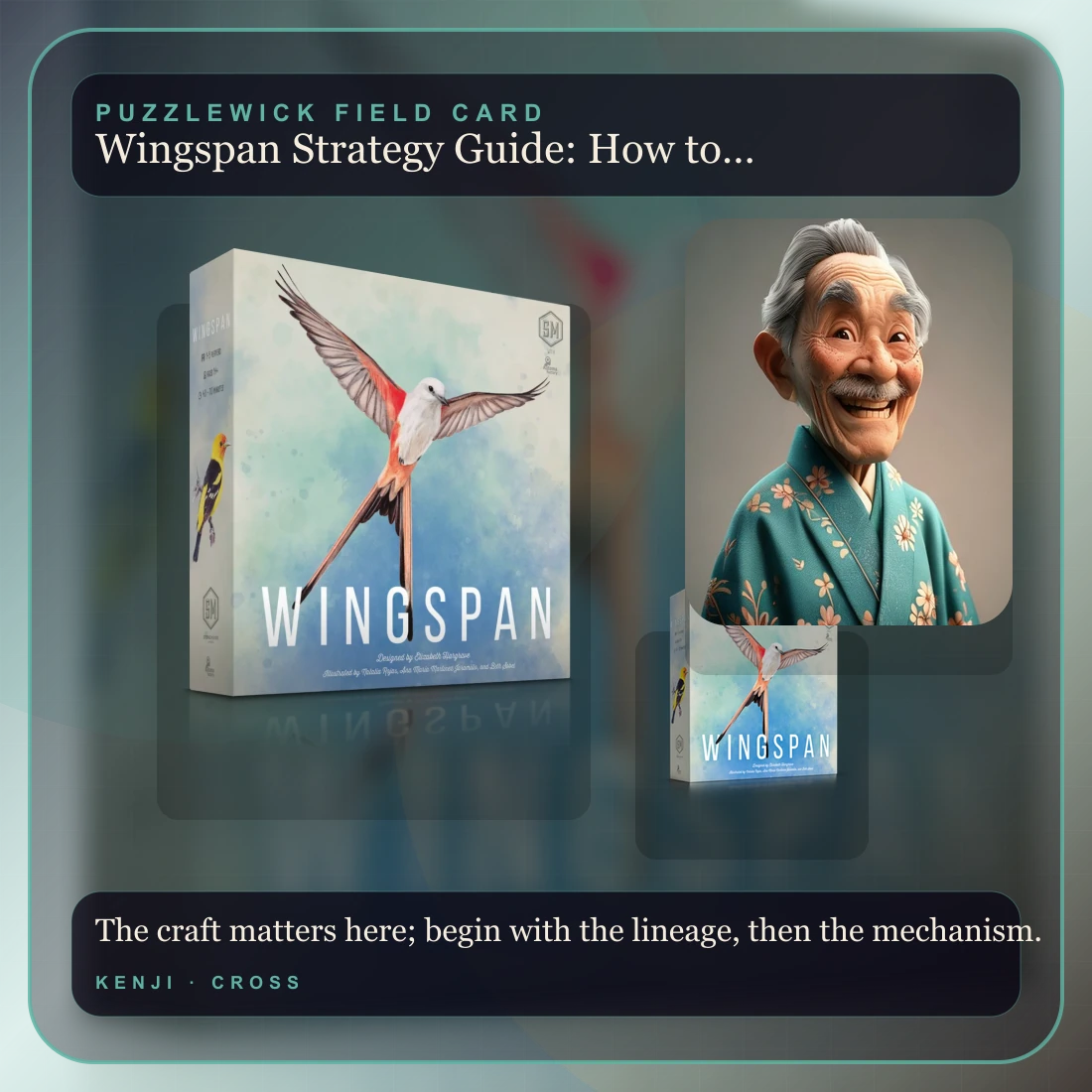
Every object has a lineage. Let me tell you its story.

Keep exploring
The next smart rabbit holes.
✦ Topic PathBoard Game Buying Guides: compare the whole shelfStart with the decision, not the shelf. These guides compare the games, editions, expansions, player counts, and costs people...ComparisonThe Best Engine-Building Board Games of 2026, RankedA sensei's tier list of the games that taught a generation what "the engine click" feels like — from the gateway masterpiece to the...Best Of9 Underrated Board Games Hiding in Plain Sight (That Aren't Wingspan or Catan)Nine games that critics adore and your group hasn't tried yet — under the radar, in print, and worth grabbing before the next reprint gap.