ISS Vanguard Review: Is This Massive Sci-Fi Campaign Worth It?
ISS Vanguard's ship phase, planet missions, dice-building exploration, campaign pacing, solo fit, expansion path, and the players who will actually finish the voyage.

AI-assisted curator persona · research and editorial responsibility: Robert Pruitt · how this guide was made
Last editorial refresh: 2026-06-15 Gold-standard QA: 2026-08-10 13 sources reviewed Affiliate links checked during gold-standard pass

The short answer
Yes — for the right captain. ISS Vanguard is one of the most thoroughly engineered campaign boxes in the hobby: a drawer-style insert, crew miniatures, dual-layer section dashboards, hardbound books, and a distinctive dice-building exploration system supporting a long campaign. The production is functional rather than merely decorative, but the value is conditional. This is a slow-burn, low-combat, bookkeeping-heavy narrative experience that community reports frequently praise in its early and middle chapters while criticizing a more repetitive late campaign. It best suits one or two committed players who prize atmosphere, exploration, and ship management. Players seeking tight tactical combat or fast setup should choose a different voyage.
Decision map
Choose in thirty seconds
Solo and two-player gamers who want a gorgeous, slow-burn sci-fi exploration campaign with a best-in-class box.
Players who finished the core campaign and want a longer, more intricate continuation of the saga.
Devoted captains who finished the base game AND Lost Fleet and want the largest additional campaign available.
Some boxes you open; this one you file. Lift the lid on ISS Vanguard and the first thing you meet is a fitted, drawer-style insert that holds the expedition like a curator's cabinet. That is the right first impression for a game whose conceit is cataloguing the unknown. Awaken Realms — the Polish studio behind Nemesis and Tainted Grail — built ISS Vanguard as a 1–4 player cooperative campaign about humanity's first deep-space exploration ship. This review checks the manifest line by line: what the box contains, how dice-building exploration works, where the production is functional, where it is spectacle, and why the campaign's ending divides players. Where community experience disagrees with the marketing promise, both are labeled plainly.
Start here, then go deeper
You are in the right cabinet.
 ✦ Universe HubISS Vanguard: the whole buying pathISS Vanguard is Awaken Realms at their most ambitious: a sci-fi exploration campaign where you crew a ship, land on hostile worlds,...
 ✦ Topic PathBoard Game Buying Guides: compare the whole shelfStart with the decision, not the shelf. These guides compare the games, editions, expansions, player counts, and costs people...
 Deep DiveTainted Grail: Kings of Ruin — Awaken Realms' Dark Arthurian Campaign at Full Production LavishnessA stand-alone, story-soaked heavyweight that represents Awaken Realms at the peak of its craft — and the rare campaign box where the...
What is ISS Vanguard, exactly?
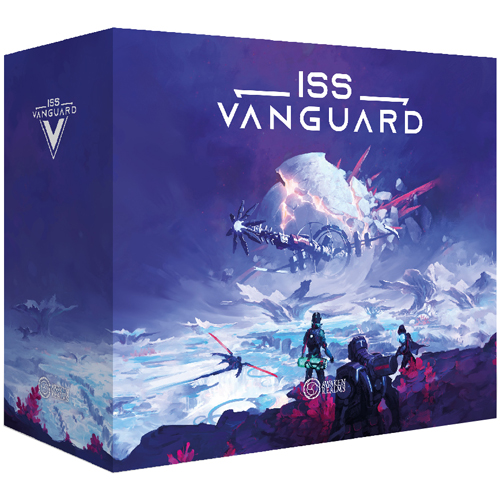
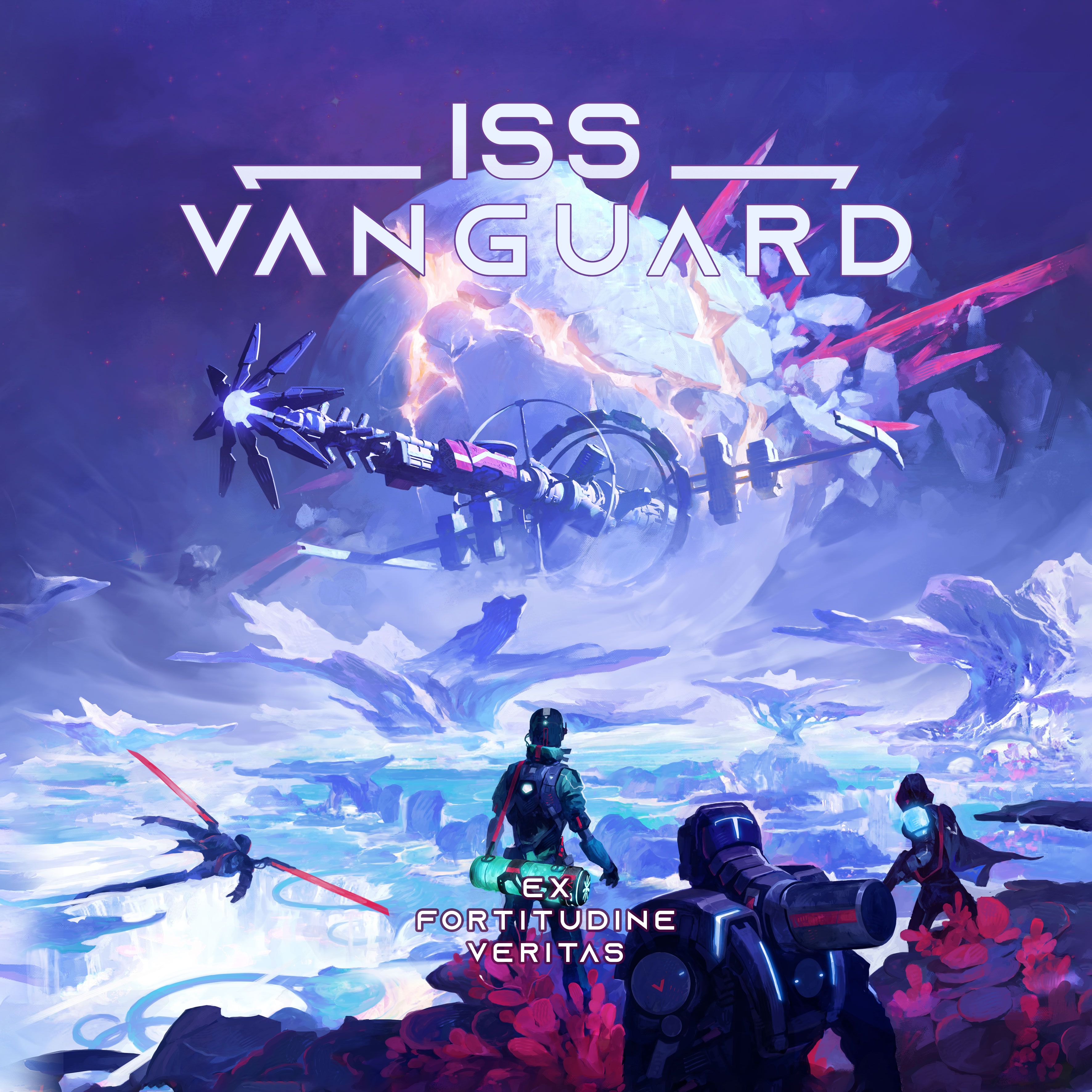
ISS Vanguard is a 1–4 player cooperative legacy-lite campaign game by Awaken Realms, designed by Andrzej Betkiewicz, Krzysztof Piskorski, Paweł Samborski, and Marcin Świerkot. You are not a single hero; you are the command crew of humanity's first faster-than-light exploration vessel, the ISS Vanguard, dispatched to chart a galaxy and trace the legacy of a vanished precursor civilization the fiction calls the Builders.
The campaign alternates between two distinct modes. In the ship phase, you sit at the home base: managing the vessel through the Ship Book, recruiting and resting crew, researching technology, and deciding which world to investigate next. Then you commit an away team — drawn from four shipboard sections (Security, Recon, Science, and Engineering) — and drop onto a planet rendered as a book of branching locations. There, the dice-building exploration engine takes over.
Tonally, it sits beside Star Trek's away-mission optimism and Battlestar Galactica's lonely-ship dread. Mechanically, it is closer to a sprawling, app-supported choose-your-path adventure with a sophisticated dice economy bolted underneath. BoardGameGeek lists it at a complexity weight of 3.66 / 5 — meaty, but not a brain-burner — with a recommended sweet spot of 1–2 players despite the 4-player ceiling. A free companion app adds voice acting, music, and automated flag-tracking to smooth the narrative bookkeeping.
You are not a single hero; you are the command crew — and the galaxy is a book of doors you open one die at a time.
What's in the box — and is the production really that lavish?
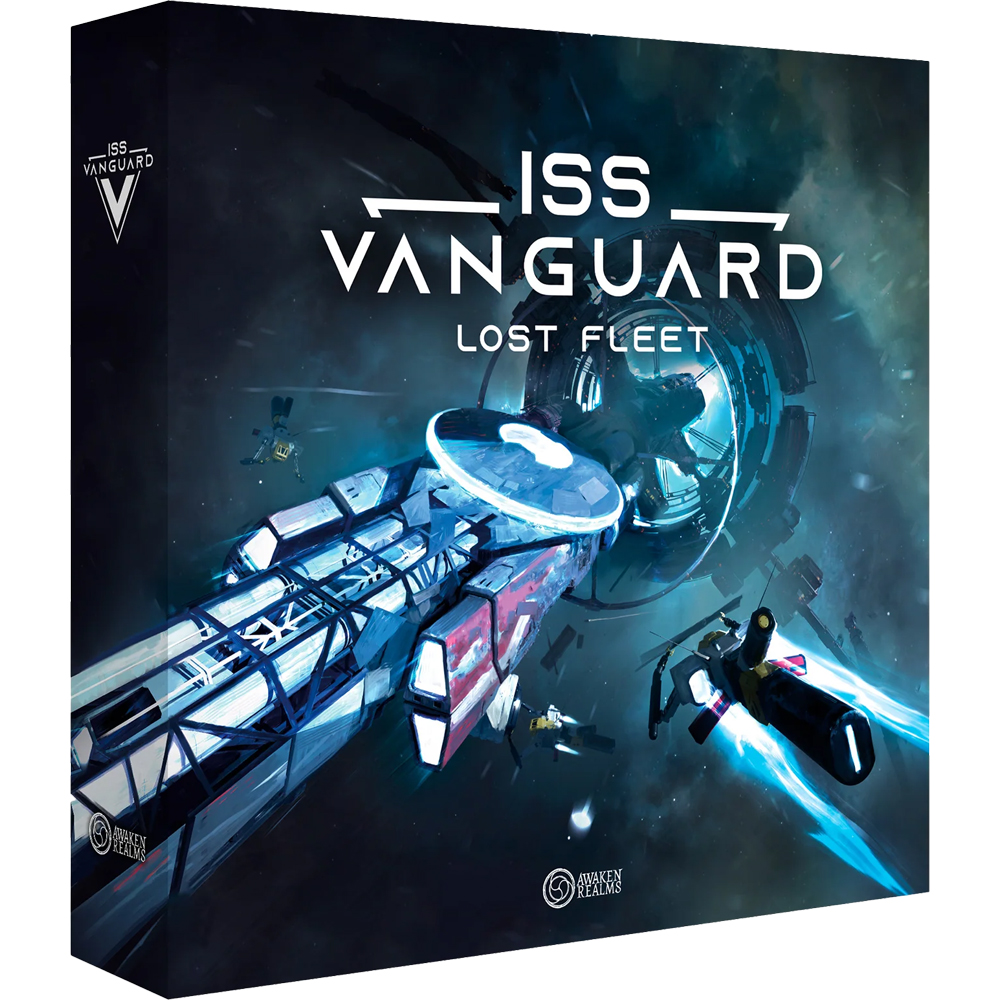
Short answer: yes, and the lavishness is unusually functional. The retail box tips the scale at over five kilograms, and almost none of that weight is filler.
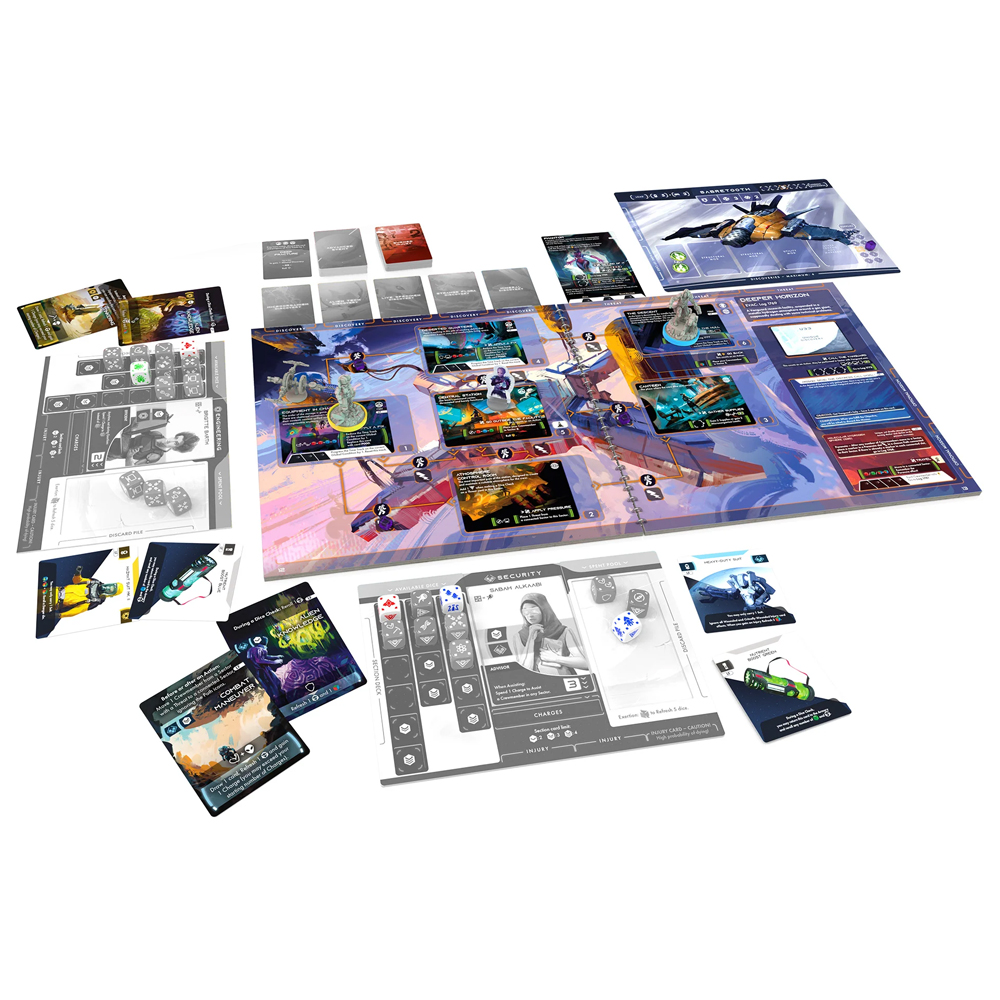
The drawer insert. The headline component is the fitted tray system — a drawer-style insert (with linen-finish, dual-layer card trays) that organizes the entire game so setup and teardown stay sane for a box this size. Reviewers single it out as one of the best factory inserts in the hobby; the broader fan verdict is that "every detail in the box feels well thought out." This is the difference between a 60-hour campaign you keep on the table and one you abandon in a closet.
The dashboards. Each away-team section gets a dual-layer player board — recessed cutouts that hold dice and tokens in place so a bumped table doesn't erase your state. They are the tactile heart of the away-team turn.
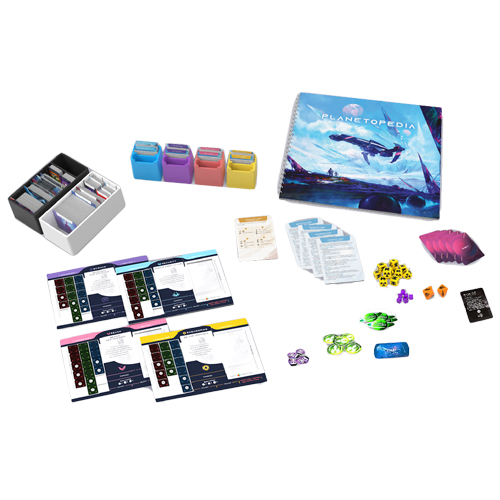
The books. Three hardbound volumes carry the experience: the Ship Book (a binder with dividers and card-storage pages that is your home base), the Planetopedia (the map-as-book you explore, with up to eight locations per planet), and the Log Book, which threads the branching campaign narrative.
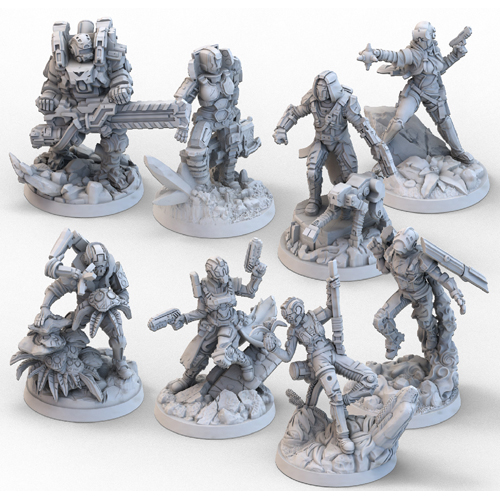
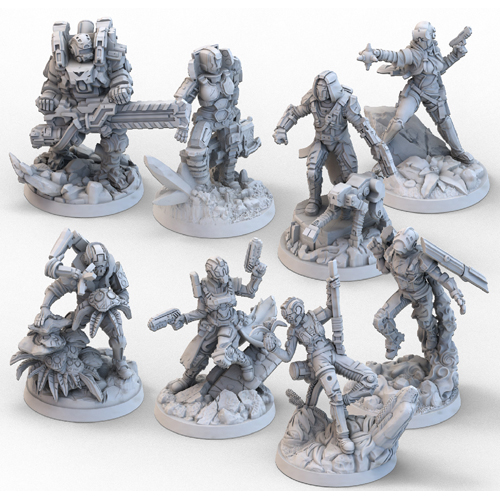
The minis and standees. The core box ships eight crew miniatures — the four sections in male/female pairs — a deliberately restrained count for an Awaken Realms game. In a notable design choice, the studio used standees for threats and equipment rather than flooding the box with plastic, putting the budget into art and structure instead. (A separate Close Encounters add-on exists for those who want 30+ sculpted threat minis.)
The dice. Custom engraved dice in three color groups, each with its own symbol set, plus the universal Vanguard wildcard symbol. The dice are not a theme skin — they are the engine, which the next section unpacks.
Over five kilograms of box, and almost none of it is filler — the weight is structure, not spectacle.
How does the dice-building exploration engine actually play?
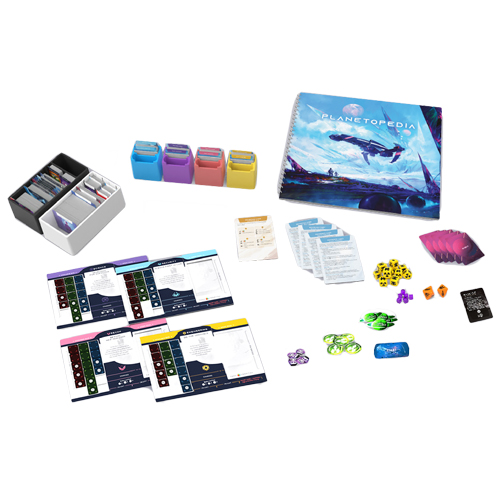
This is the mechanism that earns ISS Vanguard its keep, so let me catalogue it precisely.
Before an away mission, you build your dice pool — choosing which section dice to bring based on the crew you commit. Crucially, dice of the same color are not identical: each individual die carries a different distribution of symbols, so committing 'a Science die' is a real decision, not a formality. You are assembling a probability toolkit tuned to the mission you expect.
On the planet — explored through the Planetopedia's branching locations — you resolve checks by rolling committed dice and matching their symbols to a requirement. The Vanguard wildcard can stand in for any symbol, and cards plus character abilities let you manipulate results. The tension is pure push-your-luck: commit more dice to raise your odds, but every die you roll lands in a spent pool and is unavailable until you recover it. You refresh dice by resting — or you can exert, squeezing out an extra result now at the cost of removing that die for the rest of the session. An injury die seeds risk into the bag, so every push carries a bite.
The result, when it sings, is what one reviewer called "a great sense of exploration... paired with decision making in dice, cards, and special abilities" and "a big sense of 'pushing your luck.'" You feel the dwindling resource of your team's energy as a planet's mysteries unfold one locked-then-unlocked door at a time.
The ship phase between drops is the quieter counterweight — recruiting, researching, choosing the next heading. It is thematically right but, by common account, the weaker half: the Ship Book "doesn't have that much decision making" despite its marketing prominence, and Awaken Realms has since revised it (a later Ship Book update trimmed resource types that were adding more bookkeeping than fun).
Commit more dice to succeed — but every die you roll is spent, and the injury die is always waiting in the bag.
Is ISS Vanguard worth the money?

Here is the ledger, balanced honestly. The base game has sold at US retail anywhere from about $148 to $185 depending on the shop (GameNerdz has listed it at $147.99; other retailers sit near $169–$185). At any point in that band, this is a premium purchase, and the community genuinely splits on whether it's justified.
The case for. You are buying a complete, gorgeous, deeply replayable campaign with a best-in-class insert and a dice engine that few games replicate. The praise runs high: fans have called it "a Rolls Royce both in design and components" and "just a gorgeous looking game." Published reviews land warmly — Zatu scored it 93%, Topping the Table 4.5/5 — and per-hour, a 40–60-hour campaign at ~$160 is cheaper entertainment than most hobbies.
The case against. The most pointed criticism is that the lavishness inflates the price: one frank BGG reviewer argued the story and art are worth it, but the money probably isn't, noting many components 'weren't necessary' and the experience could have shipped in a smaller, cheaper box. Pacing is the other knock — Shelfside, who scored it 7/10, estimate the early-to-mid campaign at an 8/10 but warn the late game drags into 'tedious' multi-hour dice-rolling, and advise some players not to finish the campaign if the rolling exhausts them. Combat is rare, so tactics-hungry players may bounce.
The verdict on value: worth it if you weight production, atmosphere, and exploration highly and play at 1–2 players. Not worth it if you primarily want efficient tactical engine-building or a tidy, climactic ending.
A 'Rolls Royce in design and components' to its fans; an over-produced box whose 'money probably isn't worth it' to its critics. Both are describing the same game accurately.
How do you begin — and what should a first mission know?
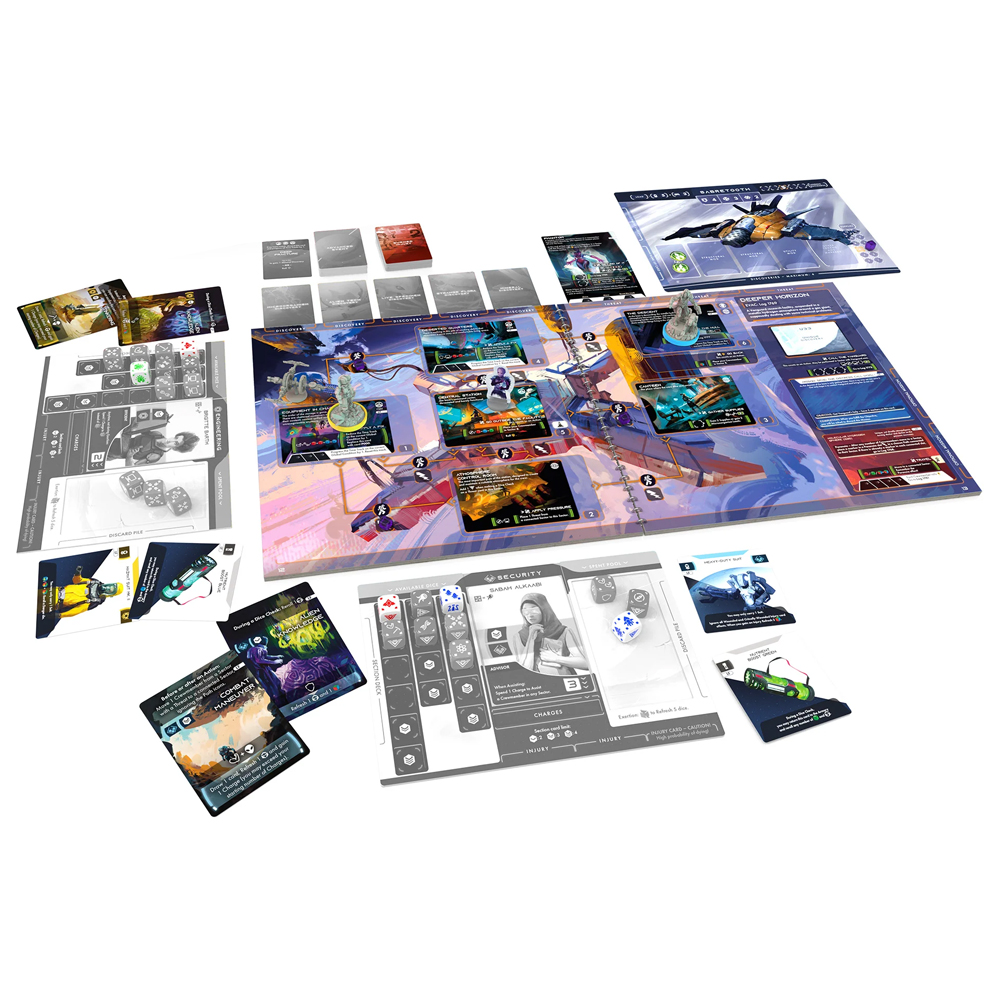
ISS Vanguard is built to teach itself, which is mercy for a box this size. A few archivist's notes for a clean launch:
Install the companion app first. The free ISS Vanguard app adds voice acting and music and, more practically, automates Log Book flag-tracking and reads narrative passages aloud. The single most common new-player stumble is mis-following the Log Book — getting 'lost more than once' is a documented hazard, and the app is the fix.
Read to the bottom. A recurring tripwire: missions hide instructions at the end of a log entry. Always scroll/read all the way down before resolving, or you'll miss a setup beat.
Pick your player count deliberately. This is the biggest first-session lever. Solo with all four crew members imposes heavy memory load; many solo players prefer running two crew to keep the cognitive weight manageable. Two human players is the widely-cited sweet spot — 'two heads are better than one' for the dice decisions. Four players spreads the bookkeeping but dilutes each person's agency. Start at 1–2.
Don't over-commit your dice early. The instinct is to throw everything at the first check. Resist it. Learn the rest/exert rhythm on low-stakes rolls so you understand your recovery economy before a planet punishes you for an empty pool. Treat the injury die with respect from mission one.
Embrace the slow burn. The opening hours are deliberately unhurried — they are establishing tone and teaching systems. If you arrive expecting immediate fireworks you'll misjudge it. Arrive expecting a logbook of discovery and it delivers.
Install the app, read to the bottom of every log entry, start at one-or-two players, and respect the injury die.
Which expansions and accessories are actually worth it?
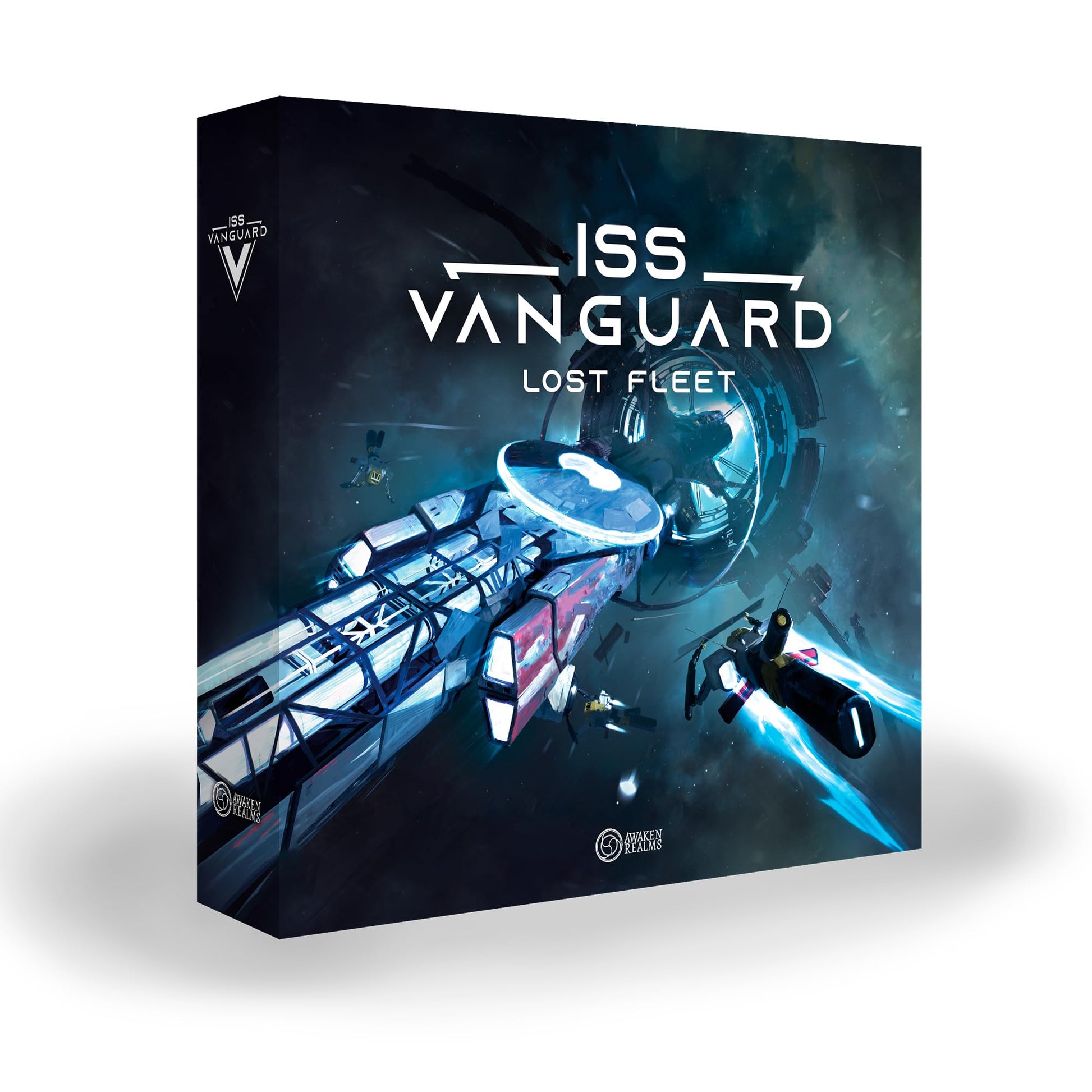

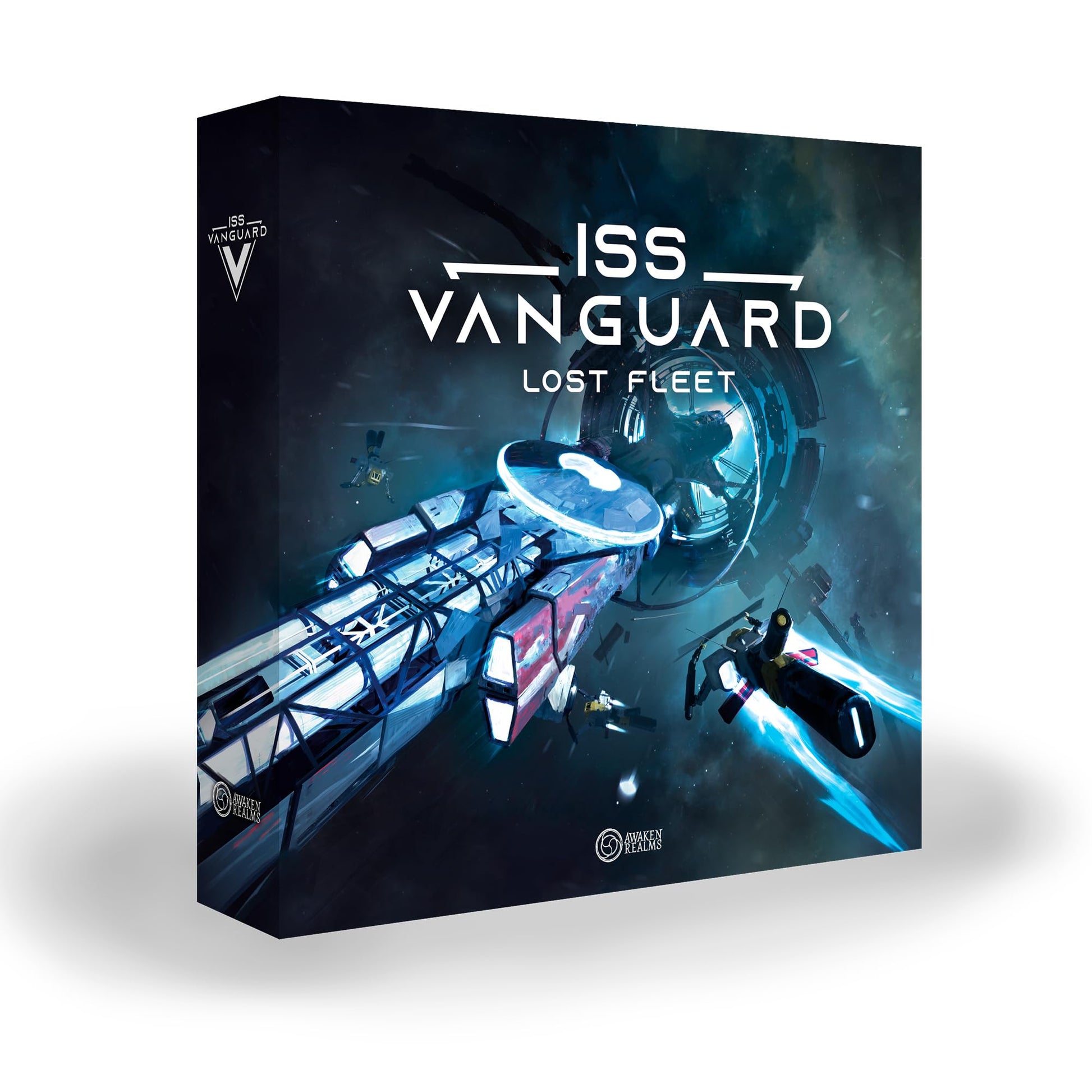
The catalogue extends well past the core box. Here is what's real, in priority order.
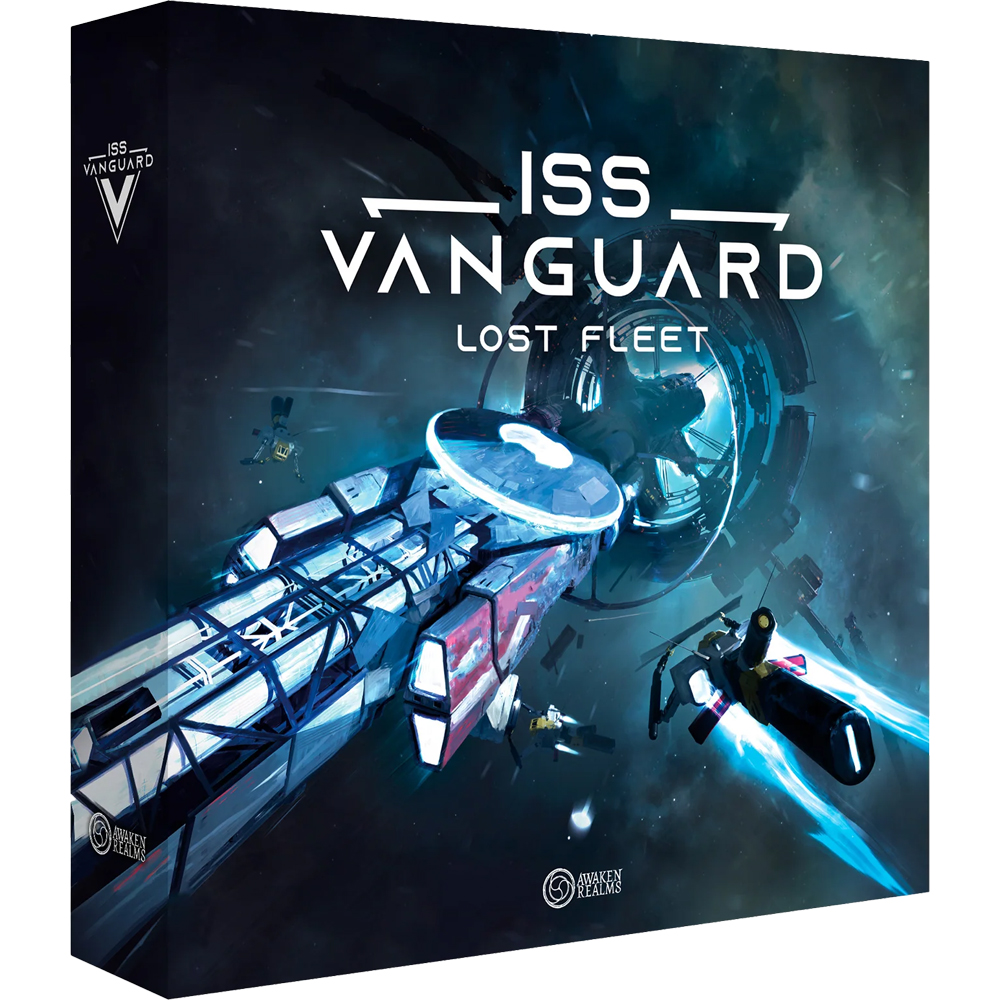
The Lost Fleet (≈$56). The flagship expansion and the clear first add-on. It continues the saga with a fresh, more intricate campaign and ships a full slate of its own content — its own Rulebook, Planetopedia, Operations Book, and Logbook, plus 104 Point-of-Interest cards, 28 mission cards, 36 section cards, standees, and dice. If you finished the base game wanting more galaxy, this is the buy. Get this first.
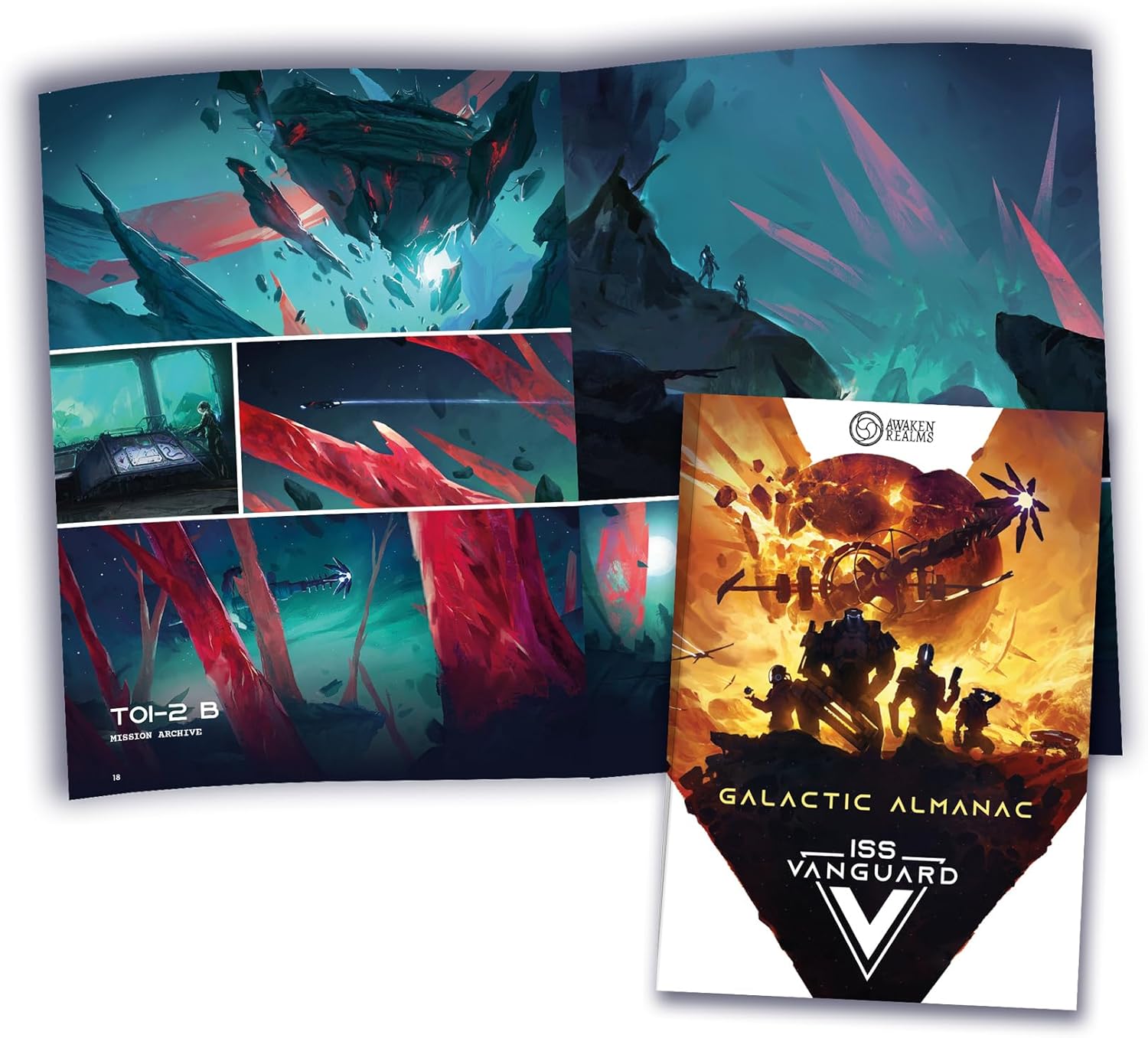
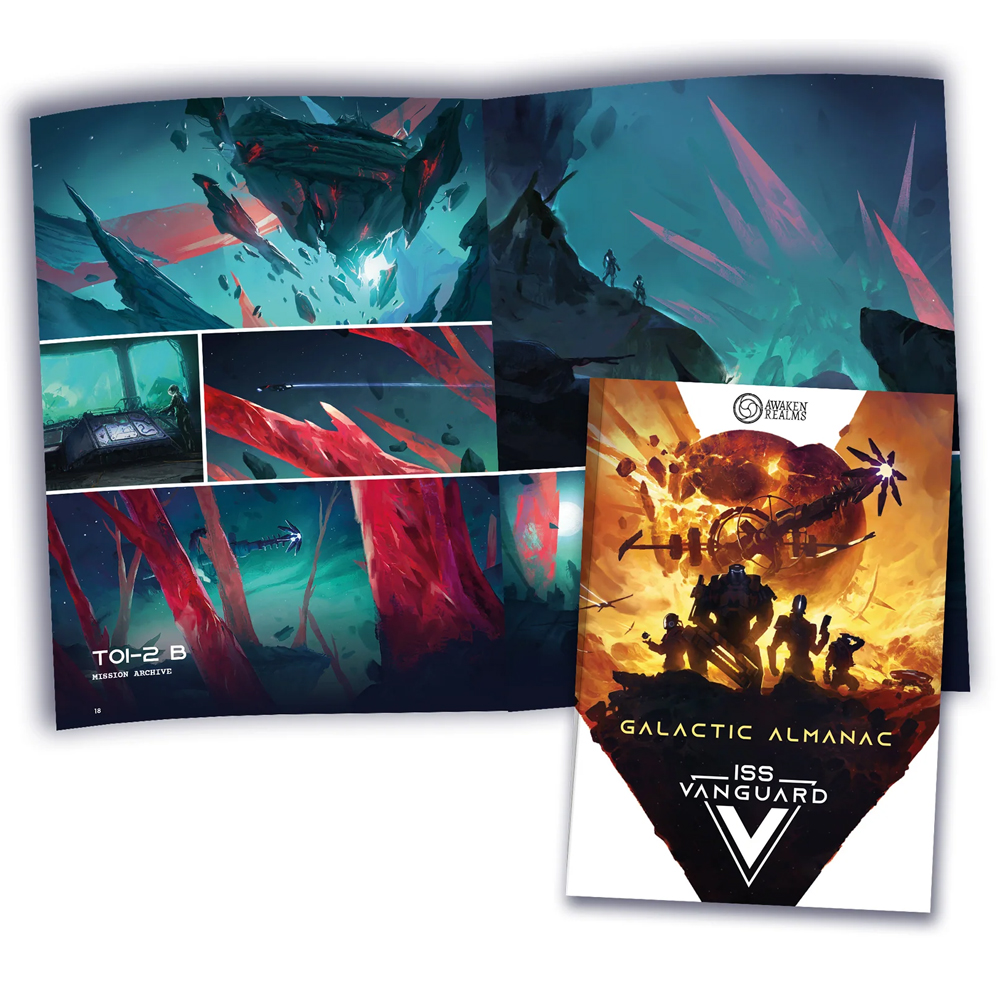
Galactic Almanac (price varies, ~$35–$64). A large additional campaign — over 700 cards, 12 models, a new galactic map with 30+ systems, an 18+-board Planetopedia, and an 80+-page Log Book. The important caveat: it requires both the base game AND Lost Fleet to play. Tremendous value-per-content, but strictly a third course, not a first.
Deadly Frontier & Close Encounters. Deadly Frontier is a further campaign expansion; Close Encounters swaps the base game's threat standees for 30+ sculpted miniatures. Both are for the committed — reviewers repeatedly flag the extra minis as cosmetic, 'far from necessary' for play.
Organizers. Worth a clarifying note: the base game's factory insert is already excellent, so you do not need an aftermarket organizer for the core box. The well-regarded LaserOx wooden insert and expansion organizer exist for those consolidating all the expansions into fewer boxes, but — per LaserOx's MAP policy — they are sold direct (laserox.net) and through authorized shops, not on Amazon. Budget for them separately only if your collection has outgrown the original trays.
Buy Lost Fleet first; save the Galactic Almanac for last — it needs both the base game and Lost Fleet on the table to function.
Who is ISS Vanguard for — and who should pass?
Let me close the ledger with a clear bill of recommendation.
Buy it if you are: a solo or two-player gamer who plays for atmosphere and discovery over optimization; a lover of campaign narratives (Tainted Grail, Sleeping Gods, Gloomhaven) who wants a sci-fi entry; a collector who genuinely values a beautifully produced, superbly organized box and will keep it on the table across many sessions; someone who finds a depleting dice-pool a satisfying puzzle; and someone comfortable spending premium money on a single deep experience.
Pass — or at least demand a test-play — if you are: primarily a tactical combat gamer (encounters here are infrequent by design); a group that needs fast setup and short sessions (90–120 minutes minimum, and a long campaign); allergic to bookkeeping (even post-revision, this is a game of logs, flags, and resource tracking); a player who needs a tightly-plotted, branch-heavy story (the campaign is fairly linear with a handful of endings); or anyone who must finish what they start — because by the designers' own community's account, the finale can grind, and the experience is honestly best in its first two-thirds.
Understood for what it is — a slow, gorgeous, attrition-driven logbook of galactic exploration rather than a tactical skirmish or a tight euro — ISS Vanguard is a singular thing on the shelf, and for the right captain it is unforgettable.
A logbook of galactic discovery, not a skirmish game. Buy it for the voyage and the cabinet it comes in — not for fireworks.
What experienced tables keep reporting
Recurring owner patterns, synthesized in Puzzlewick's words. Follow each evidence trail to read the original discussion.
Fans repeatedly describe the box as a 'Rolls Royce both in design and components,' amazed by the production quality and the sheer amount of content packed inside.
Read the evidence: BoardGameGeek — Production quality vs. price thread
A frank counterpoint from the same community: the story and art are worth it, but the money probably isn't — many components 'weren't necessary' for play, and the experience could have shipped in a smaller, cheaper box.
Read the evidence: BoardGameGeek — 'ISS Vanguard Is Not A Game' critical review
On the dice engine: planetary exploration 'gives a great sense of exploration while also being paired with decision making in dice, cards, and special abilities,' with 'a big sense of pushing your luck' as you commit more dice — aided by the Wild Vanguard symbol.
On pacing: reviewers estimate the early-to-mid campaign at roughly 8/10 but warn the late game becomes a 'tedious full-fledged mission that just doesn't end for at least 1–3 hours,' and suggest some players not finish the campaign if the dice-rolling grows exhausting.
On the overall craft: 'Every detail in the box feels well thought out' — a verdict that helped earn the game a 93% score, called 'a real home run for Awaken Realms.'
On solo and low player counts: one person 'is really all that is needed' to enjoy it, but solo with all four crew creates overwhelming memory demands — the field-tested advice is to run just two crew members alone, while two human players is often cited as the strategic sweet spot.
Read the evidence: BoardGameGeek — best number of crew for solo play
On atmosphere: reviewers call it 'just a gorgeous looking game, with vivid art on all the planets, sectors you'll explore, areas on the ship, and even the cards' — with the free app's voice acting and music deepening the immersion.
The picks
Some links below are affiliate links — as an Amazon Associate, Puzzlewick earns from qualifying purchases, at no extra cost to you. It never changes a pick.
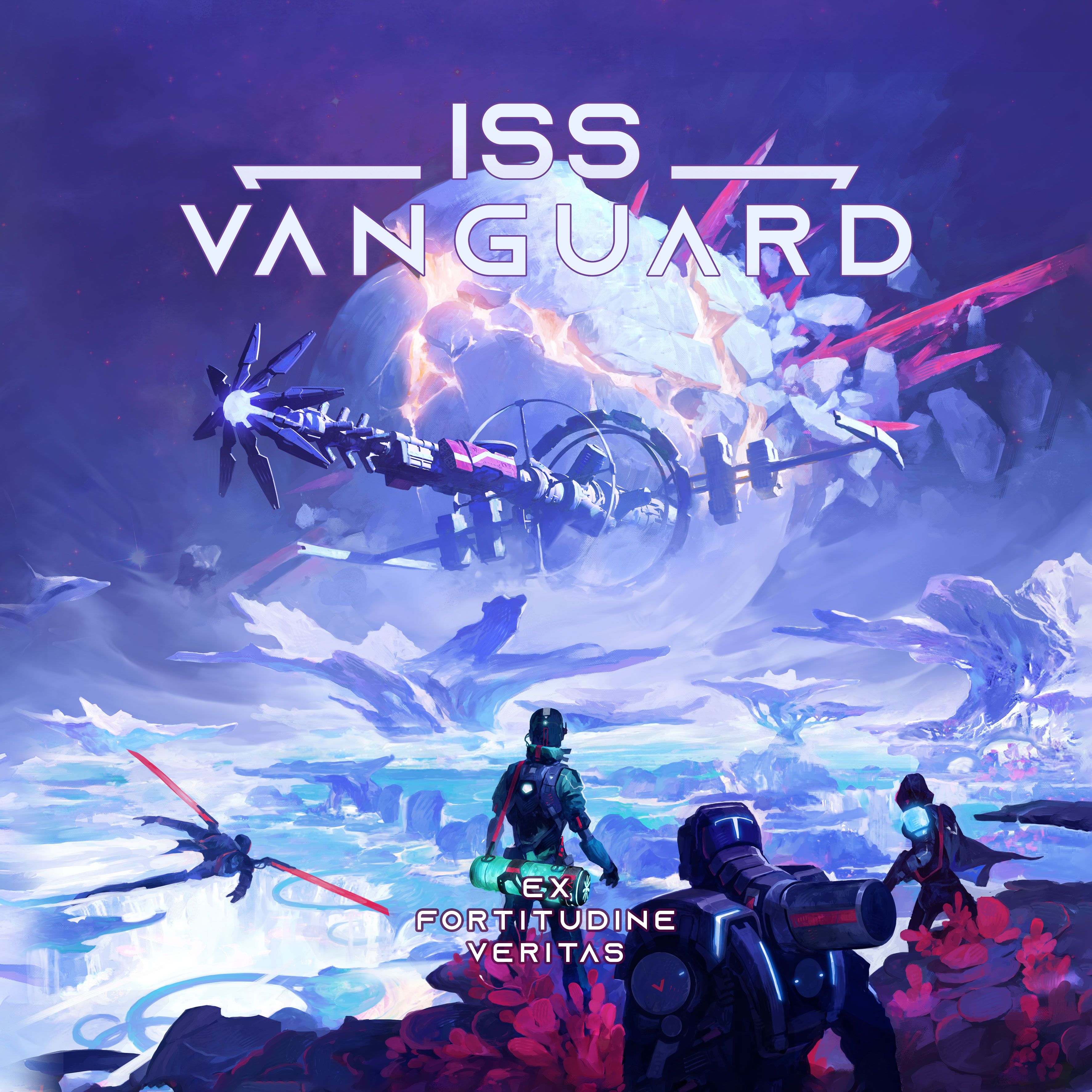 4 photos
 ISS Vanguard (Base Game / Core Box)
The whole expedition in one over-five-kilogram box: a drawer-style insert, three dual-layer section dashboards, eight crew minis, three hardbound books, and the curate-then-deplete dice-building engine that few games match. The early-to-mid campaign is reference-grade; the finale can grind. Priced premium ($148–$185 depending on retailer), but per-hour across a 20–60-hour campaign it's defensible. The definitive starting point — and everything else slots onto it.
- Best-in-class factory insert; setup/teardown stays sane for a 60-hour game
- Genuinely novel dice-building/push-your-luck exploration engine
- Spectacular art and dual-layer dashboards; free voice-acted companion app
- Huge replayable campaign — strong per-hour value
- Premium price the community openly debates
- Late-campaign pacing can drag into repetitive dice-rolling
- Low combat and heavy bookkeeping won't suit tactics-first or fast-play groups
 3 photos
 ISS Vanguard: The Lost Fleet Expansion
The flagship follow-on and the clear first expansion. A fresh, knottier campaign that arrives fully equipped — its own Rulebook, Planetopedia, Operations Book and Logbook, plus 104 Point-of-Interest cards, 28 mission cards, 36 section cards, dice and standees. If the base game left you wanting more galaxy, this is the buy. It's also the prerequisite (alongside the base) for the Galactic Almanac, so it's the natural second step in the chain.
- Substantial, more complex new campaign
- Ships complete with its own books and 168+ cards
- Gateway to the larger Galactic Almanac campaign
- Requires the base game
- Inherits the base game's slower, bookkeeping-heavy rhythm
 2 photos
 ISS Vanguard: Galactic Almanac Expansion
An enormous third course: 700+ cards, 12 models, a new galactic map of 30+ systems, an 18+-board Planetopedia, and an 80+-page Log Book of fresh story. Tremendous content-per-dollar — but it explicitly requires BOTH the base game and Lost Fleet to play, so it's strictly an endgame purchase, never a first add-on. Pricing varies by retailer; confirm before buying.
- Massive content drop — 700+ cards and a brand-new map and campaign
- Excellent value-per-content for invested players
- Requires BOTH the base game and Lost Fleet
- Not a standalone or first expansion; retail price fluctuates
At a glance
| product | type | verified us price | requires | campaign length | headline content | best for |
|---|---|---|---|---|---|---|
| ISS Vanguard (Base Game) | Core campaign | $147.99 (varies $148–$185) | Nothing — standalone | ~20–60 hours | 8 minis, 3 dual-layer dashboards, drawer insert, Ship Book + Planetopedia + Log Book, custom dice | First-time captains; the definitive entry point |
| ISS Vanguard: The Lost Fleet | Campaign expansion | $55.99 (Miniature Market) | Base game | Full additional campaign | Own 4 books + 104 PoI / 28 mission / 36 section cards, dice, standees | First expansion after the core campaign |
| ISS Vanguard: Galactic Almanac | Large campaign expansion | Varies (~$35–$64; confirm) | Base game + Lost Fleet | 80+-page Log Book campaign | 700+ cards, 12 models, 30+ system map, 18+ Planetopedia boards | Endgame content for fully invested players |
| Close Encounters (minis) | Cosmetic miniatures add-on | Varies; not core | Base game | N/A — components only | 30+ sculpted threat miniatures replacing standees | Mini-lovers only; 'far from necessary' for play |
Questions, answered
How much does ISS Vanguard cost?
The base game has sold at US retail roughly between $148 and $185 depending on the store — GameNerdz has listed it at $147.99, while other shops sit nearer $169–$185. The original Asmodee retail MSRP was around $159.99. It is a premium-priced box no matter where you buy.
Is ISS Vanguard worth the price?
For 1–2 player gamers who value production, atmosphere, and exploration, yes — a 20–60-hour campaign in a best-in-class box is strong per-hour value. For players who want tactical combat, fast setup, or a tightly-plotted climax, it's harder to justify; the community openly debates whether the lavish components inflate the cost.
How long is the ISS Vanguard campaign?
Individual sessions run about 90–120 minutes (often 2–4 hours in practice). The full campaign spans roughly 20–60 hours, and multiplayer games tend toward the higher end, frequently exceeding 50 hours.
How many players is ISS Vanguard best with?
It supports 1–4 players but is widely considered best at 1–2. Two players is the common sweet spot. Solo players are advised to control two crew members rather than all four to keep the bookkeeping manageable.
Can you play ISS Vanguard solo?
Yes — it has a very high solo rating and plays well alone. The recommended approach for solo is to run two crew members instead of all four, which preserves meaningful dice decisions without overwhelming a single player's memory.
What is the 'dice-building' system?
Before each away mission you assemble a dice pool from the crew you commit (and same-color dice differ from one another, so the choice matters). During exploration you roll those dice for checks, with a Vanguard wildcard symbol; rolled dice go to a spent pool until you rest to refresh them, or you can 'exert' to squeeze out extra results at the cost of removing a die for the session.
Do I need the companion app?
It's not strictly required, but it's strongly recommended. The free app adds voice acting and music, reads narrative passages, and automates Log Book flag-tracking — which directly fixes the most common new-player problem of getting lost in the branching log.
Is there a lot of combat in ISS Vanguard?
No. Combat is relatively rare; the game is built around exploration, narrative, and dice-driven checks rather than frequent tactical battles. Players seeking a combat-heavy experience are likely to be disappointed.
How does ISS Vanguard compare to Nemesis or Tainted Grail?
It's by the same studio (Awaken Realms) but a different beast: less of Nemesis's tense semi-cooperative combat and less of Tainted Grail's open, character-driven branching. ISS Vanguard is a more linear, exploration-and-logbook campaign with a distinctive dice-pool engine.
Which expansion should I buy first?
The Lost Fleet (~$56). It's the flagship continuation and ships complete with its own books and cards. Buy it before the Galactic Almanac, which requires both the base game AND Lost Fleet to play.
Does the base game need an aftermarket organizer?
No. The base box already includes an excellent drawer-style factory insert. Aftermarket options like the LaserOx wooden organizer exist mainly for consolidating all the expansions into fewer boxes, and are sold direct from LaserOx (not on Amazon) due to their pricing policy.
What's the main criticism of ISS Vanguard?
Pacing. The early-to-mid campaign earns near-universal praise (reviewers peg it around 8/10), but the finale draws 'grind' complaints — reduced exploration variety and long dice-rolling sequences. Some reviewers go so far as to advise stopping the campaign if the late-game rolling becomes a chore. The ship phase is also widely seen as the weaker, more administrative half.
Margo's verdict
ISS Vanguard is Awaken Realms operating at the height of its production craft — and the flex is mostly substance, not show. The drawer insert, the dual-layer dashboards, the three hardbound books, and the curate-then-deplete dice engine are all load-bearing, and the early-to-mid campaign delivers a genuine, atmospheric sense of charting the unknown that few games reach. At a US street price of roughly $148–$185, it is a premium ask, and the community is right to debate it: this is a slow, low-combat, bookkeeping-heavy NARRATIVE machine whose finale can grind and whose ship phase is the weaker half. So the honest answer to 'is the production flex worth $180?' is a qualified yes — worth it for the 1–2 player captain who treasures discovery, replay value, and a beautifully catalogued box, and worth passing for the tactics-first or fast-play gamer. Buy the base game, install the app, play at one or two players, and save the Lost Fleet (then, much later, the Galactic Almanac) for when you're hungry for more galaxy. Filed, catalogued, and recommended — with eyes open about exactly what you're shelving.
Research ledger 13 sources · reviewed 2026-08-10
Specifications, rules, current product information, community experience, and contrary evidence were checked against the sources below. Commercial links are kept separate from editorial evidence.
- amazon.comamazon.com/dp/B0BQ3TFLNG?tag=puzzlewick-20
- amazon.comamazon.com/dp/B0CRCHMB6Z?tag=puzzlewick-20
- amazon.comamazon.com/dp/B0CRVT7F4H?tag=puzzlewick-20
- shelfside.coshelfside.co/reviews-2023/issvanguard-review
- zatu.comzatu.com/iss-vanguard-review
- ageofminiatures.comageofminiatures.com/dice-and-space-exploration-welcome-to-iss-vanguard-review
- miniaturemarket.comminiaturemarket.com/iss-vanguard-lost-fleet-expansion-awiv02.html
- gamenerdz.comgamenerdz.com/iss-vanguard
- tabletopgaming.co.uktabletopgaming.co.uk/reviews/iss-vanguard-review
- boardgamegeek.comboardgamegeek.com/thread/3227155/production-quality-vs-price
- boardgamegeek.comboardgamegeek.com/thread/3417626/iss-vanguard-is-not-a-game-a-hits-critical-review
- boardgamegeek.comboardgamegeek.com/thread/2942423/best-number-of-team-members-as-a-solo-player
- Awaken Realms official ISS Vanguard product recordawakenrealms.com/games/awaken-realms/iss-vanguard
Let me check that before we say it.


Keep exploring
The next smart rabbit holes.
✦ Universe HubISS Vanguard: the whole buying pathISS Vanguard is Awaken Realms at their most ambitious: a sci-fi exploration campaign where you crew a ship, land on hostile worlds,...✦ Topic PathBoard Game Buying Guides: compare the whole shelfStart with the decision, not the shelf. These guides compare the games, editions, expansions, player counts, and costs people...Deep DiveTainted Grail: Kings of Ruin — Awaken Realms' Dark Arthurian Campaign at Full Production LavishnessA stand-alone, story-soaked heavyweight that represents Awaken Realms at the peak of its craft — and the rare campaign box where the...