Voidfall vs Andromeda’s Edge vs Eclipse in 2026: Which Space Grail Fits Your Table?
Deterministic solo empire puzzle, worker-placement space hybrid, or classic ship-customizing 4X? The community’s cleanest buying fork.


AI-assisted research and drafting in Kenji’s voice · reviewed by Robert Pruitt · how this guide was made
Last editorial refresh: 2026-07-15 Gold-standard QA: true 8 sources reviewed Affiliate links checked during gold-standard pass

The short answer
Buy Voidfall for solo or two-player deterministic empire optimization. Buy Andromeda’s Edge for an interactive worker-placement/tableau hybrid with dice conflict and a faster social pulse. Buy Eclipse: Second Dawn for the classic 4X fantasy: exploration, ship design, technology, borders, and uncertain combat. Only Eclipse is the cleanest traditional 4X; the other two are space Euros with different kinds of conflict.
Decision map
Choose in thirty seconds
Classic multiplayer 4X
Players keep comparing these because the boxes promise asymmetric factions, fleets, technology, and a table covered in a galaxy. The shared nouns conceal different verbs. Voidfall asks you to calculate. Andromeda’s Edge asks you to place, recall, and improvise. Eclipse asks you to explore and engineer a fleet before the dice discover whether the design survives contact. The right purchase begins with the kind of uncertainty you enjoy.
Start here, then go deeper
You are in the right cabinet.
 ♛ Topic PathGrail Board Games: compare the whole shelfA grail earns its space only when the experience survives the price, setup, storage, and group commitment. These are expensive-game...
 ComparisonThe Best 4X Space Board Games of 2026, RankedA verdict-forward tier list of the games that conquer the galaxy — and the schedule problem that quietly decides which one you actually...
 Deep DiveEclipse: Second Dawn for the Galaxy — The 4X Space Epic Worth Clearing the Whole Table ForA full galaxy of exploration, research, conquest, and diplomacy running on a famously elegant action-disc economy — and the version...
Which space empire game should you buy?
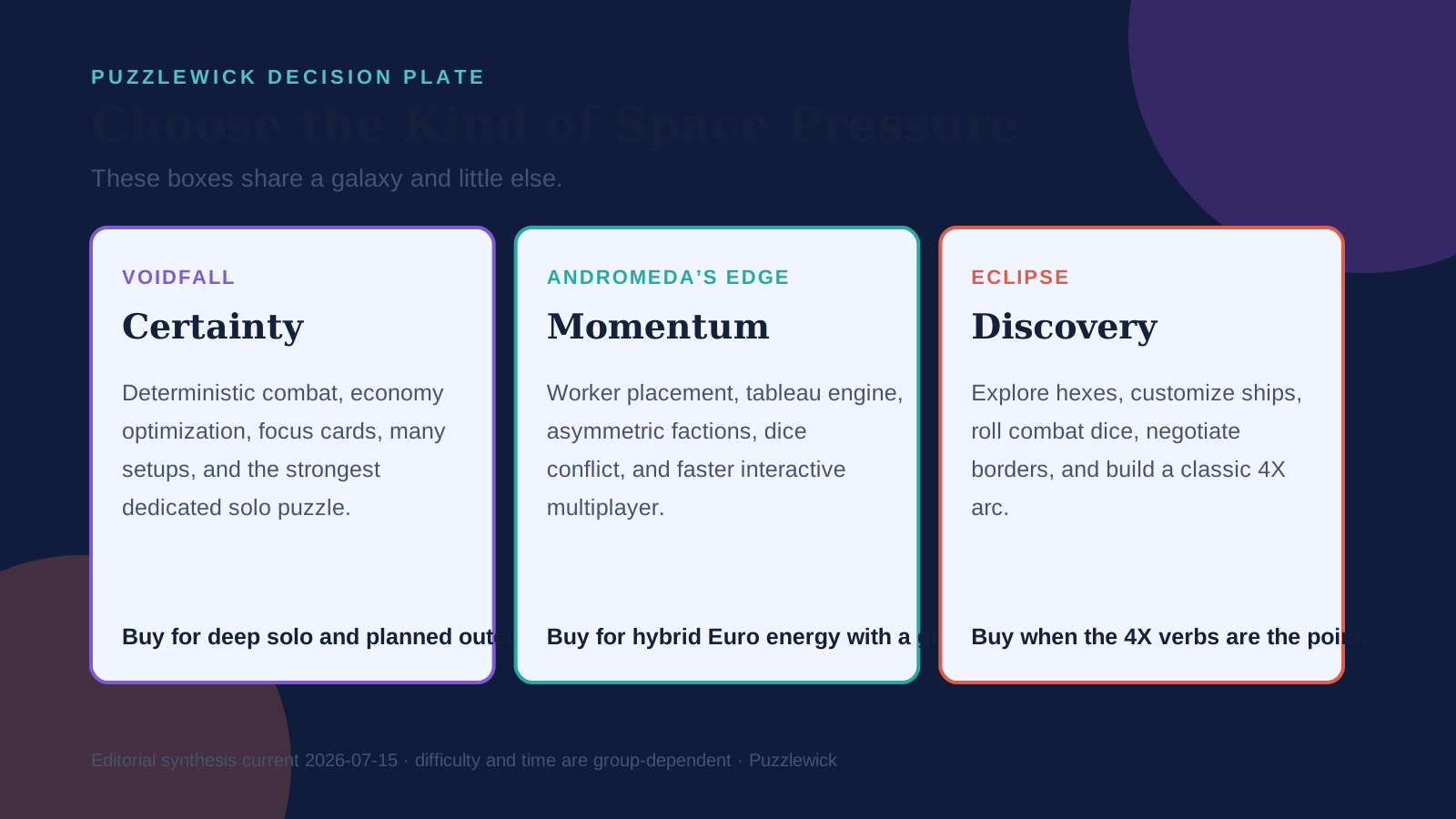
A recent comparison thread drew the most useful distinction from players and one of Voidfall’s designers: neither Voidfall nor Andromeda’s Edge is best understood as “solo Twilight Imperium.” Voidfall is an economy-optimization Euro wrapped in a galactic crisis. Andromeda’s Edge is a worker-placement and engine-building hybrid with battles. Eclipse most completely performs the four classic verbs: explore, expand, exploit, exterminate.
This is not genre policing. It prevents a $100 misunderstanding. If unexplored hexes, ship blueprints, border threat, and dice battles are your fantasy, buy Eclipse. If you want exact outcomes and a deep solo puzzle, buy Voidfall. If you want worker-placement tempo and interactive engine building, buy Andromeda’s Edge.
The current solo discussion is especially revealing because it rejects the lazy ‘three 4X games’ label. Voidfall is repeatedly recommended as the deterministic, optimization-heavy solo choice; Andromeda’s Edge as the more eventful, interactive euro with tactical placement; Eclipse as the customization-and-conflict game. Choose the verb you want to perform most often: solve, improvise, or fight.
What does Voidfall do better than its rivals?
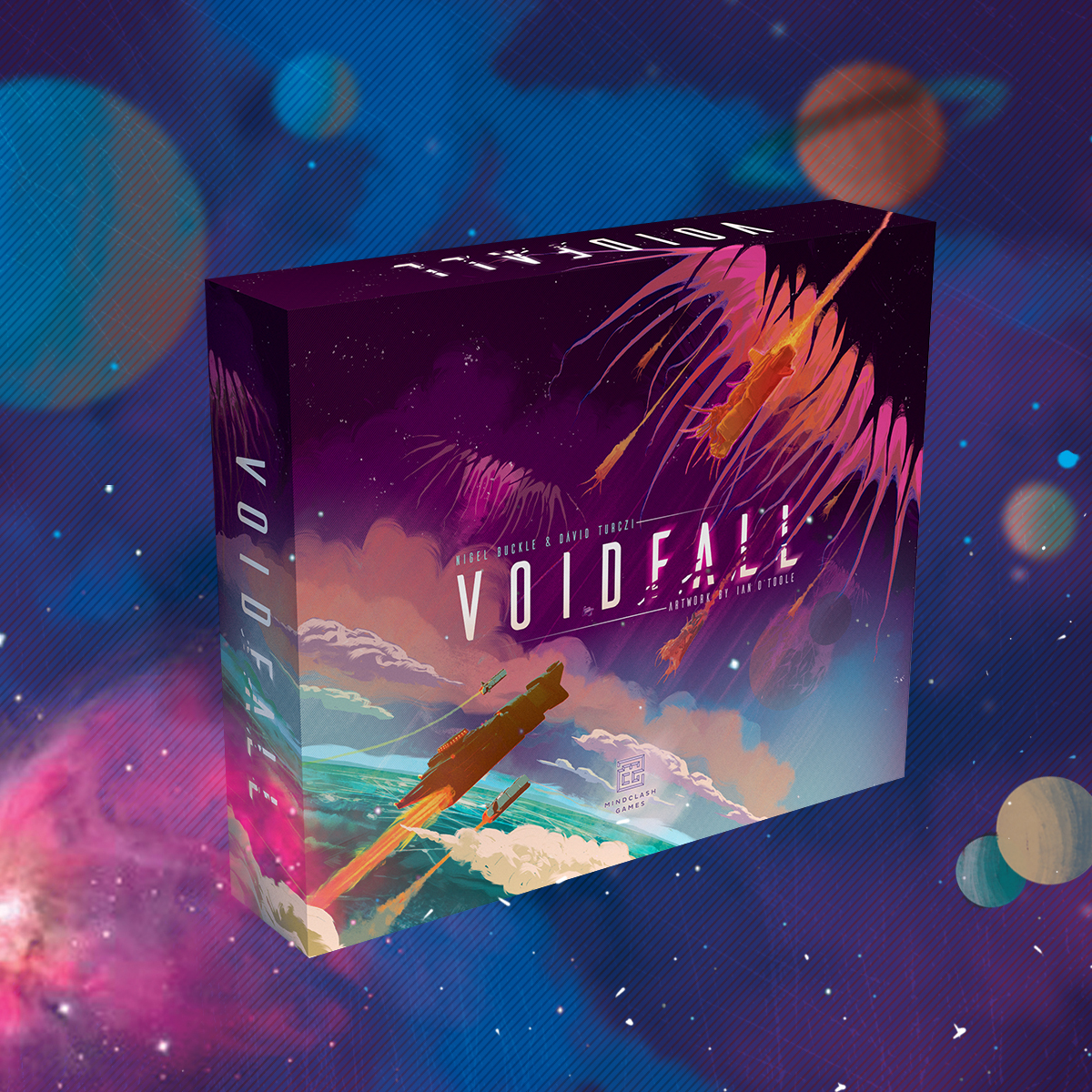
Voidfall uses Focus cards to structure turns, scenario-specific setups, asymmetrical houses, technologies, agendas, and deterministic combat. You know the military outcome before committing. The tension comes from whether the attack is economically correct and how much corruption, fleet power, and action efficiency you can absorb.
Its solo strength is not an afterthought. Different houses, maps, technologies, agendas, and scenario goals create a large puzzle library. The cost is onboarding and setup. Owners who love it sometimes describe setup as part of the hobby; owners who hate setup may never reach the decisions. The Galactic Edition miniatures are not required for the system and can make fleet handling fiddlier than cardboard tokens.
What does Andromeda’s Edge do better?
On a turn you launch a ship to collect resources or use an Alliance Base, or return ships to activate your station engine. Occupied regions can trigger combat. Progress tracks and station modules convert each cycle into visible momentum. The official description is explicit: this is faction building, worker placement, development, and dice conflict braided together.
Community comparisons call it faster, more interactive, and easier to bring to a mixed multiplayer table than Voidfall. It is still large, asymmetric, and capable of long first games. The randomness matters: if known outcomes are essential, choose Voidfall. If the group enjoys mitigation and stories produced by a battle that might turn, Andromeda’s Edge has more pulse.
Why is Eclipse still the cleanest war story?
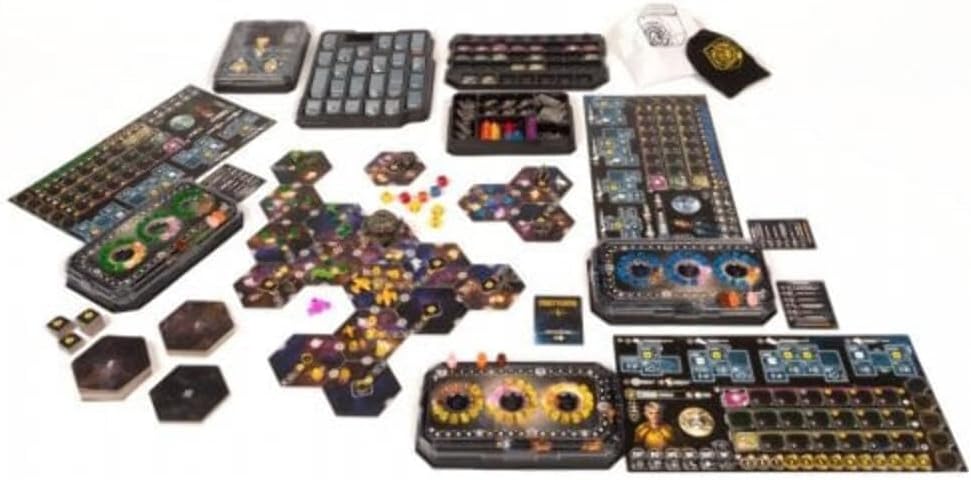
Eclipse begins with a sparse sector and turns exploration into economy, diplomacy, research, and fleet engineering. The player board makes ship design physical: weapons, shields, computers, hull, drives, and power must fit. Then dice test the design. A lucky shot can create a story, but repeated poor engineering usually creates a pattern.
Second Dawn improves trays, setup, technology balance, and turn flow over the first edition. It remains strongest with several players, where borders and threat produce decisions no automa can fully replicate. If you want solo first, buy Voidfall. If you want a galaxy of neighboring human intentions, Eclipse is the better grail.
Voidfall asks whether the attack is correct. Eclipse asks whether the ship you designed survives it.
How do setup and table recovery change the verdict?
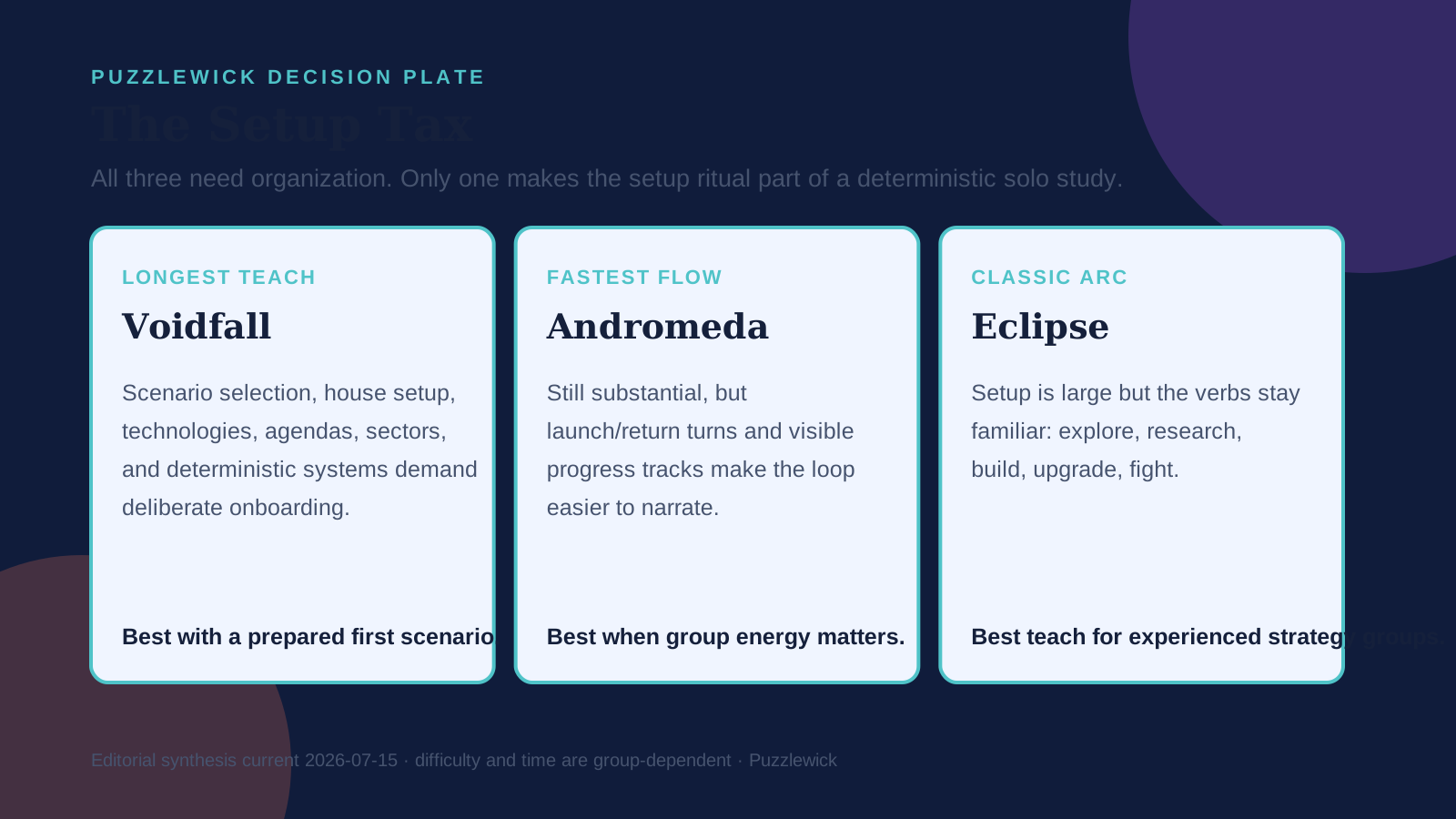
Voidfall has the steepest teach because action structure, economy, corruption, combat, and scenario setup must become one mental model. Use the official first scenario and pre-sort the chosen house before anyone arrives.
Andromeda’s Edge has a substantial table but a teachable loop: launch or return. Explain progress tracks and engine activation before listing every module. Eclipse has more physical systems, but the 4X verbs are legible to strategy players. Teach exploration, income, upkeep, and ship power before advanced diplomacy.
For all three, the best insert is one that places trays on the table as functional zones. If unpacking still requires sorting every faction color into new piles, the storage solution has failed.
How does player count change the recommendation?
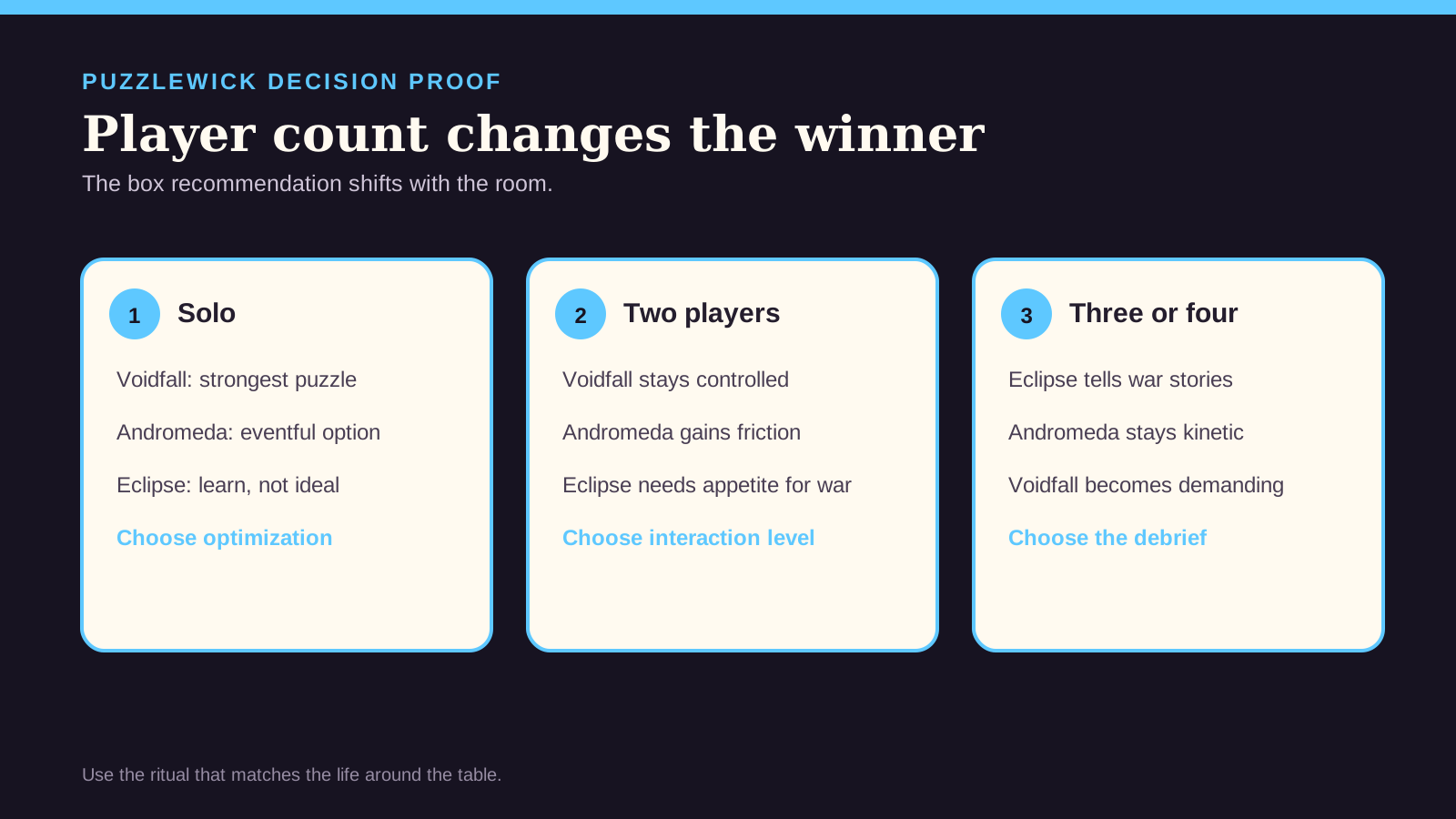
At solo, Voidfall is the clear first recommendation if you want a deterministic strategic puzzle. The crisis is not pretending to be a human rival; it gives the empire a hard efficiency problem. Andromeda’s Edge is the alternative when events, dice, and tactical bumps make the table feel alive. Eclipse can teach its economy solo, but its most memorable decisions concern other people.
At two, taste becomes decisive. Voidfall remains controlled and brain-burning. Andromeda’s Edge produces more tactical interference around action spaces and regions. Eclipse at two can become a tense border war, but the map has less diplomatic texture and a runaway lead can feel exposed. Buy it at two only when both players actively want ship design and conflict.
At three or four, Eclipse gains its strongest claim. Alliances, threat, retreat, and opportunistic battles create the war story people retell. Andromeda’s Edge remains kinetic and easier to pitch to a group that wants a modern euro with visible collisions. Voidfall is still excellent, but simultaneous system reading and lower direct combat can make the table feel like several demanding empires sharing oxygen. Pick the game whose postgame conversation you want: optimization, tactical chaos, or the battle that changed the map.
At five or six, Eclipse is the only one of this trio I would deliberately choose, and only with experienced players who accept the longer diplomatic arc. For the other two, extra bodies add waiting and state-reading faster than they add drama. A maximum player count is permission, not a recommendation.
How do you improve from first game to serious play?
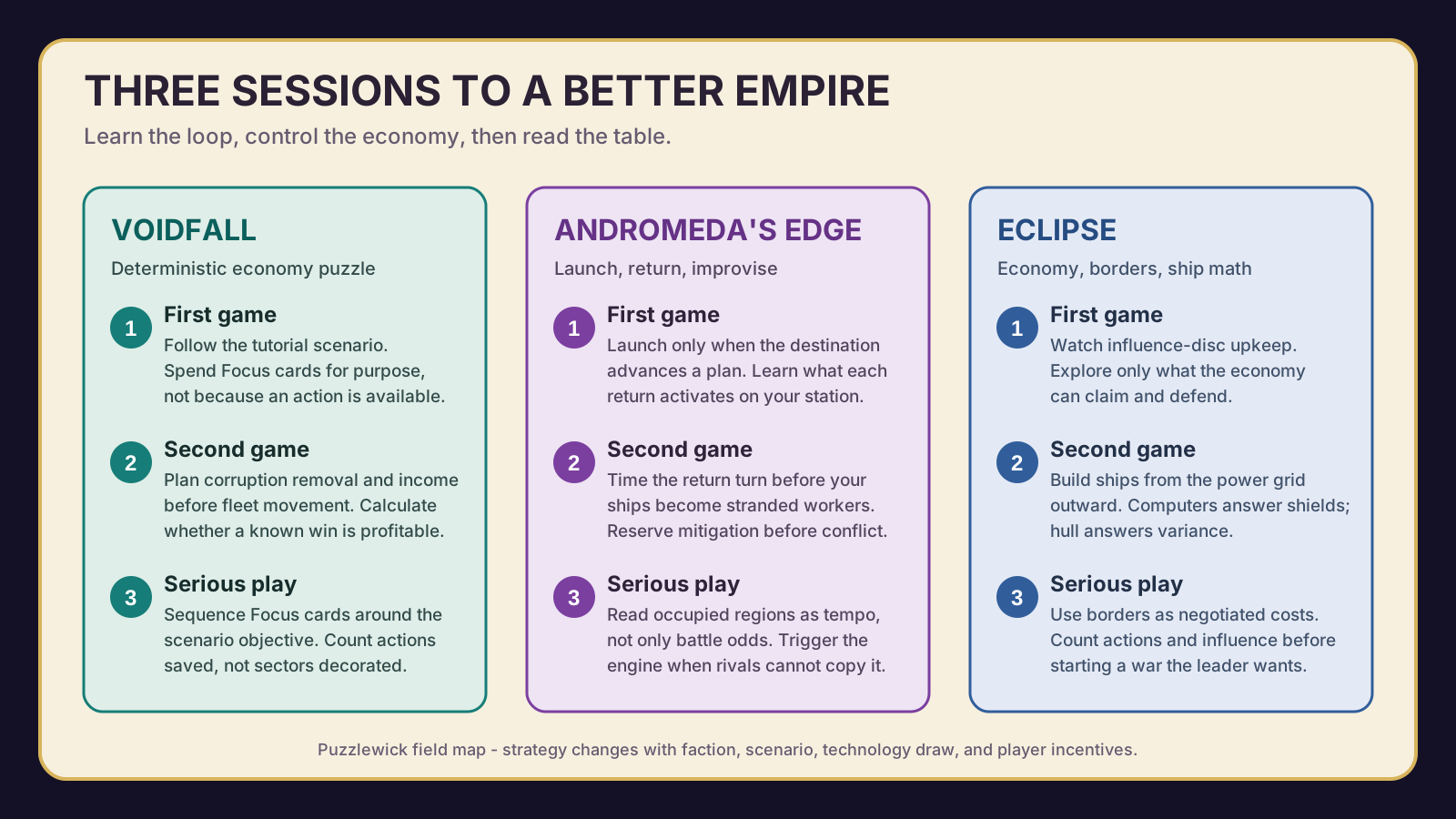
Voidfall: use the first scenario exactly as written and treat each Focus card as a limited package of tempo. In the second game, plan corruption removal and income before moving fleets. At serious play, calculate the action efficiency of the scenario objective: deterministic combat tells you whether you can win; strategy asks whether the victory advances the objective more than the same actions spent on economy. A sector that looks impressive but does not score or unlock tempo is decoration.
Andromeda’s Edge: the beginner lesson is that launching a ship is not automatically progress. Launch because the destination advances a track, resource plan, or tactical denial; understand what the later return will activate. Intermediate play is return timing: too many deployed ships can leave the station engine waiting, while an early return can abandon a contested region. Serious play treats occupied regions as tempo signals. Reserve mitigation before entering a battle and trigger the engine when rivals are least able to exploit the same window.
Eclipse: first learn the influence-disc economy. Every action and claimed sector changes upkeep, so exploration without the income or fleet to defend it can be negative progress. Next, build ships from the power budget outward: drives, computers, shields, weapons, and hull must form a working system. At serious tables, borders are negotiated costs. The strongest attack is often the one a rival must spend actions preparing against; the worst war is one that consumes your influence while a third player improves.
These are decision patterns, not fixed openings. Faction powers, scenario rules, technology supply, map shape, and the other players can overturn any canned sequence. The serious skill is recognizing which resource is currently scarce: actions, income, mitigation, information, or political safety.
Which edition should you actually buy?
Solo only: Voidfall Standard Edition. Two players who love heavy Euros: Voidfall, with Andromeda’s Edge as the more random interactive alternative. Three or four who love worker placement and engine combos: Andromeda’s Edge. Four to six who want exploration, ship design, and border politics: Eclipse. Dice-averse: Voidfall. Setup-averse: none is truly light, but Andromeda’s Edge has the easiest core loop to narrate.
Do not buy deluxe miniatures first. Use the retail or standard game to learn whether fleet handling, setup, and combat style fit. A premium edition should reward repeated play, not substitute for it.
The picks
Some links below are affiliate links — as an Amazon Associate, Puzzlewick earns from qualifying purchases, at no extra cost to you. It never changes a pick.
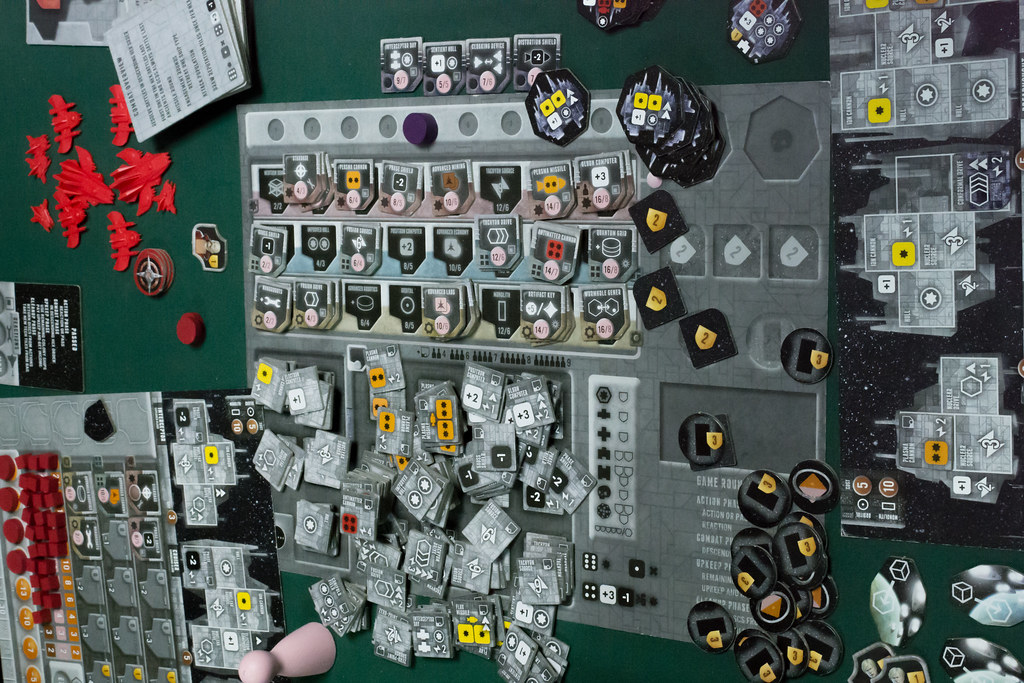
Eclipse: Second Dawn for the Galaxy
Exploration, research, physical ship design, borders, and uncertain combat make the most complete traditional 4X arc. It belongs here for classic multiplayer 4x, not because every table needs it. The ownership catch is best with a group and premium price.
- True exploration
- Ship customization
- Great multiplayer
- Best with a group
- Premium price
At a glance
| Question | Voidfall | Andromedas Edge | Eclipse |
|---|---|---|---|
| Core identity | Deterministic heavy Euro empire puzzle | Worker-placement/tableau hybrid | Traditional 4X |
| Combat | Known outcome before attack | Dice with mitigation | Dice + ship design |
| Solo | Excellent, built-in scenarios | Good but not main reason | Automated solo variant varies by edition/support |
| Multiplayer energy | Indirect, analytical | Interactive and swingy | Borders, threat, negotiation |
| Setup/teach | Heaviest | Substantial | Large but intuitive verbs |
| Best count | 1–2 | 2–4 | 3–6 |
Questions, answered
Is Voidfall or Andromeda’s Edge better solo?
Voidfall. Its deterministic systems, scenario variety, and dedicated solo design make it the stronger one-player puzzle. Andromeda’s Edge is more attractive when multiplayer interaction also matters.
Are Voidfall and Andromeda’s Edge true 4X games?
They use parts of the 4X vocabulary, but both are better understood as heavy space Euros. Eclipse is the clearest traditional 4X of the three.
Which game has the least random combat?
Voidfall has deterministic combat, so you know the outcome before committing. Andromeda’s Edge and Eclipse use dice with mitigation or engineering.
Which is easiest to teach?
Andromeda’s Edge has the cleanest central loop: launch a ship or return ships to activate the station. Eclipse has familiar 4X verbs. Voidfall requires the most deliberate onboarding.
Do I need the deluxe or miniature editions?
No. Buy the standard or retail edition first. Voidfall in particular can play more smoothly with cardboard fleet tokens than with assembled miniature fleets.
Which of these three games works best as a first heavy space game?
Eclipse: Second Dawn is the clearest first purchase when conflict and exploration are the fantasy. Andromeda’s Edge is the bridge from modern engine-building. Voidfall is the deliberate step for players who already enjoy low-luck optimization and rules-dense solo play.
Kenji's verdict
Voidfall is the solo brain-burner. Andromeda’s Edge is the group hybrid. Eclipse is the 4X.
Research ledger 8 sources · reviewed true
Specifications, rules, current product information, community experience, and contrary evidence were checked against the sources below. Commercial links are kept separate from editorial evidence.
- eu.shop.mindclashgames.comeu.shop.mindclashgames.com/product/voidfall-standard-edition-en
- mindclashgames.commindclashgames.com/wp-content/uploads/2023/03/VOIDFALL-Rulebook-websafe.pdf
- cardboardalchemy.comcardboardalchemy.com/andromedas-edge
- reddit.comreddit.com/r/soloboardgaming/comments/1t9z6yc/voidfall_vs_andromedas_edge
- reddit.comreddit.com/r/soloboardgaming/comments/1qug691/voidfall_or_andromedas_edge
- reddit.comreddit.com/r/soloboardgaming/comments/1s1qpnv/cant_afford_voidfall_kickstarter_feeling_fomo
- en.lautapelit.fien.lautapelit.fi/product/42986/eclipse---2nd-dawn-for-the-galaxy-from-us-stock
- boardgamegeek.comboardgamegeek.com/boardgame/337627/voidfall

Every object has a lineage. Let me tell you its story.

Keep exploring
The next smart rabbit holes.
♛ Topic PathGrail Board Games: compare the whole shelfA grail earns its space only when the experience survives the price, setup, storage, and group commitment. These are expensive-game...ComparisonThe Best 4X Space Board Games of 2026, RankedA verdict-forward tier list of the games that conquer the galaxy — and the schedule problem that quietly decides which one you actually...Deep DiveEclipse: Second Dawn for the Galaxy — The 4X Space Epic Worth Clearing the Whole Table ForA full galaxy of exploration, research, conquest, and diplomacy running on a famously elegant action-disc economy — and the version...